How to Clean Floors Naturally: The Right Mix for Every Floor Type
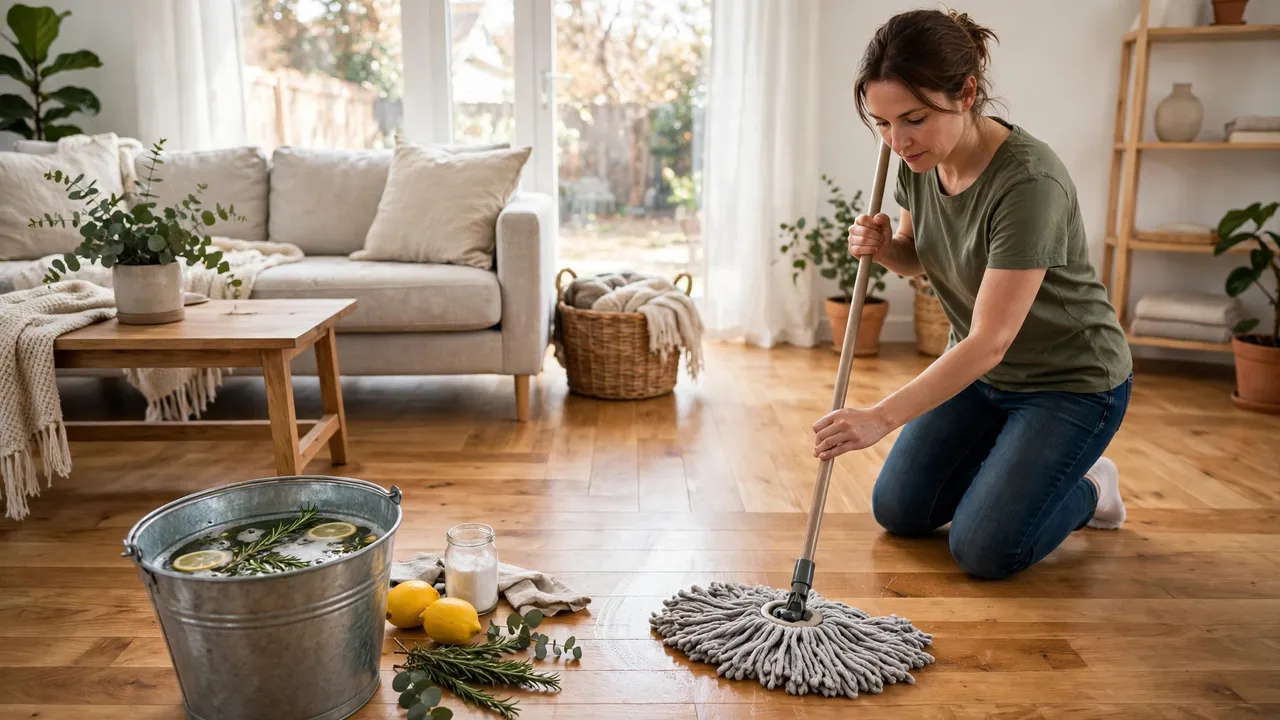
Cleaning floors naturally is mostly about matching the cleaner to the floor. The honest surprise for many people: vinegar — the internet's favourite natural cleaner — is right for sealed tile and vinyl, but wrong for natural stone and risky for hardwood finishes. The natural kit that actually covers a whole house is small: warm water, a drop of pH-neutral soap (castile soap works), baking soda for spots, and vinegar kept for the floors that can take it. Method matters as much as ingredients: sweep first, mop damp rather than wet, and use less soap than you think.
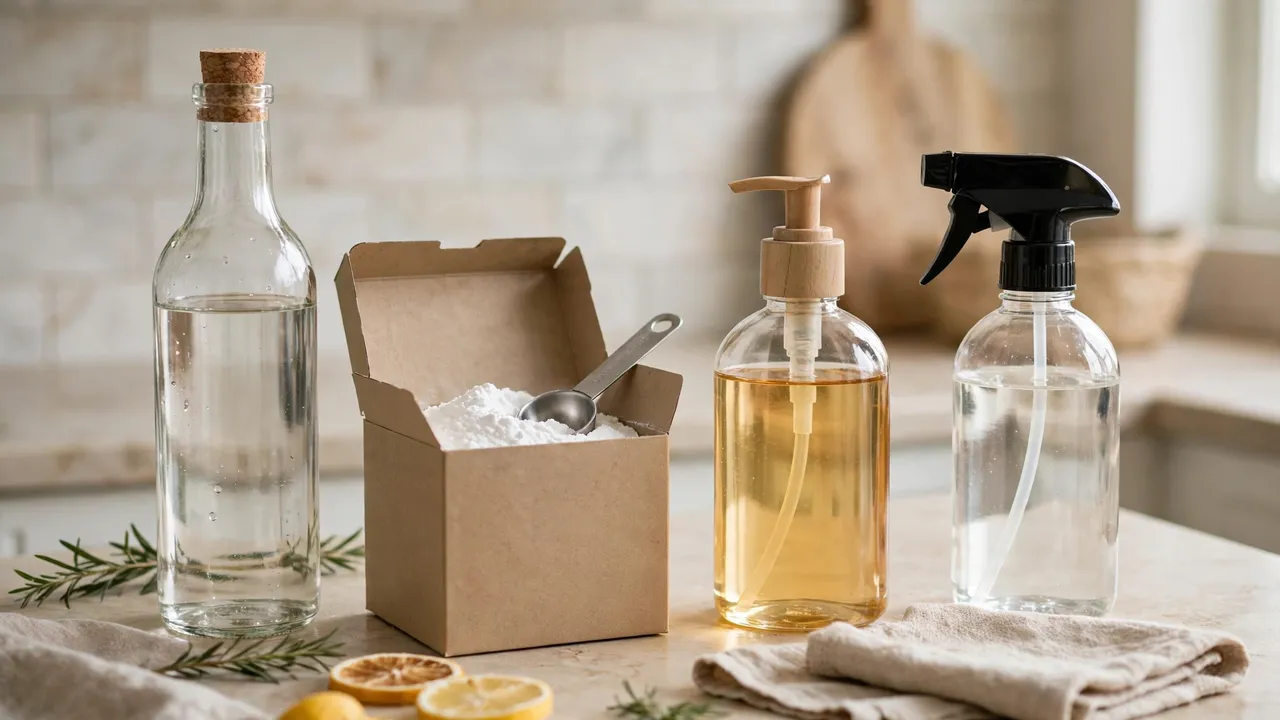
The natural cleaning kit
- Warm water — the base of everything; most weekly dirt needs nothing more
- pH-neutral soap (castile soap or a neutral floor soap) — a teaspoon per bucket, not a glug
- White vinegar — for sealed tile and vinyl only (see the table)
- Baking soda — spot paste for scuffs and stubborn marks, and a grout scrub
- A microfiber flat mop — lifts dirt instead of pushing dirty water around
- Two buckets or a rinse habit — mopping with filthy water is the main cause of dull floors
Match the mix to the floor
| Floor | Natural mix | Mop style | Never use |
|---|---|---|---|
| Sealed ceramic / porcelain tile | Warm water + up to ½ cup vinegar per gallon, or a drop of soap | Normal damp mop | Acid on stone tile (see below); excess soap leaves film |
| Vinyl / LVP | Warm water + a drop of pH-neutral soap | Damp mop, wrung well | Abrasive pads, heavy oil soaps, steam unless the maker allows it |
| Hardwood (sealed) | Warm water + a teaspoon of pH-neutral soap per gallon | Barely damp microfiber, with the grain | Vinegar (dulls polyurethane over time), steam, standing water |
| Laminate | Warm water + a teaspoon of pH-neutral soap | Barely damp — the driest mop of all | Soaking water, vinegar habitually, wax polishes |
| Natural stone (marble, granite, travertine) | Warm water + stone-safe pH-neutral soap only | Damp mop | Vinegar, lemon, any acid — it etches stone on contact |
| Bamboo / cork | Warm water + a teaspoon of pH-neutral soap | Barely damp | Excess water, vinegar, steam |
The method, step by step
Step 1: Sweep or vacuum first — always
Dry grit is sandpaper under a mop. A thorough sweep or vacuum (hard-floor mode, beater bar off on wood) before any water touches the floor is the single step that prevents scratches and muddy streaks.
Step 2: Mix mild
Warm water with a teaspoon of pH-neutral soap per gallon is enough for a weekly clean. More soap does not clean more — it leaves a film that dulls the floor and attracts dirt faster, which is why "my floors get dirty so quickly" is usually a soap problem, not a dirt problem.
Step 3: Mop damp, in sections
Wring the mop until it is damp, not dripping — barely damp for wood, laminate, bamboo and cork. Work in small sections, following the grain on wood, and rinse the mop often. On big floors, change the water when it turns cloudy.
Step 4: Spot-treat what the mop missed
Scuffs and sticky spots get a baking soda paste on a cloth, rubbed gently, then wiped with a clean damp cloth. On tile, the same paste on an old toothbrush is the natural grout cleaner — slow, but effective and fume-free.
Step 5: Let it dry before walking
Natural cleaners leave no residue to buff, so the finish line is simply a dry floor. Keep feet and paws off until it dries — a few minutes with a window open or a fan on.
The vinegar truth
Vinegar earns its place on sealed tile and vinyl, where its mild acid cuts grease and dissolves hard-water film. Everywhere else, be careful: it etches natural stone on contact (the stone is calcium-based and reacts with acid), it gradually dulls polyurethane hardwood finishes, it can leave a dust-attracting residue on laminate, and it degrades grout sealers over time. And two safety rules that never change: never mix vinegar with bleach (toxic gas) and never mix it with baking soda in the bucket — they neutralise each other into salty water that cleans worse than either alone. When in doubt, the pH-neutral soap mix is the safe default for every sealed floor in the house.
Mistakes that make floors worse
- Too much soap: the film it leaves is the #1 cause of dull, fast-dirtying floors. If your floor feels tacky after mopping, mop again with plain warm water.
- Too much water: puddles are the enemy of every wood-based floor — seams swell, edges lift. Damp is the setting.
- One dirty bucket start to finish: by the last room you are painting with dirt. Rinse the mop, change the water.
- Skipping the sweep: wet grit scratches finishes permanently.
- Using the tile mix on the stone or wood: one bucket for the whole house only works if it is the gentle mix.
Floor-by-floor deep guides
Each floor type has its own full guide on the site: how to clean vinyl flooring, how to clean laminate floors properly, how to clean bamboo flooring and how to clean cork flooring.
Frequently asked questions
What is the best natural floor cleaner?
For most sealed floors, warm water with a teaspoon of pH-neutral soap (such as castile soap) per gallon. It cleans weekly dirt without residue and is safe on tile, vinyl, hardwood, laminate and stone. Vinegar is a specialist, not the all-purpose answer: use it on sealed tile and vinyl, keep it off stone and hardwood.
Can you clean floors with just vinegar and water?
On sealed ceramic or porcelain tile and on vinyl, yes — up to half a cup of white vinegar per gallon of warm water. On natural stone, never: the acid etches it. On hardwood, it gradually dulls the finish, and on laminate it can leave a residue. For those floors, the pH-neutral soap mix is the natural choice.
Why do my floors feel sticky after mopping?
Almost always too much soap or cleaner in the water. The residue dries into a film that feels tacky and grabs dirt. Fix it by mopping once with plain warm water, and next time measure the soap — a teaspoon per gallon, not a pour.
Is baking soda safe on floors?
As a spot paste, yes, on tile, vinyl and sealed surfaces — rub gently and wipe the residue away with a clean damp cloth. Do not scatter it as a general mop additive on wood floors, and never combine it with vinegar in the same bucket; they cancel each other out.
How often should you mop floors naturally?
High-traffic hard floors weekly, other rooms every one to two weeks, with sweeping or vacuuming in between as often as grit appears. Spot spills should be wiped when they happen — dried spills are what turn a 10-minute mop into a scrubbing session.
Can you use castile soap on hardwood floors?
Yes, well diluted — about a teaspoon per gallon of warm water, applied with a barely damp microfiber mop. The catch is the dose: castile soap used strong leaves a film on wood just like any other soap. Measured mild, rinsed by the damp mop itself, it is a sound natural option.
Sources
Guidance cross-checked against floor-care sources (vinegar safe on sealed tile/vinyl, never on stone, caution on hardwood finishes and laminate, pH-neutral mixes by floor type, damp-mop technique). Written in our own words for A Natural Day readers.

Written by
MD DOLAR HOSEN
Technology expert and the founder and author of A Natural Day. He tests and reviews everyday tech, gadgets, and home essentials, and writes practical buying gui…
Comments (0)
Join the discussion — sign in to leave a comment.
Sign in to commentNo comments yet. Be the first to share your thoughts.