How to Clean Laminate Floors Properly: Streak-Free, Without Water Damage
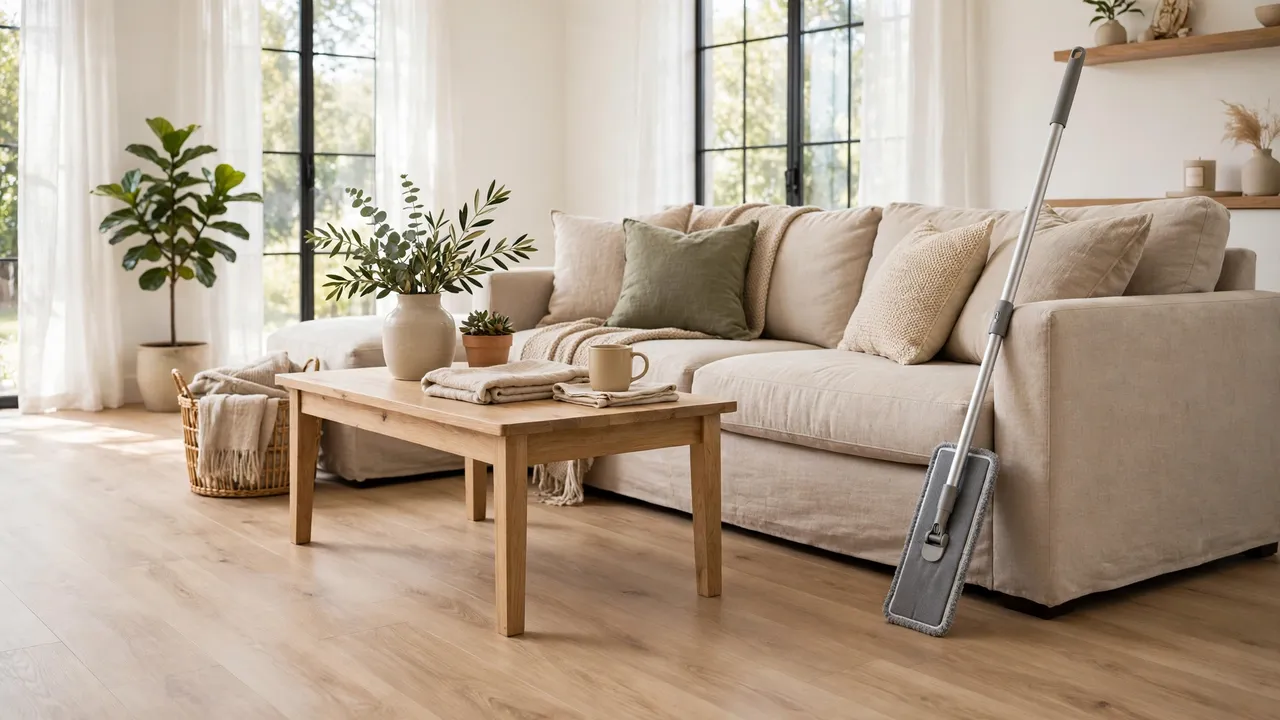
Laminate looks like wood, photographs like wood, and fools almost everyone — but it is a layered product: a clear wear layer over a printed picture of wood, on a fibreboard core that swells if it drinks water. That one fact explains every laminate rule. Water is the enemy, not dirt. The proper clean is therefore a mostly dry one: sweep or vacuum often, damp-mop rarely with a barely-wet microfibre mop, and dry as you go. Do that and a laminate floor stays streak-free and sharp for decades; soak it, steam it or wax it and the damage is permanent.
What you need
- Soft broom, dust mop, or vacuum with a hard-floor head (no beater bar)
- Microfibre flat mop (or a spray mop)
- pH-neutral laminate cleaner, or warm water alone
- A spray bottle for spot cleaning
- Dry microfibre cloths for buffing
- Felt pads for furniture feet
What laminate is — and why it streaks
| Layer | What it means for cleaning |
|---|---|
| Wear layer (clear, on top) | Tough against scratches, but residue and soap film sit on it visibly — that film is what "streaks" are. |
| Printed décor layer | Just an image. If the wear layer is scratched through or water gets under it, the picture is ruined. |
| Fibreboard (HDF) core | Absorbs water at seams and edges and swells — raised, peaked joints that never flatten again. |
How to clean laminate floors properly, step by step
Step 1: Dry-clean first — this is the real cleaning
Sweep, dust-mop or vacuum all grit away before any moisture. Grit under a mop scratches the wear layer, and grit in the seams holds moisture there. Vacuum on the hard-floor setting or with the beater bar off. Do this step several times a week in busy rooms — it matters more than mopping.
Step 2: Spot-clean spills and sticky marks first
Deal with spills, muddy prints and sticky spots with a cloth or mop pad dampened with water or laminate cleaner before you mop the whole floor. Spills should never sit: liquid that reaches a seam is absorbed by the core. Wipe, then dry the spot.
Step 3: Damp-mop — barely damp is the whole secret
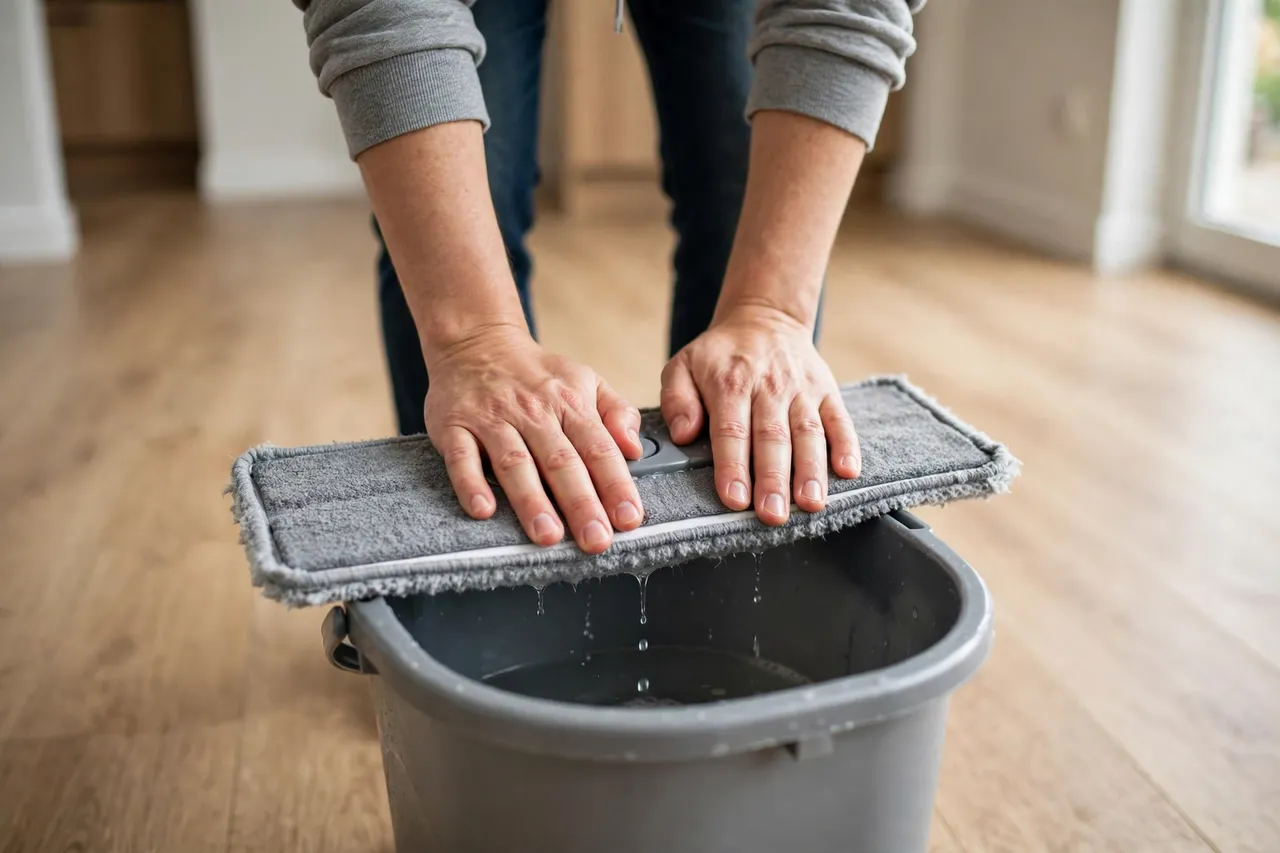
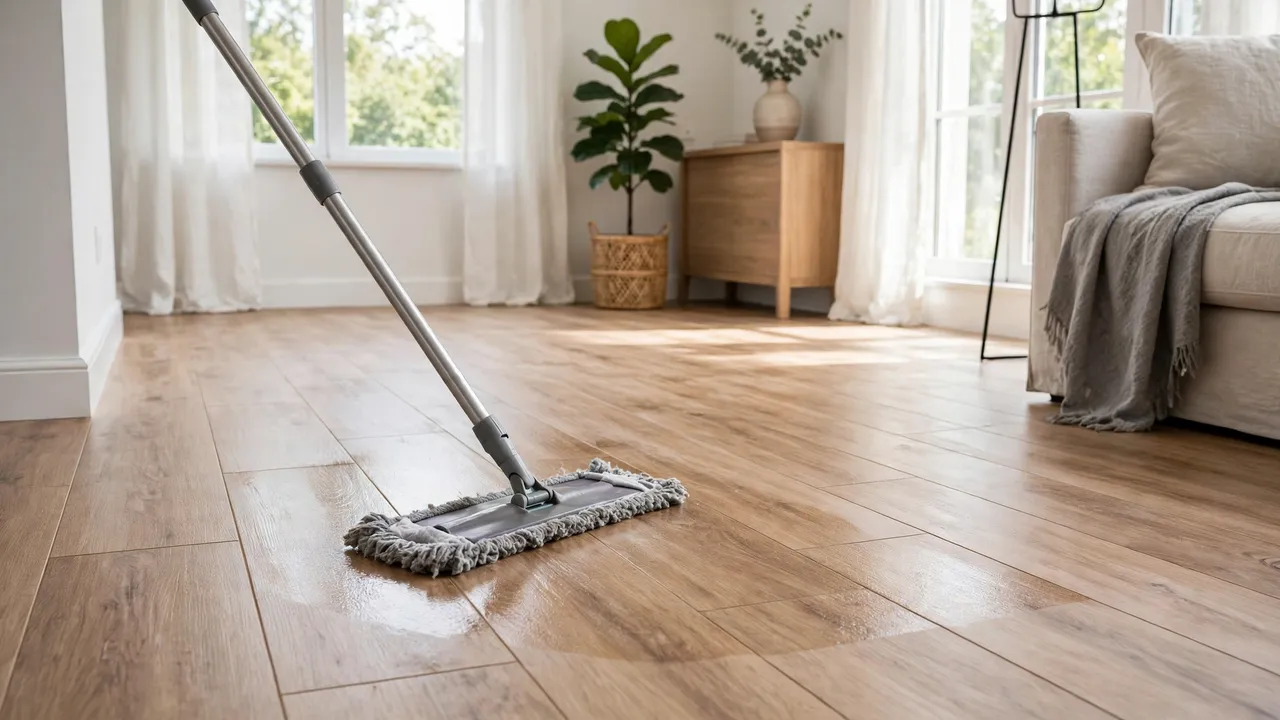
Wet the microfibre pad with warm water or a pH-neutral laminate cleaner and wring it until it is almost dry — if it drips, it is too wet. A spray mop, which mists the pad or the floor lightly, gives the best control. Mop along the planks in small sections, rinsing and re-wringing the pad often so you are not spreading dirty water (a top cause of streaks).
Step 4: No rinsing needed — if you used the right amount
pH-neutral laminate cleaners are made to dry without residue, so no rinse pass is needed. If you used dish soap (a few drops in a bucket of water at most), or the floor looks hazy, go over it once with a pad dampened in plain water to lift the film.
Step 5: Dry and buff as you go
Follow each section with a dry microfibre cloth or a second dry pad. This is the streak-killer: residue streaks form as water evaporates unevenly, and buffing removes the film before it can set. It also guarantees no moisture lingers at the seams.
How often?
- Dry clean: several times a week (daily by doors and in kitchens).
- Damp mop: every 2–4 weeks for most rooms, or when the dry clean stops restoring the look. Laminate needs far less wet cleaning than people think.
- Spills: immediately, always.
What never to use on laminate
- Steam mops: heat and pressurised moisture force water into the seams and swell the core; most makers void the warranty for steam.
- A soaking-wet mop or a bucket sloshed on: standing water is laminate's one true killer.
- Wax, polish and "shine" restorers: laminate's wear layer cannot absorb them; they build a dull, streaky coat that is miserable to remove.
- Oil soaps: the same dulling film problem.
- Bleach, ammonia and strong detergents: they attack and dull the wear layer.
- Abrasive pads, scouring powder, stiff brushes: they scratch the wear layer and let dirt and moisture in.
- Vinegar as a habit: heavily debated online; most laminate manufacturers advise against routine acidic cleaners because they can dull the finish over time. The pH-neutral route has no downside — prefer it.
Fixing common problems
- Streaks and haze: almost always cleaner residue or a dirty mop pad. Re-mop with plain warm water, a clean pad, and buff dry.
- White spots at a seam: moisture has reached the core — dry the area thoroughly and keep water away; swelling that has peaked will not flatten, so prevention is the only cure.
- Scuffs: a damp cloth with a little baking soda, rubbed gently; test melamine sponges in a hidden spot first — they are mildly abrasive.
- A dull patch where a rug sat: usually just a dirt contrast — clean the whole floor evenly rather than scrubbing the patch.
Habits that protect laminate
- Doormats and a shoes-off rule — grit is the wear layer's worst enemy.
- Felt pads on every furniture foot; lift, never drag, furniture.
- Trim pet nails and wipe paws in wet weather.
- No rubber-backed mats left damp on the floor — trapped moisture stains and swells.
- Plant pots on trays, pet bowls on a waterproof mat.
More floor care guides
Compare the other floors in this series — how to clean vinyl flooring, how to clean bamboo flooring and how to clean cork flooring. All four hate soaking; each hates it for a different reason.
Frequently asked questions
What is the best way to clean laminate floors without streaks?
Sweep or vacuum first, then mop with a microfibre pad that is barely damp, using warm water or a pH-neutral laminate cleaner. Rinse the pad often, work in small sections along the planks, and buff each section dry. Streaks are dried residue — less cleaner, a clean pad and dry buffing are the cure.
Can you use a steam mop on laminate flooring?
No. Steam drives moisture into the seams and swells the fibreboard core, and it voids most laminate warranties. Damp mopping cleans laminate fully without the risk.
Can I clean laminate with vinegar?
It is widely recommended online, but most laminate manufacturers advise against routine use of acidic cleaners because they can dull the wear layer over time. A pH-neutral laminate cleaner or plain warm water does the same job with no risk — that is the method this guide recommends.
Why does my laminate floor swell at the seams?
Water reached the fibreboard core through the joints — from a wet mop, a steam cleaner, a spill left sitting, or a leak. The core expands and the joint peaks. Drying stops it getting worse, but the swelling itself does not reverse; the affected planks must be replaced if it bothers you.
How often should laminate floors be mopped?
Less than you think: a damp mop every two to four weeks is enough for most rooms, backed by dry sweeping or vacuuming several times a week. Over-mopping is a leading cause of both streaks and seam damage.
Can laminate floors be waxed or polished to restore shine?
No. The wear layer is non-porous plastic; wax and polish sit on top as a streaky film and make the floor look worse. If the floor looks dull, remove residue with a plain-water damp mop and buff dry — the original shine is still underneath.
Sources
Method cross-checked against laminate manufacturers' care guidance (Pergo, Quick-Step and Bona: microfibre damp mopping, pH-neutral cleaners, no steam, no wax, dry immediately). Written in our own words for A Natural Day readers.

Written by
MD DOLAR HOSEN
Technology expert and the founder and author of A Natural Day. He tests and reviews everyday tech, gadgets, and home essentials, and writes practical buying gui…
Comments (0)
Join the discussion — sign in to leave a comment.
Sign in to commentNo comments yet. Be the first to share your thoughts.