How to Clean Vinyl Flooring: The Damp-Mop Method (and What Ruins It)
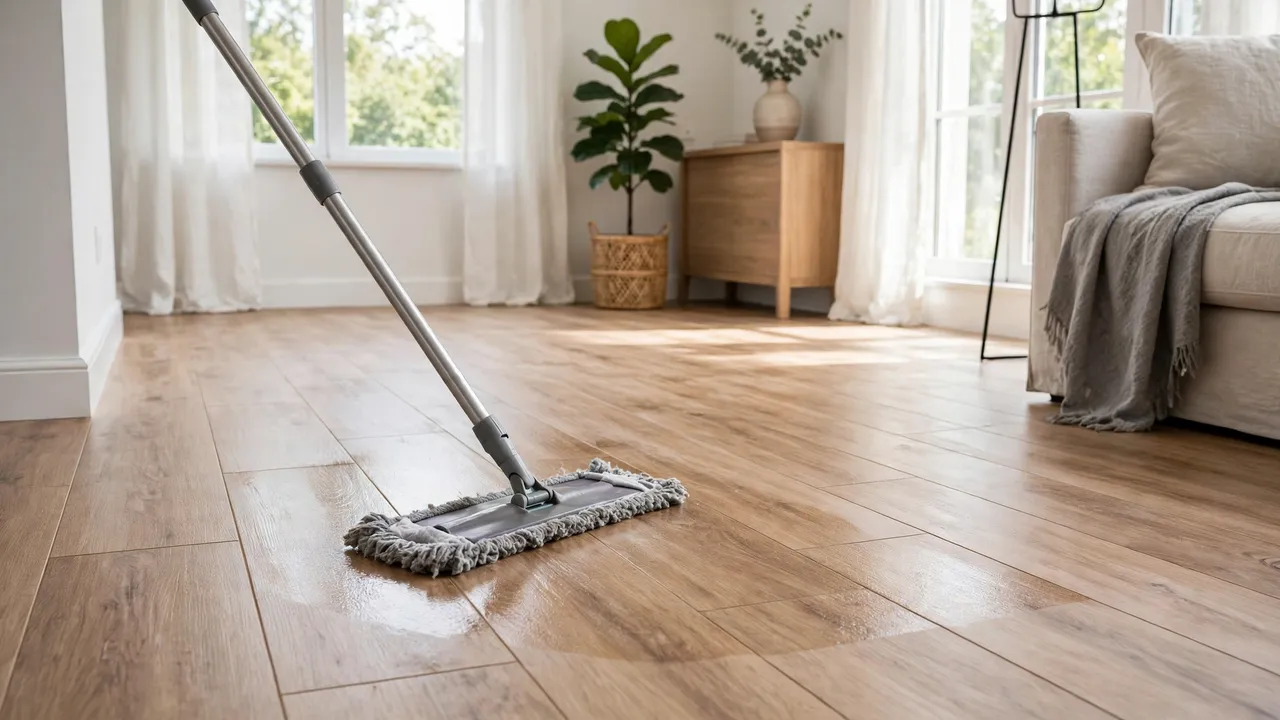
Vinyl flooring — sheet vinyl, luxury vinyl plank (LVP) and luxury vinyl tile — has a reputation for being indestructible. It is tough, but it is not carefree. Almost all vinyl damage comes from cleaning, not from use: steam forcing moisture into the seams, vinegar and ammonia dulling the wear layer, wax and "shine" products building a cloudy film, and grit left unswept scratching the surface like sandpaper. The right routine is short and cheap: dry-clean often, damp-mop with a pH-neutral cleaner, and keep water off the seams.
What you need
- Soft broom or a vacuum with a hard-floor head (no beater bar)
- Microfibre flat mop
- pH-neutral floor cleaner, or a few drops of clear dish soap
- Warm water and a spray bottle
- Soft cloths for spills and drying
- Felt pads for furniture feet
Know your vinyl
| Type | Cleaning note |
|---|---|
| Luxury vinyl plank / tile (LVP/LVT) | Many seams — water control matters most. Damp mop only, never wet. |
| Sheet vinyl | Few or no seams, so slightly more forgiving — but the wear layer still hates steam, acids and abrasives. |
| Glue-down vinyl | Heat and steam can soften the adhesive and lift edges — the strictest case for the no-steam rule. |
How to clean vinyl flooring, step by step
Step 1: Dry-clean first, every time
Sweep or vacuum up all loose grit before any mop touches the floor. Grit dragged under a mop is what scratches vinyl. Use a soft broom, a dust mop, or a vacuum on its hard-floor setting — a spinning beater bar can scuff the wear layer and push debris into the seams. In busy areas, this quick dry pass matters more than the mopping itself; do it several times a week.
Step 2: Mix a pH-neutral cleaner
Warm water with a pH-neutral floor cleaner made for vinyl, or a bucket of warm water with just three or four drops of clear dish soap. More soap is not better — excess soap leaves a film that makes the floor look dull and feel sticky, and attracts dirt faster. Never hot water: warmth is enough, and heat is vinyl's enemy.
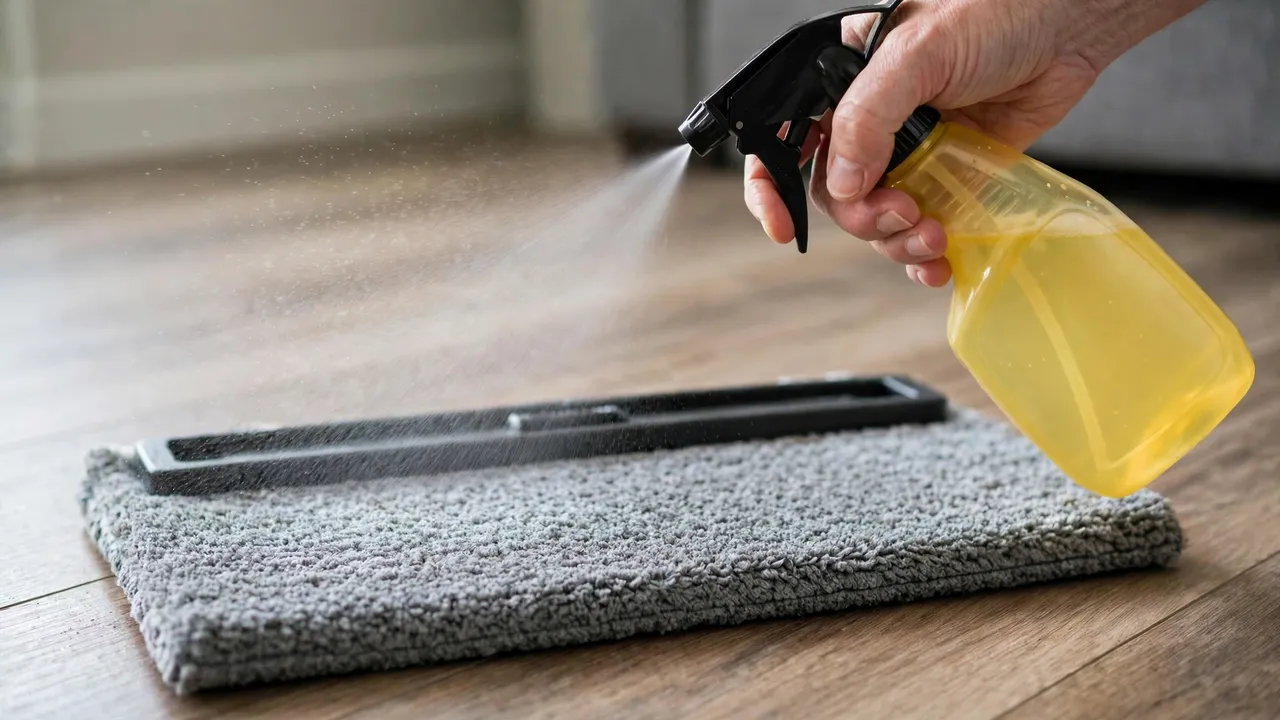
Step 3: Damp-mop — spray the mop, not the floor
The safest technique: spray the cleaner onto the microfibre mop pad, or wring the mop until it is barely damp and leaves no water trail. Mop along the planks, rinsing the pad often. If you can see water pooling anywhere, you are using too much — pooled liquid at the seams is the leading cause of lifting, swelling and mould under vinyl.
Step 4: Rinse only if the floor feels filmy
If you used soap and the floor feels slippery or looks hazy when dry, go over it once with a mop dampened in plain water. With the drops-of-soap method above, most floors will not need it.
Step 5: Dry as you go in wet-prone areas
In kitchens and bathrooms, buff the floor dry with a cloth or a dry mop pad as you finish each section. Vinyl itself resists water; its seams and edges do not.
Stains and marks
- Scuffs and heel marks: rub gently with a damp cloth and a little baking soda, or a melamine sponge used with a very light touch — melamine is a mild abrasive, so test in a hidden spot first.
- Dried food and sticky spills: warm soapy water on a cloth, laid on the spot for a few minutes, then wiped. Never flood the spot.
- Makeup and hairspray: a little shampoo on a soft cloth works surprisingly well; rinse and dry.
- Rust and set dye stains (hair dye, mustard): these can be permanent in vinyl. Blot fresh spills immediately — speed is the only reliable fix.
What never to use on vinyl flooring
- Steam mops: heat plus forced moisture swells seams, softens adhesive, degrades the wear layer — and voids most manufacturers' warranties.
- Vinegar as a routine cleaner: its acid slowly dulls and etches the wear layer. (Some older advice recommends it; modern LVP makers advise against it. Occasional spot use is low-risk, daily mopping is not.)
- Ammonia, bleach and "mop and shine" products: they degrade the surface or leave a wax film that clouds and builds up.
- Wax and polish: vinyl's factory wear layer needs no waxing — wax only adds a slippery, dirt-trapping coat.
- Oil soaps: they leave exactly the dulling film described above.
- Abrasive pads, scouring powders, stiff brushes: they scratch the wear layer open to dirt and moisture.
- A soaking-wet mop: the classic vinyl killer — water in the seams, lifting at the edges.
Habits that keep vinyl looking new
- Doormats at every entrance and a no-shoes habit — most grit arrives on soles.
- Felt pads under every furniture foot, checked and replaced as they wear; lift furniture, never drag it.
- Wipe spills promptly, especially sugary, oily or acidic ones, which can stain if left.
- Keep pet nails trimmed — vinyl resists scratches well, but claws are its main real-world threat.
- Shade strong sun where you can; years of direct UV can fade any flooring.
Mistakes that shorten a vinyl floor's life
- Steam mopping "for hygiene" — the damage is cumulative and often invisible until edges lift.
- Mopping with vinegar every week and wondering why the floor went dull.
- Skipping the dry sweep and wet-mopping grit across the surface.
- Leaving puddles around sinks, pet bowls and plant pots.
- Using shine products to fix dullness that is actually soap film — the fix is a plain-water rinse mop, not more product.
More floor care guides
Every floor type has its own rules — compare how to clean bamboo flooring and how to clean cork flooring, two floors that fear water even more than vinyl does.
Frequently asked questions
Can you steam mop vinyl plank flooring?
No. Steam forces heat and moisture into the seams, can soften the adhesive under glue-down planks, degrades the wear layer, and voids most manufacturer warranties. A barely-damp microfibre mop cleans vinyl just as well without the risk.
Is vinegar safe on vinyl floors?
Not as a routine cleaner. Vinegar is acidic, and repeated use dulls and can etch the wear layer. A pH-neutral cleaner — or warm water with a few drops of dish soap — is the safe everyday choice.
Why does my vinyl floor look dull or cloudy?
Usually product build-up: too much soap, oil soap, or wax and "shine" products leaving a film. Mop once or twice with plain warm water to strip the film; if the dullness remains, the wear layer itself may have been etched by acidic or ammonia cleaners.
How often should I mop vinyl flooring?
Dry-sweep or vacuum several times a week in busy areas, and damp-mop about once a week — more often in kitchens, less in bedrooms. The dry cleaning does most of the protective work.
Can I use a regular vacuum on vinyl plank?
Yes, on the hard-floor setting or with the beater bar switched off. A spinning beater bar can scuff the wear layer and flick grit into the seams. Soft-roller hard-floor heads are ideal.
Does vinyl flooring need waxing?
No. Modern vinyl has a factory wear layer that needs no wax or polish. Wax products only build a slippery film that traps dirt and is hard to remove.
Sources
Method cross-checked against vinyl flooring manufacturers' care guidance (pH-neutral cleaners, damp mopping only, no steam, no vinegar/ammonia/wax, beater-bar caution). Written in our own words for A Natural Day readers.

Written by
MD DOLAR HOSEN
Technology expert and the founder and author of A Natural Day. He tests and reviews everyday tech, gadgets, and home essentials, and writes practical buying gui…
Comments (0)
Join the discussion — sign in to leave a comment.
Sign in to commentNo comments yet. Be the first to share your thoughts.