How to Clean Bamboo Flooring Without Damaging the Finish
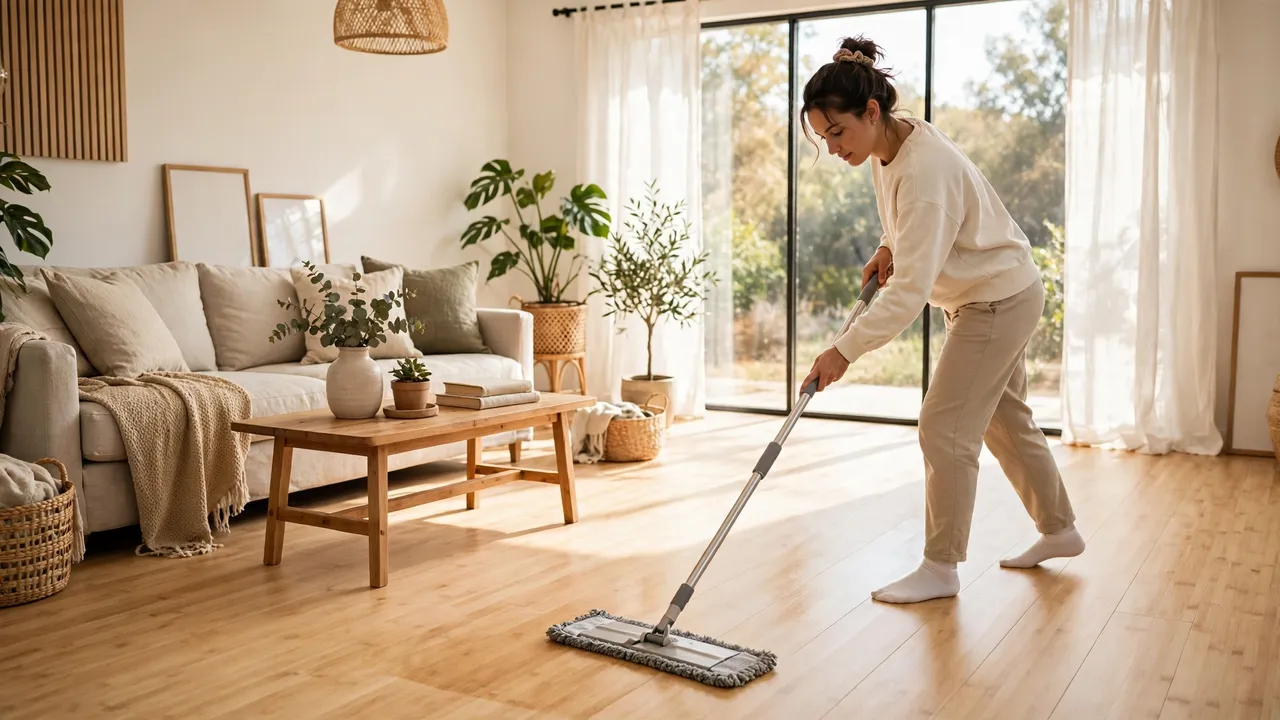
Bamboo flooring looks like hardwood, but it is not wood — it is a grass, pressed into planks and sealed with a hard factory finish. That finish is what you actually clean, and it is pickier than most people expect. The two rules that matter most: very little water, and a pH-neutral cleaner. The internet's favourite floor cleaner, vinegar, is exactly what bamboo makers tell you to avoid.
Follow the routine below and a bamboo floor keeps its shine for years. Break the rules — a soaking mop, a steam cleaner, the wrong spray — and the finish dulls, the planks swell at the edges, and the warranty may not cover it.
What you need
- Soft-bristle broom or a vacuum with a hard-floor head (beater bar off)
- Flat microfibre mop
- pH-neutral cleaner made for bamboo or hardwood floors
- Microfibre cloths
- Felt pads for furniture legs, and mats for doorways
Know your bamboo floor type
| Type | How it looks | Cleaning note |
|---|---|---|
| Horizontal | Wide strips with visible bamboo "knuckle" nodes | Standard gentle care |
| Vertical | Narrow strips, fine striped look | Standard gentle care; softer than strand-woven |
| Strand-woven | Dense, wood-like grain; the hardest type | Tolerates a firmer scrub on stuck dirt |
| Carbonised | Rich brown colour from heat treatment | Softer and easier to dent and stain — be extra gentle, wipe spills fastest here |
One more check before you clean: if your floor has a waxed or oiled finish instead of the usual polyurethane coating, it needs its maker's own care products. The routine below is for the common polyurethane-finished floors.
How to clean bamboo flooring, step by step
Step 1: Sweep or vacuum the grit away
Grit is the floor's real enemy. Sand and dirt under shoes act like sandpaper and scratch the finish a little more every day. Sweep with a soft broom along the grain, or vacuum with a hard-floor attachment and the rotating beater bar switched off. Do this daily in busy areas, and always before any mopping — mopping over grit just grinds it in.
Step 2: Deal with spots and scuffs first
Before the mop comes out, treat marks while you can see them. Heel scuffs usually lift with a dry microfibre cloth or a little cleaner on a cloth, rubbed gently. Sticky spots (jam, gum) harden with an ice cube in a bag, then lift off with a plastic scraper. Never use a scouring pad or steel wool.
Step 3: Damp-mop with a barely damp mop
Spray the pH-neutral cleaner onto the mop pad, not onto the floor, or dip the mop and wring it until it is barely damp — it should not drip when you lift it. Mop in small sections, following the grain. Standing water is the enemy: it seeps into the seams between planks and makes the edges swell and lift.
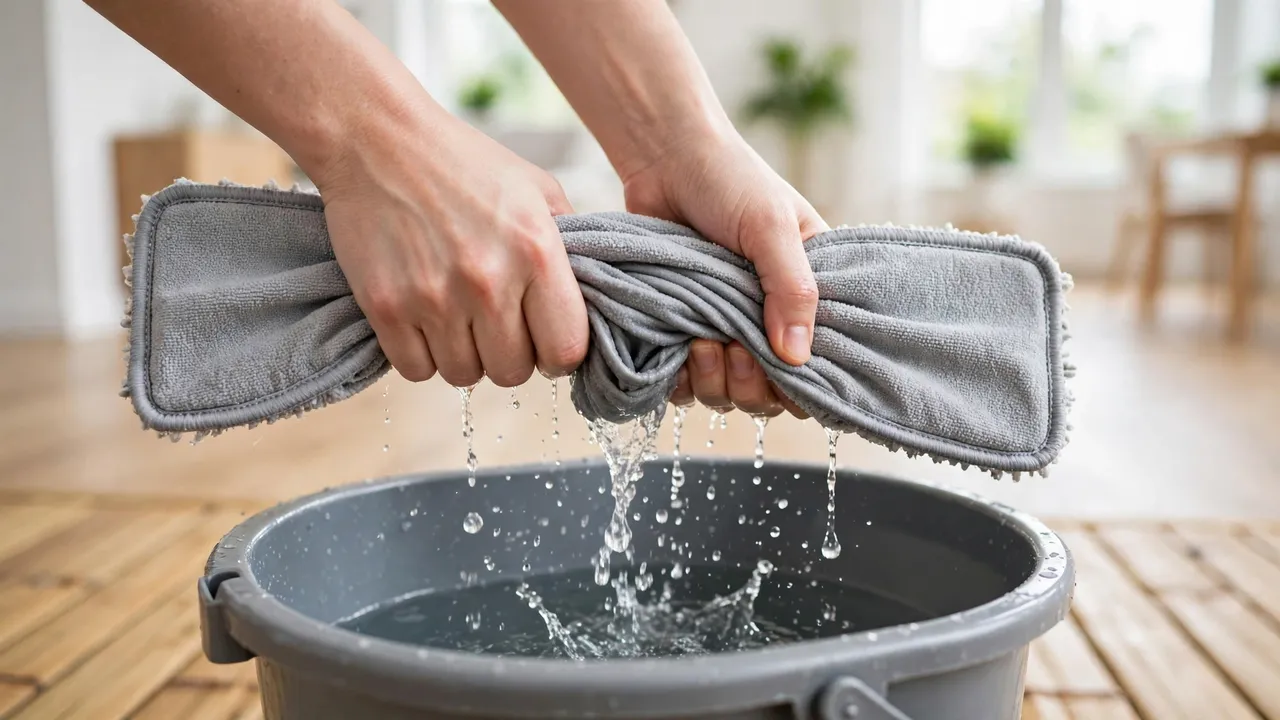
Step 4: Dry as you go
Follow each section with a dry microfibre cloth, or simply make sure the mop was dry enough that the floor is dry within a minute or two. A floor left damp after every clean slowly loses its finish. Never "wet mop" bamboo the way you would tile.
Step 5: Wipe spills the moment they happen
Water, pet accidents and drinks should be blotted up at once with a dry or slightly damp cloth, then dried. Liquid left sitting finds the seams. This one habit prevents most bamboo floor damage.
What never to use on bamboo flooring
- Vinegar and acidic cleaners: acid slowly dulls and eats the protective finish. Most bamboo makers exclude them in their care instructions.
- Steam mops: steam forces moisture deep into the seams and can crack the finish and warp planks. Makers warn against them by name.
- Wax and oil soaps: they leave a film that dulls the floor and makes future refinishing difficult.
- Ammonia-based and all-purpose cleaners: too harsh for the finish and can discolour the floor.
- A soaking-wet mop: the most common cause of swollen, cupped planks.
How often to clean
- Daily: sweep or vacuum high-traffic areas.
- Weekly: damp-mop with the pH-neutral cleaner.
- At once: every spill, every time.
- Yearly: check felt pads and doorway mats; replace worn ones before they let grit through.
Protect the floor between cleans
- Keep indoor humidity around 35–50%. Bamboo moves with moisture in the air; a humidifier in dry winters and ventilation in wet summers prevent gaps and swelling.
- Felt pads under every furniture leg, and lift — never drag — furniture across the floor.
- Mats at every outside door to catch grit before it reaches the floor.
- Keep pet nails trimmed and wipe wet paws at the door.
- Use rugs in the busiest paths, with a breathable rug pad (solid rubber pads can trap moisture).
Mistakes that ruin bamboo floors
- Cleaning it like tile — buckets of water and a dripping mop.
- Trusting vinegar because it is "natural". Natural does not mean finish-safe.
- Vacuuming with the beater bar on. The rotating brush scratches the finish with every pass.
- Leaving spills "for later". Seams soak up liquid faster than you think.
- Skipping the sweep before mopping. You end up scrubbing the floor with its own dirt.
More floor and home care
Different floors need different rules — our guide on how to clean shower tiles shows the same identify-first approach for tile, and how to clean a leather couch covers the furniture sitting on your floor.
Frequently asked questions
Can I use vinegar on bamboo flooring?
No. Vinegar is acidic, and repeated use dulls and weakens the polyurethane finish that protects the bamboo. Flooring makers advise against it, and using it can void the warranty. A pH-neutral bamboo or hardwood cleaner is the safe choice.
Can I use a steam mop on bamboo floors?
No. Steam drives moisture into the seams between planks and can cause swelling, cupping and finish damage. Major bamboo brands warn against steam mops for exactly this reason.
Why does my bamboo floor look hazy or streaky after mopping?
Usually too much cleaner, a mop that was too wet, or residue from an oil soap or wax product used before. Damp-mop with plain water and a well-wrung microfibre mop to lift residue, then return to a small amount of pH-neutral cleaner.
Is bamboo flooring harder than hardwood?
Strand-woven bamboo is harder than many hardwoods, including red oak. Natural horizontal and vertical bamboo are similar to oak, and carbonised bamboo is softer. Hardness helps with dents, but the finish still scratches under grit — which is why daily sweeping matters.
How do I remove a dark pet stain from bamboo?
Blot fresh accidents at once. For a set stain, clean the spot with your pH-neutral cleaner on a cloth and let it dry fully. Dark stains that have soaked through the finish into the bamboo itself usually cannot be cleaned off — they need a flooring professional to sand and refinish that section.
Can bamboo floors be refinished?
Solid and strand-woven bamboo can usually be sanded and refinished by a professional, depending on the wear-layer thickness. Thin engineered wear layers may allow only a light recoat. Check your maker's guidance before booking the work.
Sources
Method cross-checked against manufacturer care guidance for bamboo flooring (including Bona and major bamboo brands: pH-neutral cleaners only, no vinegar, no steam, minimal water) and Bob Vila's bamboo floor care guide. Written in our own words for A Natural Day readers.

Written by
MD DOLAR HOSEN
Technology expert and the founder and author of A Natural Day. He tests and reviews everyday tech, gadgets, and home essentials, and writes practical buying gui…
Comments (0)
Join the discussion — sign in to leave a comment.
Sign in to commentNo comments yet. Be the first to share your thoughts.