How to Clean Cork Flooring: The Damp-Mop Method and When to Reseal
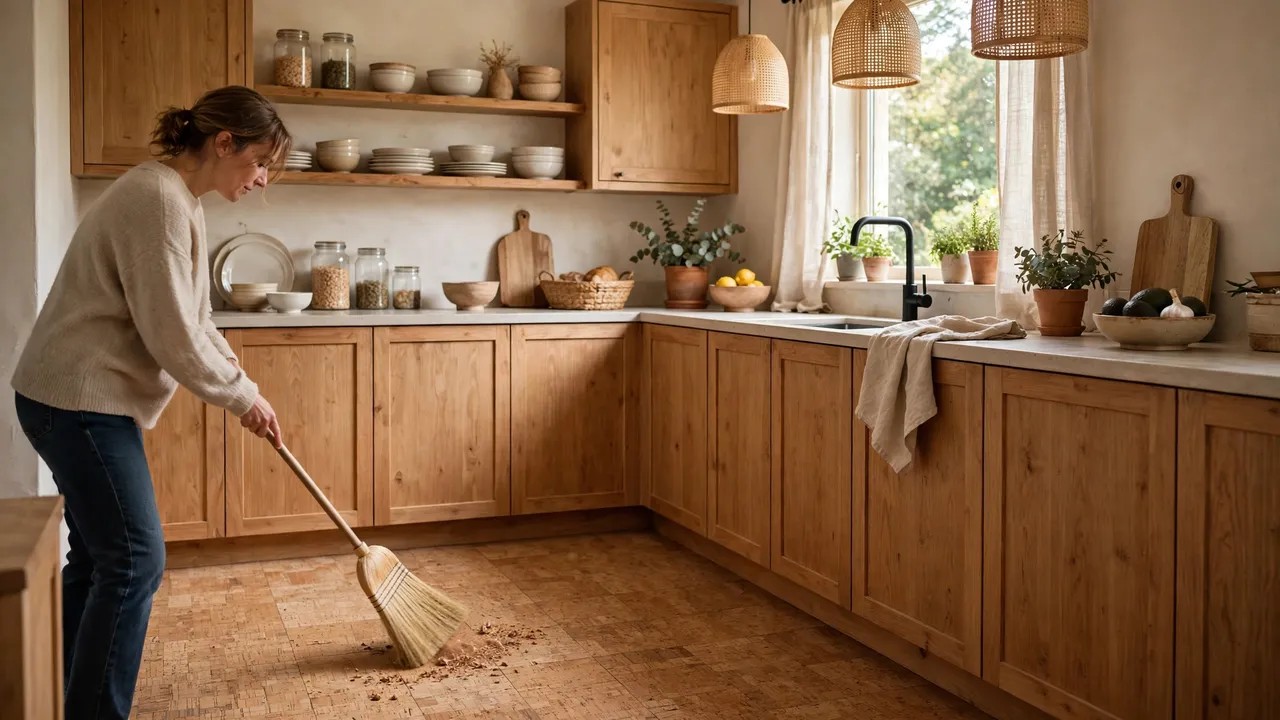
Cork flooring is soft, warm and quiet underfoot — and easier to damage than almost any other floor. Cork is made from pressed bark granules, and it behaves like what it is: a natural sponge with a thin protective seal on top. Too much water swells the joints. The wrong cleaner dulls the seal. A steam mop can undo the floor in one session.
The safe routine is short: sweep often, damp-mop with a well-wrung mop and a pH-neutral cleaner, wipe spills at once, and reseal the floor when water stops beading on it. Here is each step in order.
What you need
- Soft-bristle broom or dust mop
- Vacuum with a hard-floor setting (beater bar off)
- Flat microfibre mop
- pH-neutral cleaner made for cork or sealed wood floors
- Soft cloths
- Felt pads and doorway mats
- Cork floor sealant or maintenance wax (for resealing, when needed)
First: is your cork floor sealed or unsealed?
Most modern cork floors come pre-sealed with a polyurethane-style finish. That seal slows water and stains, but it does not make the floor waterproof. Older solid cork tiles may be wax-finished or unsealed, and water soaks into those much faster.
Quick test: place a few drops of water on a hidden corner. If the drops bead and sit on the surface, the seal is intact. If they soak in and darken the cork within a minute or two, the floor is unsealed — or the seal has worn thin and needs renewing.
| Floor | Water rule | Cleaner rule |
|---|---|---|
| Sealed cork (polyurethane finish) | Damp mop only; no standing water | pH-neutral cork or sealed-wood cleaner |
| Wax-finished cork | Damp mop only, even less water | Wax-safe products only; maintain with wax coats |
| Unsealed cork | Blot stains with a barely damp cloth; avoid mopping | Dry methods first; seal the floor as soon as you can |
How to clean cork flooring, step by step
Step 1: Clear and sweep the floor
Pick up rugs, shoes and clutter, then sweep with a soft broom or dust mop, or vacuum on the hard-floor setting. Never use a beater bar. Grit under shoes works like sandpaper on the seal, and grit trapped under furniture legs scratches every time the furniture shifts.
Step 2: Mix a gentle cleaner
Add a pH-neutral cleaner made for cork or sealed wood to warm water, following the label. More cleaner is not better — excess product leaves a residue film that attracts dirt and turns the floor sticky and dull.
Step 3: Wring the mop until it is only just damp
This is the step that decides everything. Dip the microfibre mop, then wring it hard. If the floor looks wet behind your mop, wring it again. Cork seams drink standing water, and swollen seams never fully flatten again.
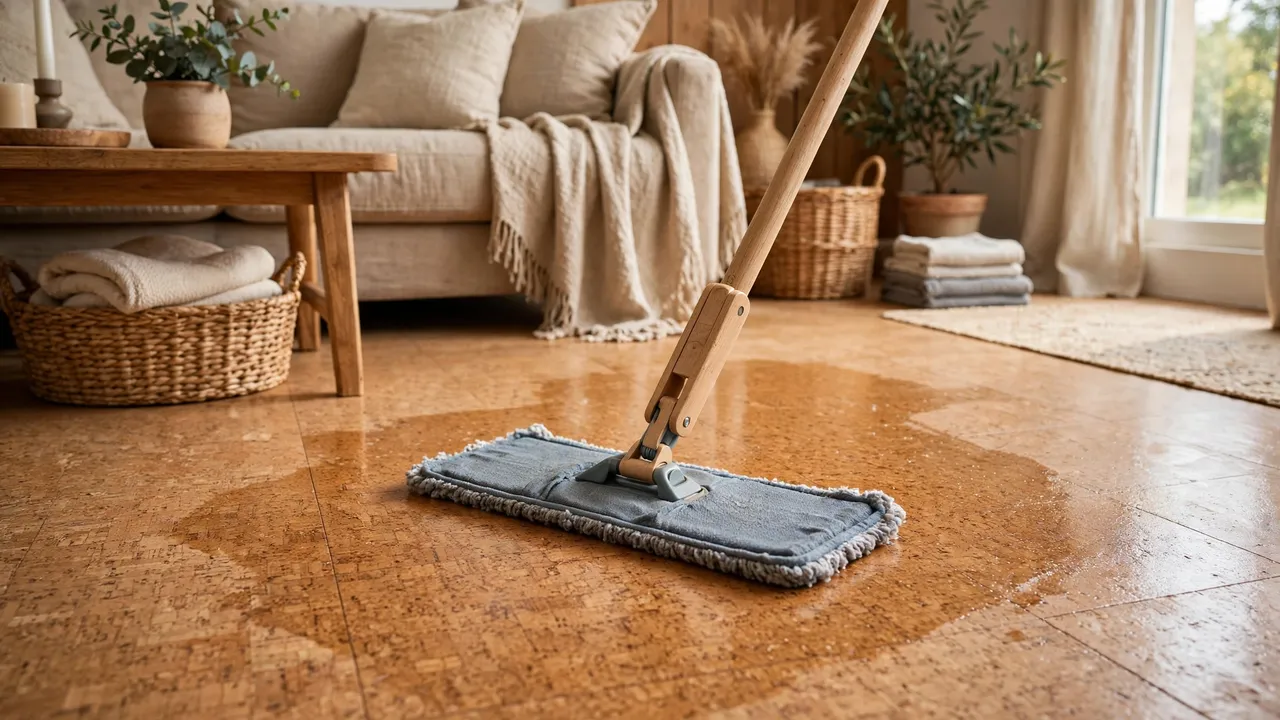
Step 4: Mop in sections, then dry
Work in small sections from the far corner towards the door. Follow with a dry cloth in busy areas, or check that each section dries within a few minutes. Never leave puddles to "air dry" on cork.
Step 5: Treat stains the gentle way
- Water marks and light dirt: wipe with a cloth dampened in your cleaner mix, then dry at once.
- Grease or oil: cover the spot with baking soda or cornstarch for a few hours to draw the oil out, sweep it up, then wipe.
- Scuffs: rub gently with a soft cloth; a tennis ball over the mark also works on heel scuffs.
- Set stains: work slowly with the pH-neutral cleaner and patience. A stronger chemical is more likely to strip the seal than the stain.
What never to use on cork flooring
- Steam mops: heat and moisture push water into the cork and under the seal, swelling the floor and lifting edges. Makers warn against them.
- A soaking mop or standing water: the fastest way to swollen, rough joints.
- Vinegar as a regular cleaner: acid dulls the seal over time. It is not the safe "natural" choice here.
- Ammonia-based and harsh all-purpose cleaners: they attack the seal and the cork beneath it.
- Oil soaps and wax build-up products on sealed cork: they coat the floor and can stop a future seal coat from bonding.
- Abrasive pads and stiff brushes: cork is soft; they tear the surface instead of cleaning it.
How often to clean — and when to reseal
- Several times a week: sweep or dust-mop. Cork rewards frequent dry cleaning.
- Weekly: damp-mop with the pH-neutral cleaner.
- At once: wipe every spill, especially near seams.
- Every 3–5 years (or when the water test fails): reseal. When water stops beading and starts soaking in, the protective coat is worn. Clean the floor fully, let it dry, and apply a fresh cork-compatible sealant as the product directs — or refresh a wax finish with a maintenance wax coat.
Protect cork between cleans
- Felt pads under all furniture legs, and lift furniture instead of dragging it — cork dents under point loads.
- Mats at doorways and a no-shoes habit for grit.
- Trim pet nails and wipe wet paws.
- Shade sunny spots: strong sunlight fades cork unevenly, so curtains or a rug in bright patches help.
- Keep humidity steady (roughly 40–60%) so the floor does not shrink or swell with the seasons.
Mistakes that ruin cork floors
- Treating cork like tile — wet mopping with plenty of water.
- Reaching for the steam mop "just once". Once is enough.
- Skipping the sweep and mopping grit into the seal.
- Ignoring a worn seal. Once water soaks in freely, every clean does damage until the floor is resealed.
- Dragging heavy furniture without pads or sliders.
More floor care guides
Every natural floor has its own rules. See how to clean bamboo flooring for bamboo's version of the barely-damp method, and how to clean shower tiles for the wet rooms of the house.
Frequently asked questions
What is the best cleaner for cork flooring?
A pH-neutral, residue-free cleaner made for cork or sealed wood floors, used with a well-wrung microfibre mop. Avoid vinegar, ammonia-based sprays and oil soaps, which dull or coat the seal.
Can you steam clean cork flooring?
No. Steam forces moisture into the cork and under its seal, causing swelling, lifted edges and finish damage. A damp mop is the safe method.
How do I know when my cork floor needs resealing?
Do the water-drop test: if drops soak in and darken the cork instead of beading on the surface, the seal has worn thin. Most cork floors need resealing every 3 to 5 years, sooner in kitchens and hallways.
Is cork flooring good with pets?
It is comfortable and quiet for pets, and its soft surface hides small marks well. But claws can scratch the seal and accidents must be wiped at once, because liquid left on seams swells the floor. Mats under water bowls are a smart move.
Can cork flooring go in a kitchen or bathroom?
Kitchens, yes, with care — spills wiped fast and the seal kept in good shape. Bathrooms are risky: constant splashing and standing water are exactly what cork handles worst. If it is already installed, keep the seal fresh and dry the floor after every use.
How do I fix a dent in cork flooring?
Cork's springy cells recover from light dents on their own over a few days. For a deeper dent, gentle steam from a kettle held above the spot (not a steam mop on the floor) can help the cells expand back — test in a hidden area first, and keep the moisture brief.
Sources
Method cross-checked against cork flooring manufacturer care guidance (pH-neutral cleaners, damp mopping only, no steam, reseal when water stops beading) and established flooring-care references. Written in our own words for A Natural Day readers.

Written by
MD DOLAR HOSEN
Technology expert and the founder and author of A Natural Day. He tests and reviews everyday tech, gadgets, and home essentials, and writes practical buying gui…
Comments (0)
Join the discussion — sign in to leave a comment.
Sign in to commentNo comments yet. Be the first to share your thoughts.