Hard Boiled Eggs in an Air Fryer: 270°F, Easy-Peel Every Time
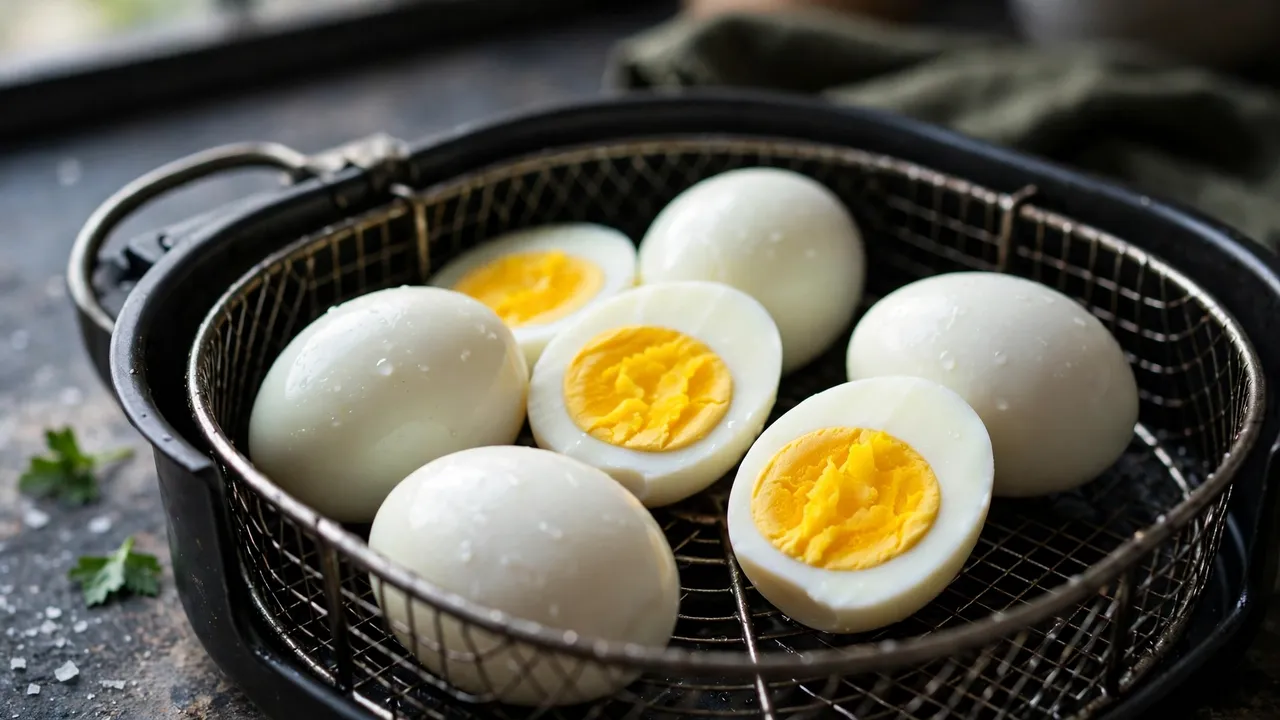
Hard boiled eggs in an air fryer are not really boiled at all — the eggs cook in their shells in dry, gentle heat, with no pot, no water to bring to the boil, and no eggs cracking against each other. Set the air fryer to 270°F, cook large fridge-cold eggs for 15–17 minutes for fully hard yolks, then move them straight into an ice bath. That cold shock is the whole peeling secret: it stops the cooking and loosens the membrane, so the shells come away cleanly.
What you need
- Large eggs, straight from the fridge (as many as fit in one layer — 6–12 in most baskets)
- A bowl of ice water, ready before the eggs finish
- Tongs or a spoon
The yolk chart (all at 270°F)
| Style | Time | Yolk | Ice bath |
|---|---|---|---|
| Soft | 9–11 min | Set white, runny yolk | 5 min |
| Jammy | 11–13 min | Custardy, fudgy centre | 5 min |
| Medium-hard | 13–15 min | Mostly set, moist centre | 5–10 min |
| Hard | 15–17 min | Fully set, firm yolk | 5–10 min |
Why 270°F and not hotter? At this gentle heat the white sets gradually and stays tender instead of turning rubbery, and the yolk cooks through evenly without the grey-green ring that marks an overcooked egg. Hotter settings cook the outside faster than the centre and raise the odds of cracked shells. Stay in the 250–270°F band for eggs in the shell.
Step by step
Step 1: Load the basket
Place the cold eggs in a single layer in the basket with a little space between them. Single layer matters — stacked eggs cook unevenly. No water, no oil, nothing else goes in.
Step 2: Set 270°F and your time
Most recipes skip preheating for eggs: the gentle heat-up is part of why they peel well. Set 270°F (132°C) and the time for your style from the chart — 15–17 minutes for classic hard boiled.
Step 3: Prepare the ice bath while they cook
Fill a bowl with ice and cold water so it is ready the second the timer ends. A roomy bowl matters for a big batch — crowded eggs cool slowly and keep cooking.
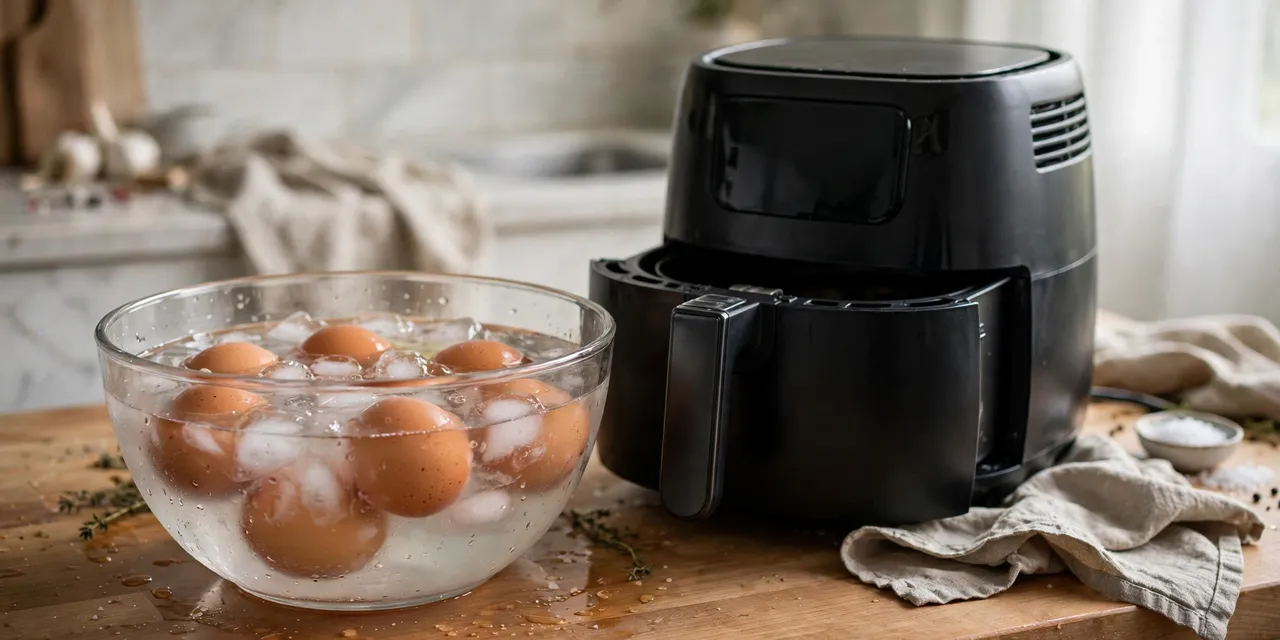
Step 4: Shock the eggs
The moment the timer ends, move the hot eggs straight into the ice bath with tongs and leave them at least 5 minutes — up to 10 for hard eggs. Do not skip or shorten this: it stops the carryover cooking exactly where you set it and makes the shells release.
Step 5: Peel from the wide end
Tap the wider end of the egg — that is where the air pocket sits — then roll it gently to crack the shell all over. Peel under a thin stream of water or in the bowl; the water slips under the membrane and the shell should come away in large pieces.
First batch? Calibrate
Every air fryer runs a little hot or cool, so treat your first batch as a test. Cook one egg at your target time, ice it, slice it, and check the yolk. Too soft or too firm, adjust the next batch by a minute either way and note your machine's number — after that, it is repeatable every time. The chart assumes large, fridge-cold eggs; room-temperature or extra-large eggs shift the times slightly.
Peeling rules that actually matter
- Older eggs peel better. Eggs that are a week or so old release their shells far more easily than farm-fresh ones. For a big batch you plan to peel, buy the eggs ahead.
- The ice bath is not optional. It is doing two jobs — stopping the cooking and loosening the membrane. Lukewarm water does neither properly.
- Peel under water when a shell does stick; the water gets under the membrane and lifts it off the white instead of tearing it.
- Storage: unpeeled eggs keep about 7 days in the fridge, peeled about 5. Writing the cook date on the shell with a pencil saves guessing.
Air fryer or stovetop?
The air fryer wins on hands-off convenience: no pot to watch, no boil to time, and it is just as easy to cook two eggs as twelve. The stovetop wins for very large batches and for cooks who already have their water timing memorised. The eggs themselves come out the same — tender whites, the yolk exactly where you set it — as long as the ice bath happens either way.
More air fryer recipes
Next in the basket: grilled cheese in an air fryer and baked potatoes in an air fryer.
Frequently asked questions
How long do hard boiled eggs take in an air fryer?
15–17 minutes at 270°F for large, fridge-cold eggs with fully set yolks, followed by at least 5 minutes in an ice bath. Softer styles take less: 9–11 minutes for soft, 11–13 for jammy, 13–15 for medium-hard — all at the same 270°F.
What temperature is best for eggs in an air fryer?
270°F (132°C) is the standard, and the safe band is 250–270°F. The gentle heat sets the white without making it rubbery and cooks the yolk evenly. Hotter settings cook the outside too fast, risk cracked shells, and can leave the centre behind.
Do air fryer eggs really peel easily?
Usually yes — often more easily than stovetop eggs, because the dry heat helps the membrane separate from the white. Two things still decide it: the ice bath (never skip it) and the age of the eggs (week-old eggs peel better than very fresh ones).
Do you need to preheat the air fryer for eggs?
Most recipes say no, and some specifically advise against it — eggs going into a cold basket heat up gently, which helps the peeling. If your model runs cool and your test egg comes out underdone, a short preheat or an extra minute fixes it.
Why did my yolks turn grey-green?
That ring means the eggs overcooked or cooled too slowly — the classic cause is skipping or shortening the ice bath, so carryover heat kept cooking the yolk. Move the eggs into ice water the moment the timer ends and give them the full 5–10 minutes.
Can eggs explode in an air fryer?
Whole eggs in the shell do not explode at these temperatures — the shell vents pressure as it heats. Cracks can happen if the temperature is far too high or an egg already had a hairline crack. Stay at 250–270°F and discard any egg with a cracked shell before cooking.
Sources
Times and temperatures cross-checked against published air fryer egg guides (250–270°F band, 9–17 minute yolk chart, mandatory ice bath, peel-from-the-wide-end method). Written in our own words for A Natural Day readers.

Written by
MD DOLAR HOSEN
Technology expert and the founder and author of A Natural Day. He tests and reviews everyday tech, gadgets, and home essentials, and writes practical buying gui…

Comments (0)
Join the discussion — sign in to leave a comment.
Sign in to commentNo comments yet. Be the first to share your thoughts.