How to Clean Window Tracks: The Baking Soda Method That Reaches the Corners
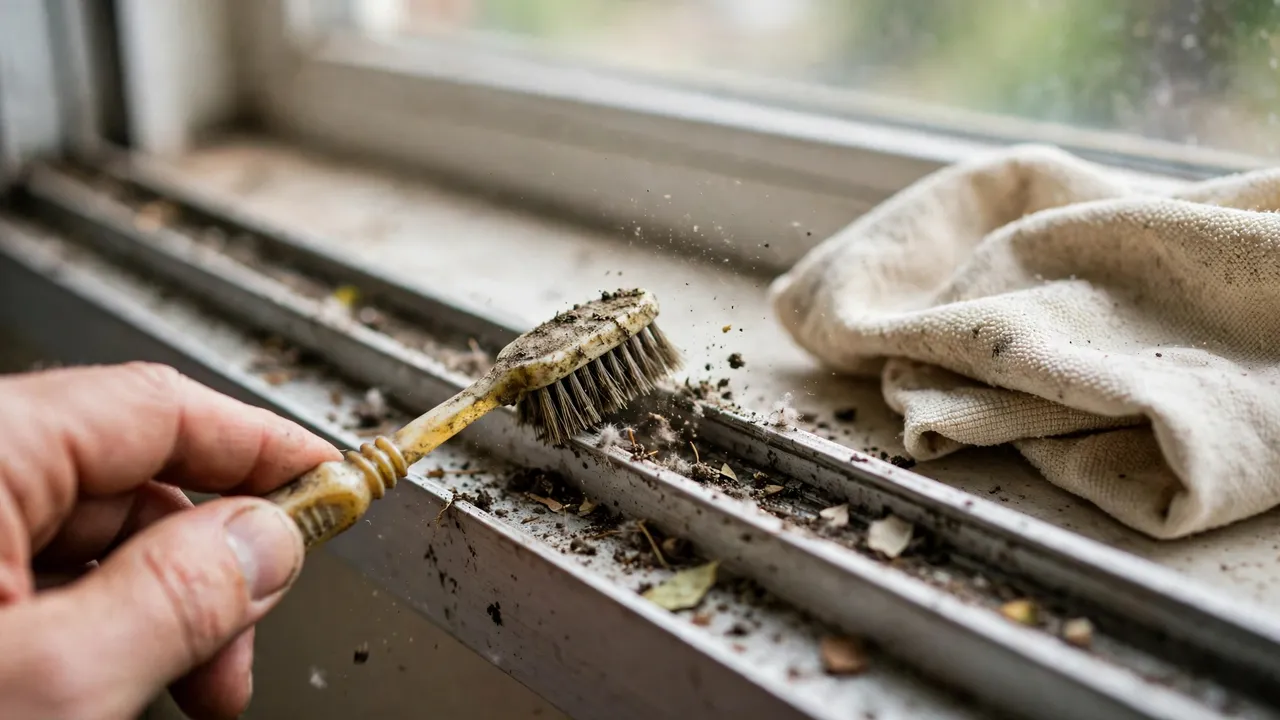
Window tracks collect everything: dust, pollen, dead insects, and a black gritty paste that rain and condensation glue into the grooves. They look awful up close and they matter more than they look — clogged tracks hold moisture against the frame, grow mould in the corners, and block the weep holes that are supposed to drain water out of the window. The clean itself is simple and cheap: dry dirt out first, a baking soda and vinegar fizz to loosen the crust, a toothbrush, and a cloth-wrapped butter knife for the corners. About fifteen minutes per window.
What you need
- Vacuum with a crevice tool (or a dry paintbrush)
- Baking soda — about 2–3 tablespoons per window
- White vinegar in a spray bottle (1:1 with warm water, plus a drop of dish soap if you like)
- Old toothbrush or a slim track brush
- Butter knife and a thin cloth or paper towels
- Cotton buds for the tightest corners
- Microfibre cloths
How to clean window tracks, step by step
Step 1: Open the window and vacuum the dry dirt out
Open the window fully (and slide sliding doors wide). Run the crevice tool along every groove, then brush with a dry toothbrush or paintbrush and vacuum again. This step is not optional: wetting loose dust turns it into a dark sludge that smears everywhere and is twice the work to remove.
Step 2: Sprinkle baking soda along the track
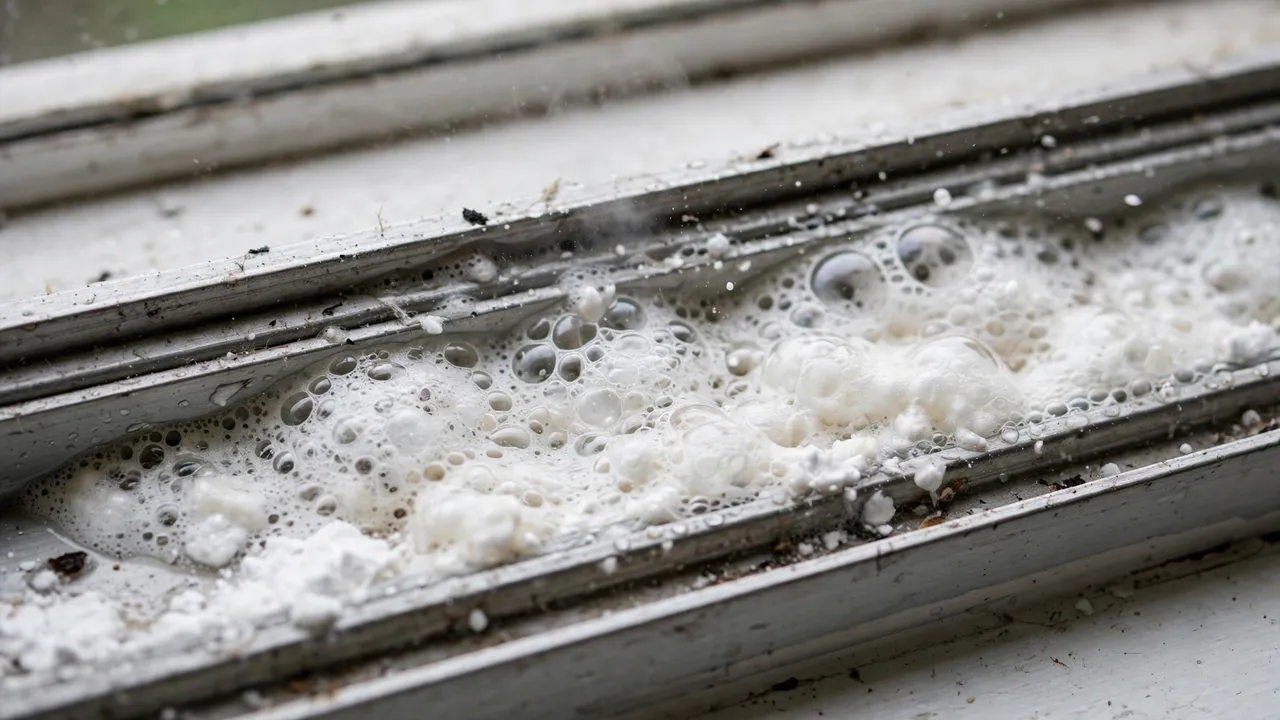
Shake a thin, even line of baking soda the length of the track, with a little extra in the corners and on dark, sticky patches. Baking soda is mildly abrasive and lifts the greasy film that binds the dirt, without scratching vinyl or aluminium.
Step 3: Spray with vinegar and let it fizz
Mist the baking soda with the vinegar solution until it is damp all along. It will fizz — that reaction helps loosen grime from the edges of the grooves. Leave it 5–10 minutes: five for light dust, the full ten for a dark crust. For truly caked tracks, cover the damp paste with plastic wrap and leave it 30 minutes to 2 hours; the film keeps the paste wet so it can soften what a quick fizz cannot.
Step 4: Scrub the grooves
Work along each groove with the toothbrush in short strokes, sweeping the loosened muck toward the centre of the track as you go. Use cotton buds for the corners the brush cannot reach.
Step 5: The butter-knife trick for corners
Wrap a thin cloth or folded paper towel around the tip of a butter knife, dampen it, and push it right into each corner and along the narrowest channels, twisting as you go. This simple tool reaches the spots that defeat every brush.
Step 6: Wipe, rinse-wipe and dry
Lift the dirty paste out with paper towels first, then wipe the whole track with a damp microfibre cloth, then a clean damp cloth to rinse away residue, and finish dry. Leaving the track wet invites the next layer of dirt to stick faster.
Step 7: Check the weep holes
Most window frames have small drainage slots at the bottom outside edge — weep holes. They let water escape from the frame; clogged ones trap water inside it, which damages framing and insulation over time. Clear them gently with a pipe cleaner or cotton bud, then test: pour a little water into the track and watch it drain out. Keep paste and plastic wrap away from them while you clean.
Sliding door tracks
Same method, bigger scale: vacuum thoroughly (door tracks collect gravel-like grit), baking soda and vinegar as above, scrub, wipe dry. If the door still drags afterwards, the problem is usually grit under the rollers or worn rollers, not dirt on the surface. For a smooth glide after cleaning, wipe a small amount of silicone lubricant on a cloth along vinyl tracks — avoid grease and oil sprays, which trap more dirt.
Black mould spots in the corners
Dark spots that survive the scrub are usually mould growing in the damp corners. The vinegar spray is a reasonable first treatment: soak the spot, leave 10 minutes, scrub, wipe. Keep the track dry afterwards and check the weep holes — persistent mould almost always means water is sitting where it should drain. Never mix vinegar with bleach (the combination releases dangerous chlorine gas); pick one product, not both.
Mistakes to avoid
- Wetting the track before vacuuming — you manufacture sludge.
- Flooding the track with water. Everything here is sprayed or damp-wiped; poured water finds the frame's interior and the wall below.
- Scrubbing with abrasive pads or harsh chemicals. Window makers specify non-abrasive cloths and mild soap for a reason — scratched vinyl and aluminium collect dirt faster forever after.
- Sealing or blocking the weep holes with paste, film or sealant.
- Vinegar on stone sills. Keep acidic sprays off marble and limestone sills, and test on painted or wooden frames first.
- Forcing a stuck window instead of cleaning the track — you bend hardware and crack trim.
How often?
A full clean twice a year — spring and autumn — keeps tracks easy: each clean is quick when the last one was recent. A 30-second vacuum pass whenever you clean the glass stops the worst build-up between deep cleans.
More home cleaning guides
Tracks are one of the forgotten spots — so are the heaters behind the furniture: see how to clean baseboard heaters and how to clean shower mold for the bathroom's version of the same problem.
Frequently asked questions
What is the easiest way to clean window tracks?
Vacuum the dry dirt out with a crevice tool, sprinkle baking soda along the track, spray it with a 1:1 vinegar-and-water mix, wait 5–10 minutes, scrub with an old toothbrush, dig the corners out with a cloth wrapped around a butter knife, then wipe and dry. About fifteen minutes per window.
Why do people put baking soda on window tracks?
Baking soda is a mild abrasive and deodoriser that lifts the greasy film binding dirt into the grooves. Sprayed with vinegar it fizzes, which helps loosen crust from the edges. Covered with plastic wrap, the damp paste keeps working for up to two hours on caked-on grime.
How do I clean the corners of window tracks?
Wrap a thin cloth or paper towel around the tip of a butter knife, dampen it with your cleaning solution, and push it into the corner, twisting as you go. Cotton buds work for the very tightest spots. Brushes alone rarely reach the corners.
What are weep holes and should I clean them?
Weep holes are the small drainage slots at the bottom of the window frame that let water escape. Yes — clear them gently with a pipe cleaner and test them by pouring a little water into the track; it should run out. Clogged weep holes trap water inside the frame and cause hidden damage.
Can I use this method on sliding door tracks?
Yes — the same vacuum, baking soda, vinegar, scrub and dry sequence works on sliding door tracks. Afterwards, a wipe of silicone lubricant on vinyl tracks helps the door glide; avoid grease, which traps grit.
How do I remove black mould from window tracks?
Spray the spot with the vinegar solution, leave it 10 minutes, scrub with the toothbrush and wipe clean. Then keep the track dry and make sure the weep holes drain — mould returns when water sits in the track. Never mix vinegar with bleach.
Sources
Method cross-checked against window manufacturer care guidance (Milgard: non-abrasive cloths, mild cleaners, keep weep holes clear) and professional cleaning practice (vacuum first, baking soda and vinegar dwell, butter-knife corner method). Written in our own words for A Natural Day readers.

Written by
MD DOLAR HOSEN
Technology expert and the founder and author of A Natural Day. He tests and reviews everyday tech, gadgets, and home essentials, and writes practical buying gui…


Comments (0)
Join the discussion — sign in to leave a comment.
Sign in to commentNo comments yet. Be the first to share your thoughts.