How to Clean Quartzite Countertops: Not Quartz — Natural Stone Care
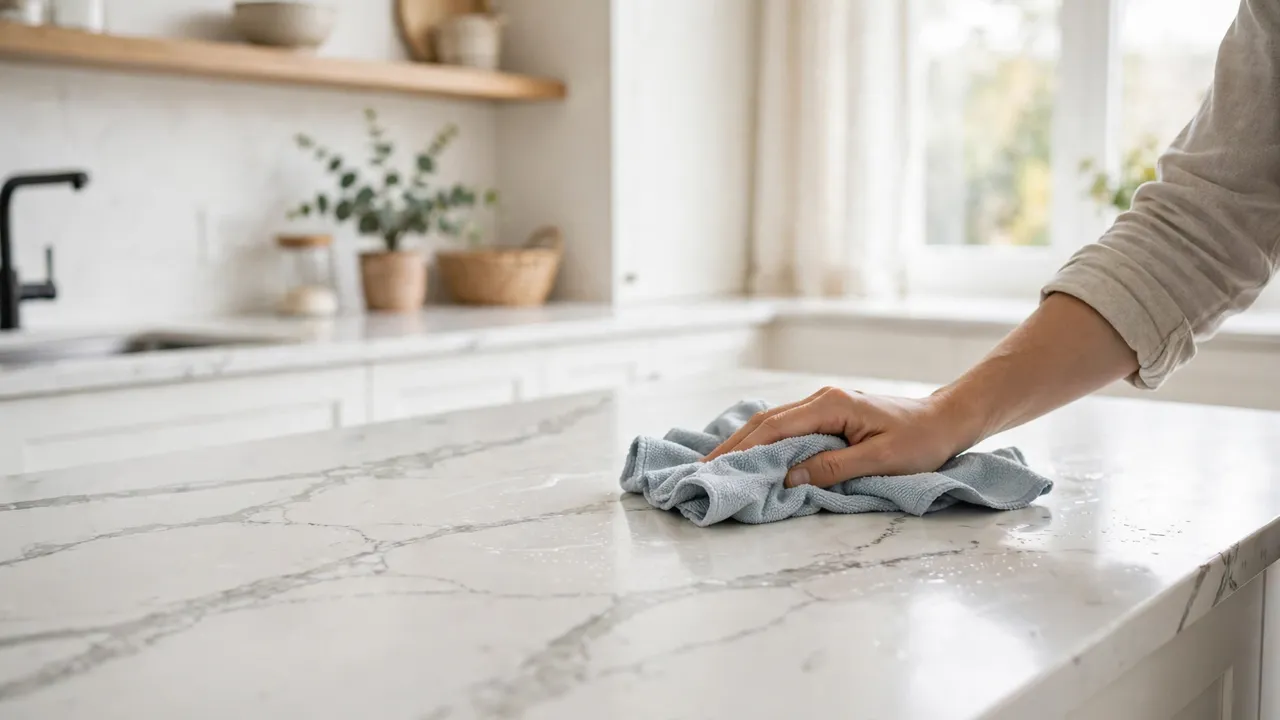
Quartzite is not quartz. That one mix-up causes most of the damage done to these counters. Quartz is a manufactured slab — ground stone in resin, non-porous, almost no care needed. Quartzite is a natural stone, quarried from the earth, and while it is genuinely hard — harder than granite — it is porous like other natural stones and needs sealing and gentle cleaning.
Treat quartzite like the natural stone it is, and it will outlast your kitchen. Treat it like bulletproof engineered quartz, and stains and dull spots will teach you the difference. Here is the routine that matches the real material.
What you need
- Soft microfibre cloths
- pH-neutral cleaner made for natural stone, or mild dish soap
- Warm water
- Penetrating (impregnating) stone sealer
- Baking soda and plastic wrap (for stain poultices)
- Trivets and cutting boards
Quartzite vs quartz: the difference that decides the cleaning
| Quartzite (natural) | Quartz (engineered) | |
|---|---|---|
| What it is | Metamorphic stone, formed from sandstone under heat and pressure | Ground quartz bound with polymer resin |
| Porous? | Yes, varies by slab | No |
| Sealing | Yes — every 1–3 years by the water test | Never |
| Cleaners | pH-neutral only; acids and harsh sprays can dull and strip sealer | More forgiving (check maker's guidance) |
| Heat | Handles heat well; still use trivets as a habit | Resin can scorch — trivets essential |
| Hardness | Mohs 7–8 — harder than granite, resists scratches | Hard, but resin can mark |
One more wrinkle: some stones sold as "quartzite" are actually softer, marble-like stones (dolomitic varieties). True quartzite barely reacts to acid; a mislabelled slab etches like marble. If your counter dulls suspiciously easily around lemon and vinegar, that may be why — and the gentle routine below protects both kinds.
How to clean quartzite countertops, step by step
Step 1: Clear crumbs and wipe spills at once
Sweep crumbs off with a dry cloth. Then the golden rule: wipe spills when they happen. A sealer buys you time — minutes to an hour — but quartzite stays porous underneath, and oil, wine and coffee left sitting will find their way in.
Step 2: Wash with a pH-neutral cleaner
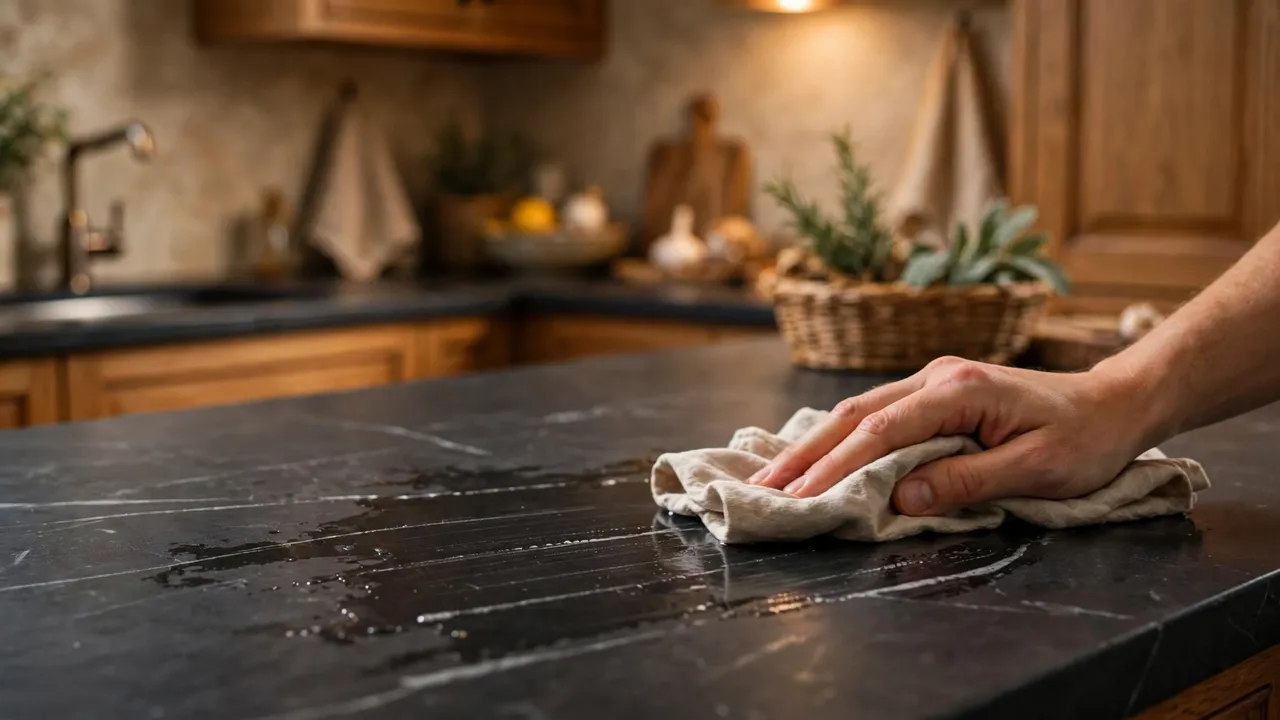
Spray a pH-neutral stone cleaner, or wipe with warm water carrying a drop or two of mild dish soap. Use a soft microfibre cloth and cover the whole surface. Keep soap quantities small — residue is the main cause of streaks.
Step 3: Rinse with clean water
Go over the counter with a cloth dampened in plain water to remove cleaner film. Skipping the rinse is why natural stone counters look hazy even when they are clean.
Step 4: Dry and buff
Dry the surface fully with a clean cloth. Standing water around the sink is the fastest way to wear a sealer down in one spot, and hard water leaves mineral marks as it dries.
Sealing: the water test decides
Quartzite needs a penetrating sealer — the kind that soaks into the pores and protects from below the surface without changing the stone's look. How often depends entirely on your slab: dense quartzites absorb slowly and may go two or three years; softer, more porous slabs may need sealing every year.
Do the water test once a year. Pour a small puddle of water on the counter and watch it for 10–15 minutes. If it still beads and the stone beneath has not darkened, the sealer is doing its job. If the stone darkens within two to four minutes, water is soaking in — reseal now.
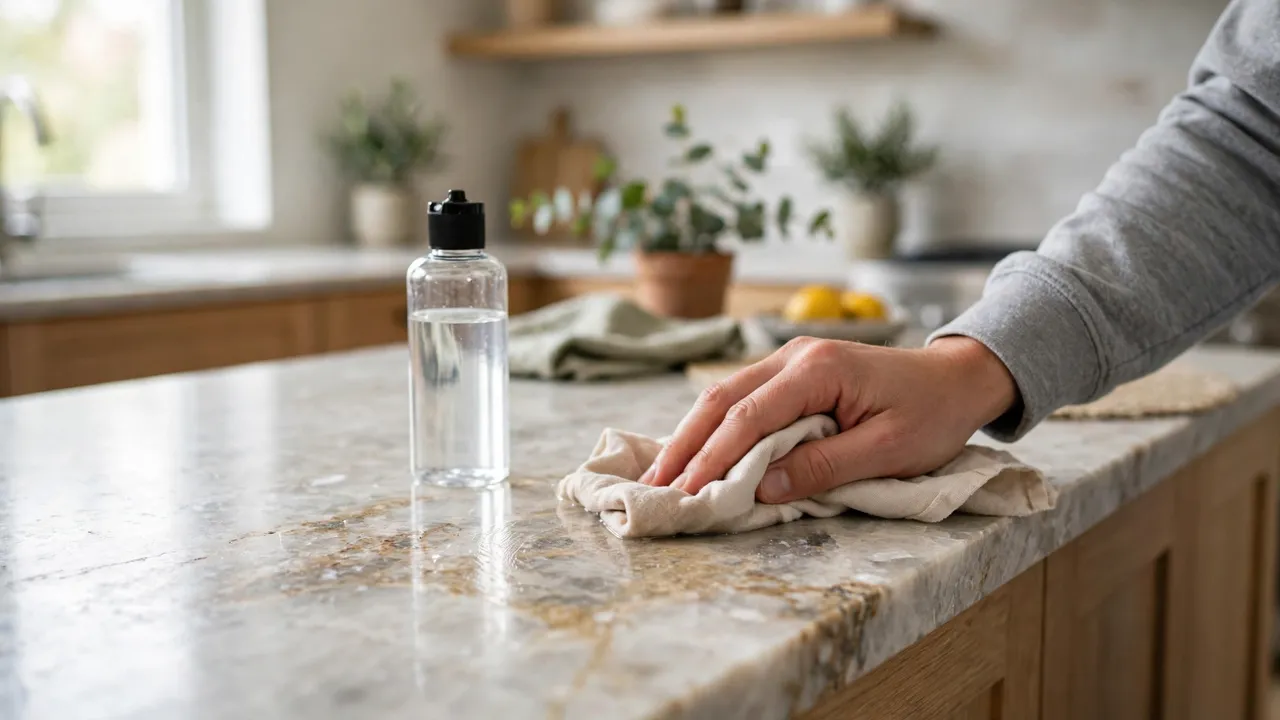
Sealing is a manageable DIY job of about an hour: clean the counter fully, let it dry, apply the penetrating sealer evenly with a cloth, let it soak in as the label directs (usually 15–30 minutes), and buff off every trace of excess so it cannot dry sticky on the surface.
Stains and dull spots
- Oil and organic stains: use a poultice — baking soda mixed with a little water into a thick paste, spread over the stain, covered with plastic wrap and left 24 hours. As it dries it draws the stain out of the pores. Repeat for older stains.
- Dull spot that feels smooth: usually sealer wear or cleaner residue in one area, not true etching. Wash, rinse, dry; if the spot stays dull, that patch needs resealing.
- Dull spot that feels rough or catches a fingernail: that is real etching — the surface itself has reacted, which happens on carbonate-bearing or mislabelled slabs. It cannot be washed off; a stone professional can re-polish the spot.
What never to use on quartzite
- Vinegar, lemon and citrus cleaners: acid dulls the finish, strips sealer, and etches any carbonate veins in the slab.
- Ammonia glass cleaners and bleach sprays: they degrade the sealer and can discolour the stone with repeated use.
- Abrasive pads, scouring powders, steel wool: quartzite is hard, but the polish and sealer are not — scratches collect grime.
- Strong alkaline degreasers and oven cleaner: too harsh for the sealer; a pH-neutral cleaner handles kitchen grease with a little dwell time.
- Generic "all-surface" sprays not labelled for natural stone.
Daily habits that protect the stone
- Blot spills in minutes, especially oil, wine, coffee and anything acidic.
- Cutting boards always — knives rarely scratch quartzite itself, but they dull fast on it, and dragged grit scratches the sealer.
- Trivets under hot pans as a habit: quartzite handles heat well, but sudden thermal shock on a cold slab is a needless risk.
- Coasters under oil bottles and glasses near the stove and sink, where sealer wears fastest.
- Test the sealer every year on the calendar, not when a stain reminds you.
Mistakes quartzite owners make
- Believing it is quartz and cleaning it with anything in the cupboard.
- Never sealing it, because "the salesman said maintenance-free". That was the other material.
- Leaving the red wine ring until morning. Sealed stone gives you time, not immunity.
- Scrubbing a stain harder instead of using a poultice and time.
- Skipping the rinse, then blaming the stone for a soapy haze.
More stone care guides
Every stone in the kitchen plays by different rules — compare how to clean granite countertops and how to clean soapstone countertops, the stone that needs no sealing at all.
Frequently asked questions
Is quartzite the same as quartz?
No. Quartzite is a natural metamorphic stone that is porous and needs sealing. Quartz is an engineered product of ground stone and resin that is non-porous and never needs sealing. The similar names cause endless confusion — check which one you actually have before choosing cleaners.
How often should quartzite be sealed?
Test once a year with the water test and reseal when water darkens the stone within a few minutes. In most kitchens that works out to every 1–3 years; softer, more porous slabs may need it annually.
What is the best cleaner for quartzite countertops?
A pH-neutral cleaner labelled for natural stone, or warm water with a drop of mild dish soap — rinsed and dried. Avoid vinegar, citrus cleaners, ammonia sprays, bleach and anything abrasive.
Does quartzite etch?
True quartzite is very acid-resistant and etches rarely. But slabs containing carbonate minerals or veins can etch, and some stones sold as quartzite are actually marble-like and etch easily. A dull, rough-feeling spot after an acidic spill is an etch; a smooth dull spot is usually sealer wear.
Can I put hot pans on quartzite?
Quartzite is one of the most heat-tolerant countertop stones, and a hot pan will usually do no harm. A trivet is still wise: extreme sudden temperature change can stress any natural stone, and hot oily pans can leave marks that soak in.
How do I remove a dark stain from quartzite?
With a baking soda poultice: thick paste on the stain, covered with plastic wrap for 24 hours, then wiped, rinsed and dried. Repeat for deep stains. If the mark is roughness rather than colour, it is an etch, not a stain, and needs professional re-polishing.
Sources
Method cross-checked against Natural Stone Institute and stone-fabricator guidance for quartzite (natural stone, penetrating sealer every 1–3 years by water test, pH-neutral cleaners, quartzite vs quartz distinction). Written in our own words for A Natural Day readers.

Written by
MD DOLAR HOSEN
Technology expert and the founder and author of A Natural Day. He tests and reviews everyday tech, gadgets, and home essentials, and writes practical buying gui…
Comments (0)
Join the discussion — sign in to leave a comment.
Sign in to commentNo comments yet. Be the first to share your thoughts.