How to Clean Leather Shoes: The 15-Minute Brush, Condition and Polish Routine
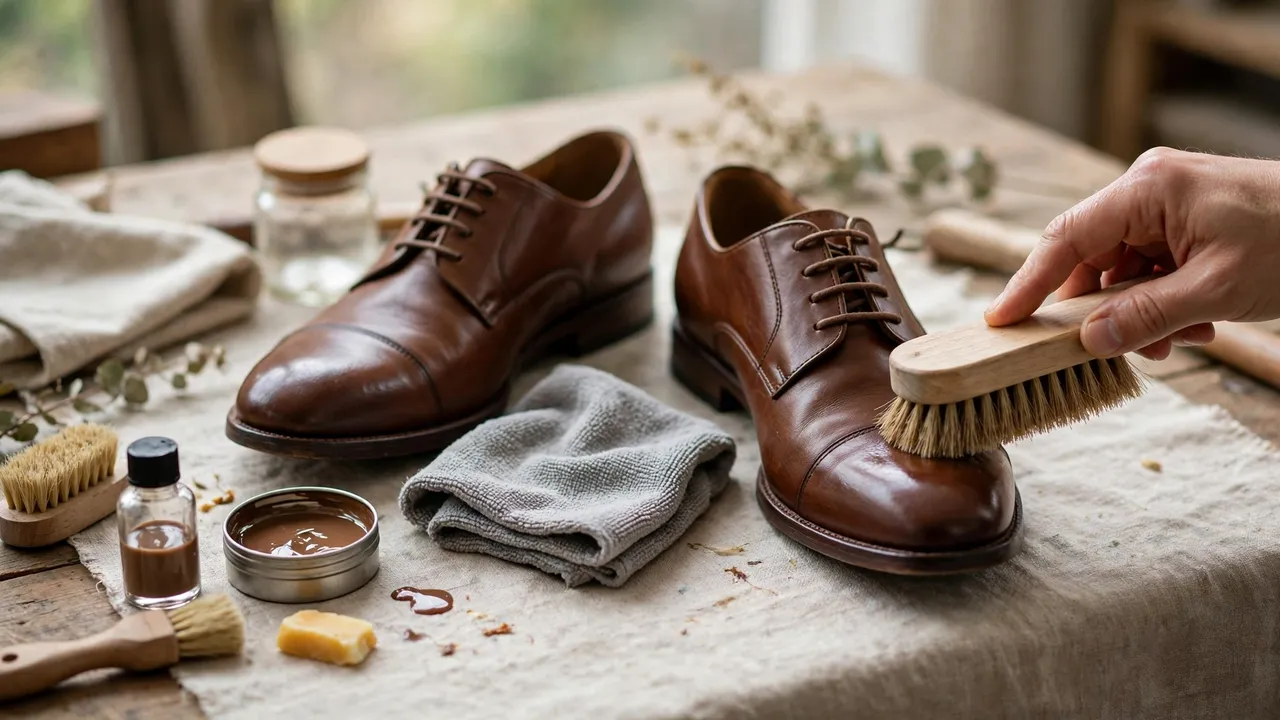
Leather shoes do not wear out from walking — they wear out from dirt, dryness and heat. The fix is a fifteen-minute routine every few weeks: brush, wipe, dry, condition, polish. Do it in that order and a good pair of leather shoes can look smart for a decade. Skip it, and the leather dries, cracks at the flex points, and no polish will bring it back.
This guide covers smooth leather shoes and boots. Suede and nubuck are different materials with different rules — they are covered briefly at the end, because the wet methods below would ruin them.
What you need
- Horsehair brush
- Two soft cloths
- Saddle soap or a leather cleaner (for a deep clean)
- Leather conditioner or shoe cream in your shoe's colour (or neutral)
- Wax polish (for shine and water resistance)
- Cedar shoe trees
- Newspaper or an old towel to work on
Cream vs wax: know the difference first
| Product | What it does | Where it goes |
|---|---|---|
| Conditioner / leather lotion | Replaces the oils leather loses; keeps it supple and stops cracking | Whole shoe, thin coat |
| Shoe cream | Feeds the leather and restores colour; soft shine | Whole shoe |
| Wax polish | Sits on the surface for gloss and water resistance | Toe and heel only — the parts that do not flex |
If you buy only one product, buy the cream. Wax over dry, unfed leather just seals in the dryness.
How to clean leather shoes, step by step
Step 1: Unlace and dry-brush
Take the laces out so you can reach the tongue and eyelets. Put shoe trees in if you have them — they hold the shoe's shape while you work. Brush the whole shoe with the horsehair brush, working into the welt and seams where grit collects. This step always comes first: grit left on the leather gets dragged under your cloth and scratches it.
Step 2: Wipe, or wash with saddle soap
For light dirt, wipe the uppers with a cloth barely damp with water, in small circles. Damp, never wet. For ground-in dirt or layers of old polish, work a little saddle soap into a light lather on the damp cloth and clean the whole shoe, then wipe all the soap off with a second clean damp cloth. Residue left behind dries the leather out.
Step 3: Let them dry slowly
Rest the shoes at room temperature, away from radiators, heaters and direct sun. Heat is leather's enemy — it cracks and discolours it. Slow drying never harmed a shoe; forced drying ruins them. Stuff wet shoes loosely with newspaper and give them a full day.
Step 4: Condition the leather
Apply a thin, even coat of conditioner or shoe cream with a cloth, in small circles, over the whole upper. A pea-sized amount per shoe is usually enough. Leave it 10–15 minutes to sink in, then brush off the excess. The leather should look fed, not greasy.
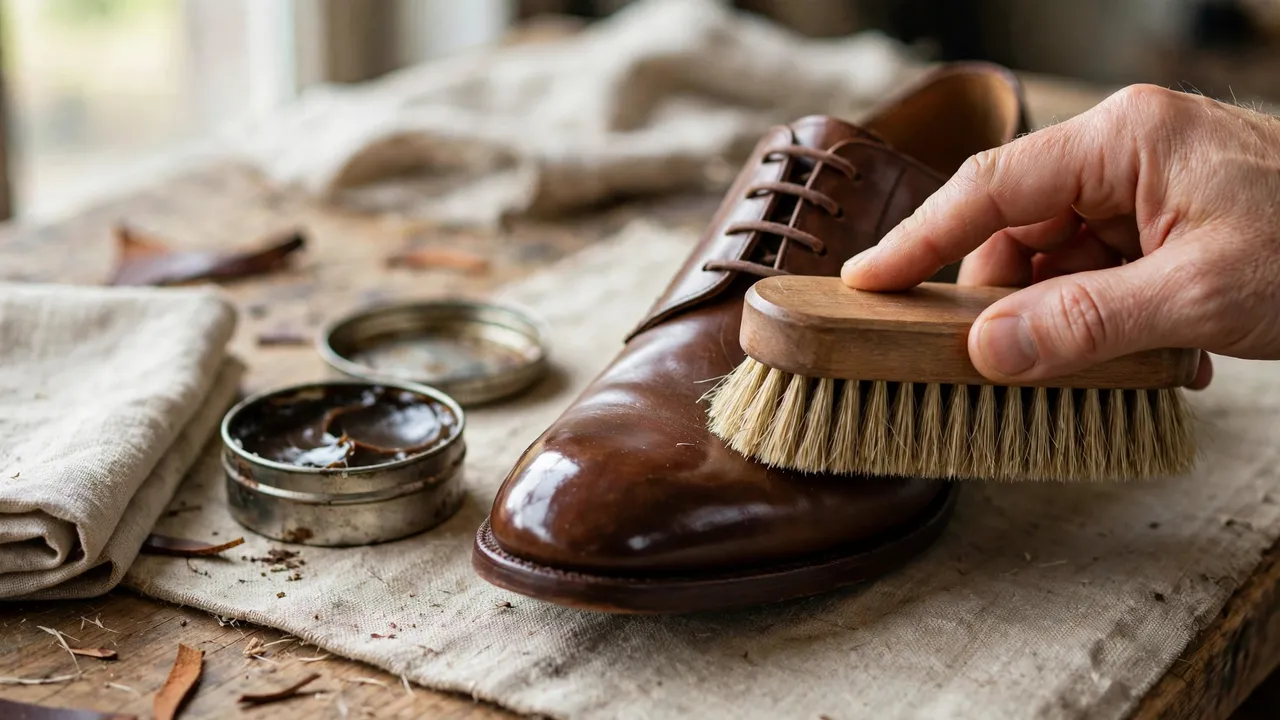
Step 5: Polish for shine and protection
Work a little wax polish over the toe and heel with a cloth, let it haze for a few minutes, then buff briskly with the brush and finish with a soft cloth. Build two or three thin coats for more depth rather than one thick one. Wax belongs on the stiff toe and heel — on the flexing parts of the shoe it cracks.
Step 6: Trees in, and rest the pair
Put cedar shoe trees in as soon as the shoes come off your feet, while they are still warm: the trees hold the shape, flatten the toe crease and absorb moisture from the lining. And rotate your shoes — a pair worn every single day never fully dries out. A rest day between wears doubles a pair's life.
Stains and winter salt
- White salt lines (winter roads): wipe with a cloth dampened in a 1:1 mix of water and white vinegar, then wipe again with plain water and condition once dry. This is a spot treatment, not a wash.
- Scuffs: most lift with cream polish in the matching colour, worked in and buffed. Deeper scuffs on the toe take a wax coat over the top.
- Water spots: dampen the whole upper evenly with a barely damp cloth so it dries as one tone, then condition.
- Oily stains: blot at once; cover with cornstarch overnight to draw the oil out. Set oil stains often need a specialist degreaser or a cobbler.
How often: the simple schedule
- After each wear: 30 seconds with the brush; shoe trees in.
- Every few weeks (or 10–15 wears): the full clean, condition and cream routine above.
- Two or three times a year: conditioner even if the shoes look fine — dryness builds invisibly, especially in heated winter rooms.
- Before winter: wax the toes and heels well, or add a water-protector spray for wet-weather pairs.
Suede and nubuck: different rules
Never use the wet routine, creams or waxes on suede. Brush it with a suede brush to lift the nap and remove dust, use a suede eraser on marks, and protect it with a suede spray. If suede gets soaked, stuff it with paper and let it dry slowly, then brush the nap back up.
Mistakes that ruin leather shoes
- Drying wet shoes on a radiator or with a hairdryer. Heat cracks leather faster than anything.
- Polishing over dirt. You grind the grit in and seal it under wax.
- Soaking the leather with a wet cloth or under a tap. Damp is the limit.
- Skipping conditioner and only ever waxing. Shine on starved leather cracks at every step.
- Wearing the same pair daily with no rest day and no shoe trees.
- Using household cleaners or washing-up liquid on the uppers — too harsh, and they strip the oils.
More leather and fabric care
The same feed-the-material logic applies indoors: see how to clean a leather couch for furniture leather, and how to clean makeup brushes for the smaller tools in the bathroom cabinet.
Frequently asked questions
How often should I clean leather shoes?
Brush them after every wear, and do the full clean-condition-polish routine every few weeks, roughly every 10–15 wears. Shoes worn in wet or salty conditions need the wipe-down more often.
Can I wash leather shoes with water?
Only barely. A cloth dampened with water (or a light saddle-soap lather) is fine; soaking, rinsing under a tap or machine washing is not. Water strips leather's oils and stiffens it as it dries.
What is the difference between shoe cream and wax polish?
Cream sinks in: it feeds the leather and restores colour, and goes over the whole shoe. Wax sits on top: it gives gloss and water resistance, and belongs on the toe and heel, which do not flex. Cream first, wax over it.
How do I get a mirror shine?
Clean and condition first, add cream, then build the toe and heel with several very thin wax coats. For the final coats, touch the cloth with a drop of water as you work the wax in small circles, and buff between coats. Thin layers and patience make the mirror — thick wax just goes cloudy.
Can I use this routine on leather boots?
Yes — the same brush, wipe, condition and polish steps work for smooth leather boots. Work boots that take heavy mud may need the saddle-soap wash more often, and a heavier conditioner afterwards.
How do I stop leather shoes from cracking?
Cracks come from dryness and heat. Condition two or three times a year, keep shoes away from radiators, use shoe trees, and rest pairs between wears. Once leather has cracked through, the damage cannot be reversed — prevention is the whole game.
Sources
Method cross-checked against established shoe-care guidance from leather shoe makers and care specialists (brush first, damp-not-wet cleaning, slow drying, cream before wax, cedar shoe trees). Written in our own words for A Natural Day readers.

Written by
MD DOLAR HOSEN
Technology expert and the founder and author of A Natural Day. He tests and reviews everyday tech, gadgets, and home essentials, and writes practical buying gui…

Comments (0)
Join the discussion — sign in to leave a comment.
Sign in to commentNo comments yet. Be the first to share your thoughts.