How to Clean a Leather Couch Without Damaging It: Step-by-Step Guide
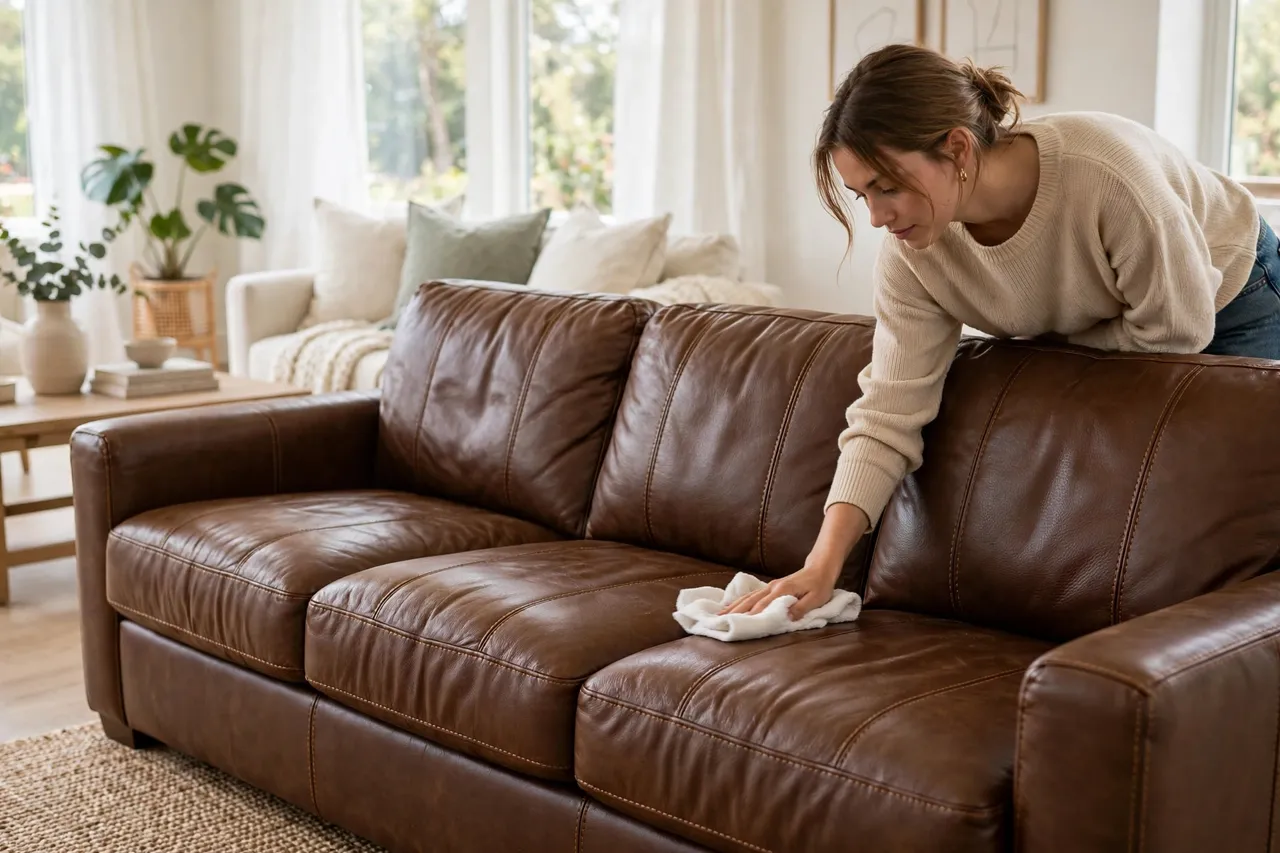
A leather couch can last for decades, but only if it is cleaned the right way. Leather is skin, not fabric: too much water dries it out, the wrong cleaner strips its finish, and everyday dust slowly scratches the surface like fine sandpaper. The safe method is simple — vacuum first, test any cleaner in a hidden spot, wipe with a barely damp cloth, dry at once, and condition once or twice a year.
This guide starts with the step most people skip: working out what kind of leather your couch actually is. The right method depends on the finish, and the wrong one can leave permanent marks.
First, find out what kind of leather you have
Most leather couches fall into one of four groups. The finish on the surface decides how much water and cleaner it can take.
| Leather type | How to spot it | Safe cleaning |
|---|---|---|
| Aniline (unfinished) | Soft, natural look; a drop of water soaks in and darkens it; scratches show easily | Dry cloth only for routine care; use a cleaner made for aniline leather; keep water off it |
| Semi-aniline | Mostly natural look with a light protective coat; water sits briefly, then soaks in slowly | pH-neutral leather cleaner on a well-wrung cloth |
| Pigmented (protected) | Even colour, slight sheen; water stays on the surface; the most common couch leather | Mild soap solution or leather cleaner on a damp cloth |
| Faux or bonded leather | Very even texture, often a slight plastic feel; may peel with age | Mild soap and water on a damp cloth; never use conditioner |
Also check the care tag, usually sewn under a cushion or along the frame. Many couches carry a simple code:
| Care code | What it means |
|---|---|
| W | Water-based cleaning is safe |
| S | Solvent-based cleaner only — no water |
| S/W | Both water-based and solvent cleaners are safe |
| X | Vacuum or brush only — no liquid at all |
No tag and no idea of the type? Do the water-drop test on a hidden area. If the drop soaks in and darkens the leather, treat it as aniline and keep cleaning dry or use a specialist product.
What you need
- Vacuum cleaner with a soft brush attachment
- Two or three microfibre cloths
- Distilled water (tap water can leave mineral spots on light leather)
- Mild pH-neutral soap, or a leather cleaner made for your leather type
- Leather conditioner (real leather only)
- Soft-bristled brush for seams and tufted areas
- Cotton buds for tight corners
What never to use on a leather couch
- Baby wipes and disinfecting wipes: they carry chemicals and drying agents that break down the finish over time.
- Bleach, ammonia and all-purpose sprays: far too harsh; they strip colour and dry the leather.
- Vinegar on aniline or unfinished leather: it can strip the surface and leave permanent marks. (A diluted vinegar mix is sometimes used on protected leather only — a proper leather cleaner is the safer choice.)
- Olive oil and home "feeds": oil can sink into the pores, turn rancid and darken the leather unevenly.
- Furniture polish and silicone sprays: they leave a film that blocks conditioner from soaking in later.
- Steam cleaners and hair dryers: heat and steam dry leather out and can crack the finish.
How to clean a leather couch, step by step
Step 1: Vacuum the whole couch
Run the soft brush attachment over every surface, slowly, including the seams and the crease where the seat meets the back. This matters more than it looks: grit left on the surface gets rubbed into the leather during wiping and causes fine scratches. Do not use a rotating brush head.
Step 2: Dry-wipe with a microfibre cloth
Wipe the full couch with a dry cloth to lift the loose dust the vacuum missed. Your cloth should come away fairly clean before any moisture touches the leather.
Step 3: Spot-test your cleaner
Every cleaner, every time — even one you used last year. Apply a little to a hidden area, such as the underside of a cushion, wait 15 minutes, and check in daylight for colour change or a change in texture. No change means you can go ahead.
Step 4: Mix a gentle cleaning solution
For protected (pigmented) leather, add a few drops of mild pH-neutral soap to a bowl of distilled water. For semi-aniline leather, use a pH-neutral leather cleaner as directed on the bottle. For aniline leather, skip the water entirely and use only a product made for aniline.
Step 5: Wipe with a barely damp cloth
This is where most cleaning goes wrong. Dip the cloth in the solution, then wring it out hard until it feels barely damp — not wet. Wipe one section at a time (one cushion, one arm, one back panel) with light, straight strokes. Dirt should lift onto the cloth; rinse the cloth often so you are not spreading dirt back onto the leather.
Step 6: Dry each section at once
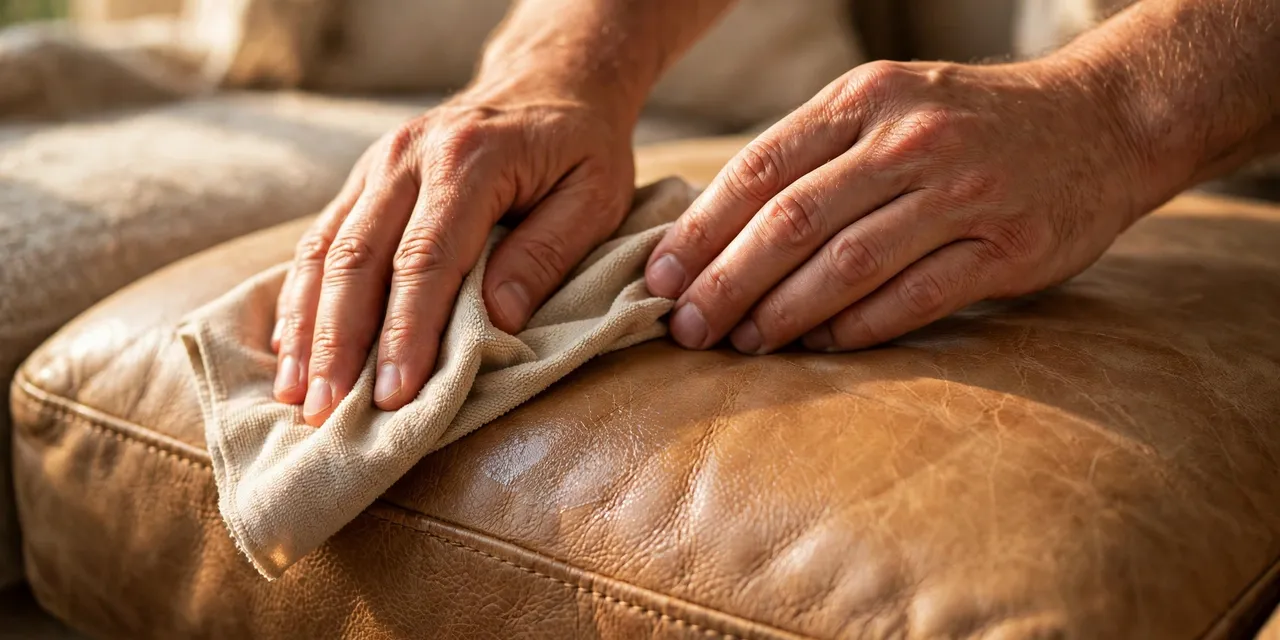
Follow straight behind with a clean, dry towel. Leather should never sit wet: standing moisture can leave water marks and, over time, weaken the finish. Let the couch air-dry fully away from direct sunlight and heat vents before anyone sits on it.
Step 7: Condition (real leather only)
Once the couch is fully dry, apply a small amount of leather conditioner to a clean cloth and rub it in with light circular motions, one section at a time. Let it soak in for about 15 minutes, then buff off any extra with a dry cloth. Conditioning replaces the natural oils leather slowly loses, and it is the main defence against cracking.
How to treat common stains
| Stain | What to do |
|---|---|
| Fresh spill | Blot at once with a dry cloth — never rub, which spreads it. Then clean the area as above. |
| Grease or body oil | Blot, then leave a little baking soda or cornstarch on the spot for a few hours to draw the oil out. Brush it off and clean gently. |
| Ink | Use a leather ink remover made for your leather type, on a cotton bud, with a light touch. Test first. Rubbing alcohol is risky and can lift colour — a specialist product is safer. |
| Water marks | On protected leather, wipe the whole panel with a barely damp cloth so it dries evenly. On aniline, let it dry on its own — marks often fade as the leather dries. |
| Dye transfer (from jeans or a cushion) | Clean as soon as you see it with your normal leather cleaner; the longer dye sits, the harder it is to lift. |
A note on white and light-coloured leather
Light leather shows dirt sooner and picks up dye from dark jeans and clothing. Clean it a little more often with the same gentle method, always with distilled water to avoid mineral spots, and deal with dye transfer the same day you notice it. Keep light leather out of strong sunlight, which yellows and fades it.
How often should you clean and condition?
- Weekly: dust or vacuum with the soft brush attachment.
- Monthly: wipe down with a barely damp cloth.
- Every 3–6 months: a full clean, following the steps above.
- Every 6–12 months: condition real leather — more often in dry homes or near heat vents and sunny windows.
Mistakes that damage a leather couch
- Soaking the leather. A dripping cloth is the fastest route to water marks and a weakened finish. Barely damp is the rule.
- Skipping the spot test. A cleaner that is safe on one finish can strip another.
- Scrubbing in hard circles. It wears the finish and pushes dirt into the grain. Light strokes lift more.
- Cleaning before vacuuming. Grit plus a wet cloth equals scratches.
- Placing the couch against a heat vent or in full sun. Heat and sunlight dry leather out and fade it, no matter how well you clean it.
More furniture care that pairs well
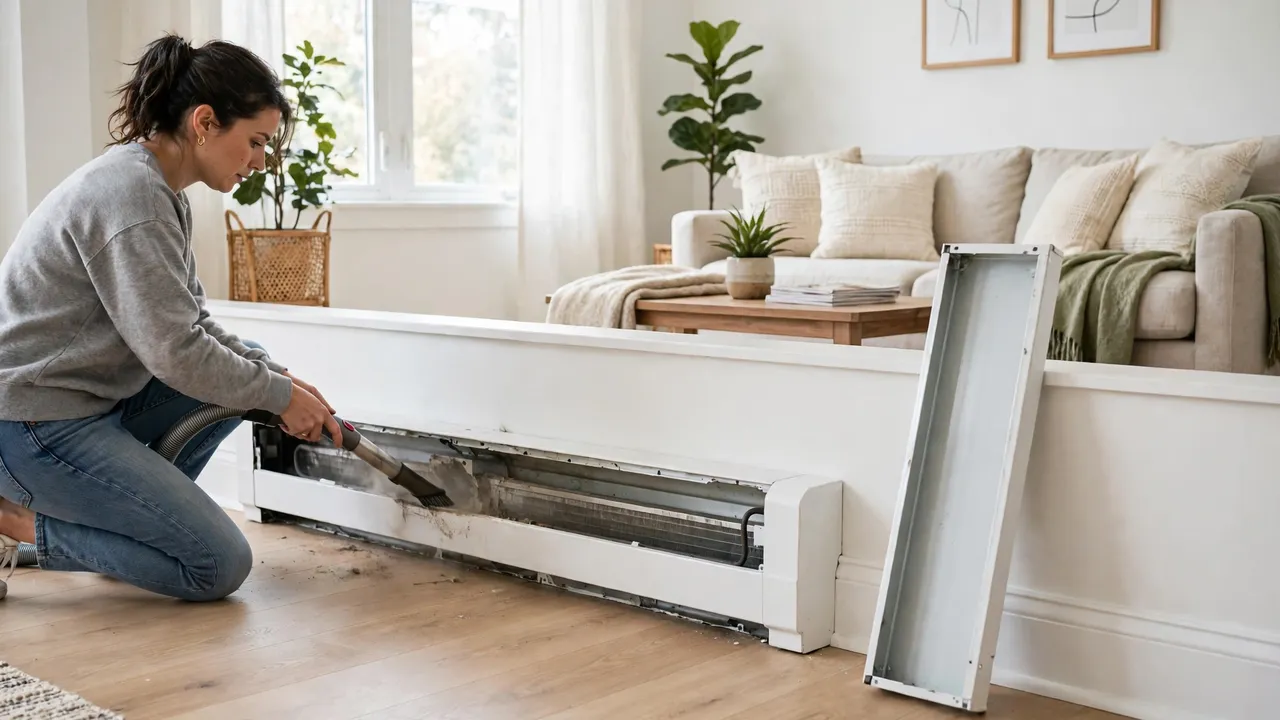
While the vacuum is out, the rest of the room benefits from the same routine: our guide on how to clean baseboard heaters covers the dusty heaters behind the couch, and how to polish stainless steel handles the kitchen metalwork.
Frequently asked questions
Can I clean a leather couch with just water?
For a light wipe-down on protected leather, a barely damp cloth with distilled water is fine. For a real clean, a little pH-neutral soap or a leather cleaner lifts body oils and ground-in dirt that water alone leaves behind. Never use plain water on aniline leather.
How do I know if my couch is real leather or faux?
Real leather feels warm, has uneven grain and pores, and creases softly when pressed. Faux leather feels cooler and smoother, with a very even pattern, and may peel at worn edges. Check the tag — it often says "leather", "bonded leather" or "polyurethane".
Why is my leather couch cracking?
Cracking means the leather has dried out — usually from heat, sunlight, harsh cleaners, or years without conditioner. Clean gently, condition well, and move the couch away from heat sources. Deep cracks cannot be fully reversed, but conditioning stops them getting worse.
Can I use dish soap on a leather couch?
A few drops of mild, pH-neutral soap in distilled water is a common and safe mix for protected leather. Strong or antibacterial dish soaps can be too harsh, so keep it mild, keep the cloth barely damp, and wipe with a plain damp cloth afterwards to remove residue.
How do I get a smell out of a leather couch?
Clean the couch first — most smells sit in surface dirt and oils. Then sprinkle baking soda over the cushions, leave it for a few hours, and vacuum it off. Keep the room aired. Avoid scented sprays, which coat the finish without removing the cause.
When should I call a professional leather cleaner?
For large ink or dye stains, mould growth, tears, peeling bonded leather, or any stain on valuable aniline leather. A professional has solvents and dyes that home cleaning cannot match, and one wrong product can make a stain permanent.
Sources
Method cross-checked against established furniture-care references, including This Old House (leather grades and routine care) and manufacturer care-code guidance (W / S / S-W / X). Written in our own words for A Natural Day readers.

Written by
MD DOLAR HOSEN
Technology expert and the founder and author of A Natural Day. He tests and reviews everyday tech, gadgets, and home essentials, and writes practical buying gui…
Comments (0)
Join the discussion — sign in to leave a comment.
Sign in to commentNo comments yet. Be the first to share your thoughts.