How to Clean Granite Countertops: Daily Care, Stains and Sealing
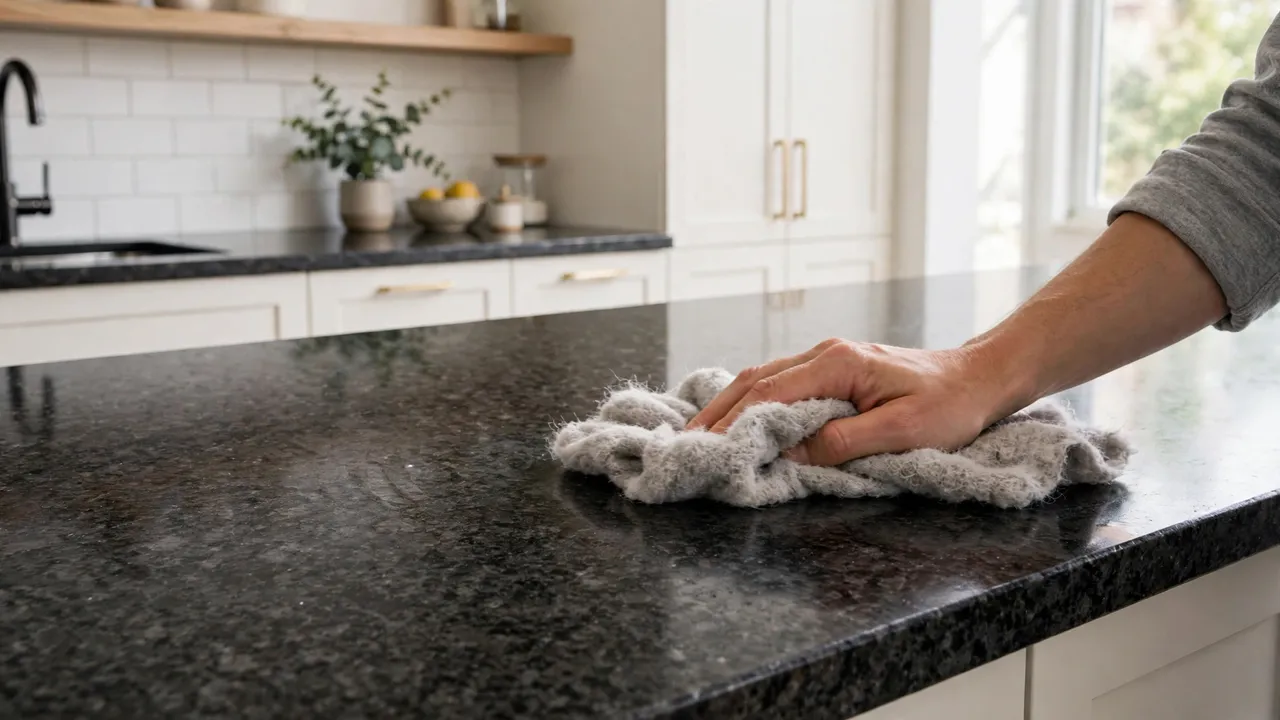
Granite is one of the hardest surfaces in your kitchen, but it is not maintenance-free. The stone is porous — tiny gaps in the crystal structure let oil, wine and water soak in and leave dark shadow stains. A thin penetrating sealer closes those pores, and almost all granite care comes down to two habits: clean gently every day, and keep the sealer in good shape.
The good news is that daily cleaning takes two minutes and needs nothing stronger than warm water, a few drops of dish soap, and a soft cloth. The damage almost always comes from the opposite instinct — reaching for vinegar, bleach or a scouring pad.
What you need
- Two soft microfibre cloths (one for washing, one for drying)
- Mild dish soap, or a pH-neutral cleaner made for granite or natural stone
- Warm water and a spray bottle
- A plastic scraper or non-scratch pad for stuck-on food
- Penetrating granite sealer (for resealing, when the water test says so)
- Baking soda and plastic wrap (for an oil-stain poultice, if needed)
How to clean granite countertops, step by step
Step 1: Clear crumbs and grit first
Sweep the surface with a dry microfibre cloth. Crumbs and grit dragged under a wet cloth can scratch the sealer and, over time, the polish itself.
Step 2: Wash with warm soapy water
Add a few drops of mild dish soap to warm water, or spray on a pH-neutral stone cleaner. Wipe the whole surface with the soft cloth. Plain warm water is enough for a light wipe between meals — save the soap for after cooking, because too much soap too often leaves a dulling film.
Step 3: Rinse the soap off
Go over the counter again with a clean cloth dampened in plain water. This rinse is the step most people skip, and it is the main reason granite looks streaky or cloudy: dried soap residue, not dirt.
Step 4: Dry and buff
Dry the surface straight away with the second, dry microfibre cloth and buff lightly. Drying prevents the water spots and mineral deposits that slowly dull the shine, especially in hard-water areas.
Step 5: Lift stuck-on food gently
For dried spills, soften the spot with a warm wet cloth for a minute, then lift it with a plastic scraper or non-scratch pad. Never use a scouring pad, steel wool or a knife blade — they scratch the sealer first and the stone eventually.
Spills: wipe them within minutes
Granite forgives a lot, but not time. Oil is the worst offender — it absorbs slowly and leaves a dark shadow. Red wine, coffee, tomato sauce and citrus juice are close behind. Blot (do not wipe and spread) any spill within a few minutes, then wash the area as above. Acidic spills like lemon juice left sitting can also etch some granites, dulling the polish in that spot.
Removing stains from granite
- Oil stains (dark, greasy shadow): make a poultice — a thick paste of baking soda and a little water — spread it over the stain, cover with plastic wrap, and leave it 24 hours. The paste draws the oil back out as it dries. Wipe away, rinse and dry. Repeat if needed.
- Water marks and rings: usually mineral deposits on the surface, not in the stone. They lift with your normal wash and a thorough dry. Persistent rings mean the sealer is worn in that area.
- Organic stains (coffee, wine, food colour): the same baking soda poultice, left overnight, lifts most of them. Work gently — time does the job, not scrubbing.
Test the sealer once a year
Sealing is what actually protects granite, and it wears off gradually. How often you must reseal depends on the stone: dense dark granites may need it only every 3–5 years, while light, porous granites can need it every year, sometimes every 6 months under heavy use.
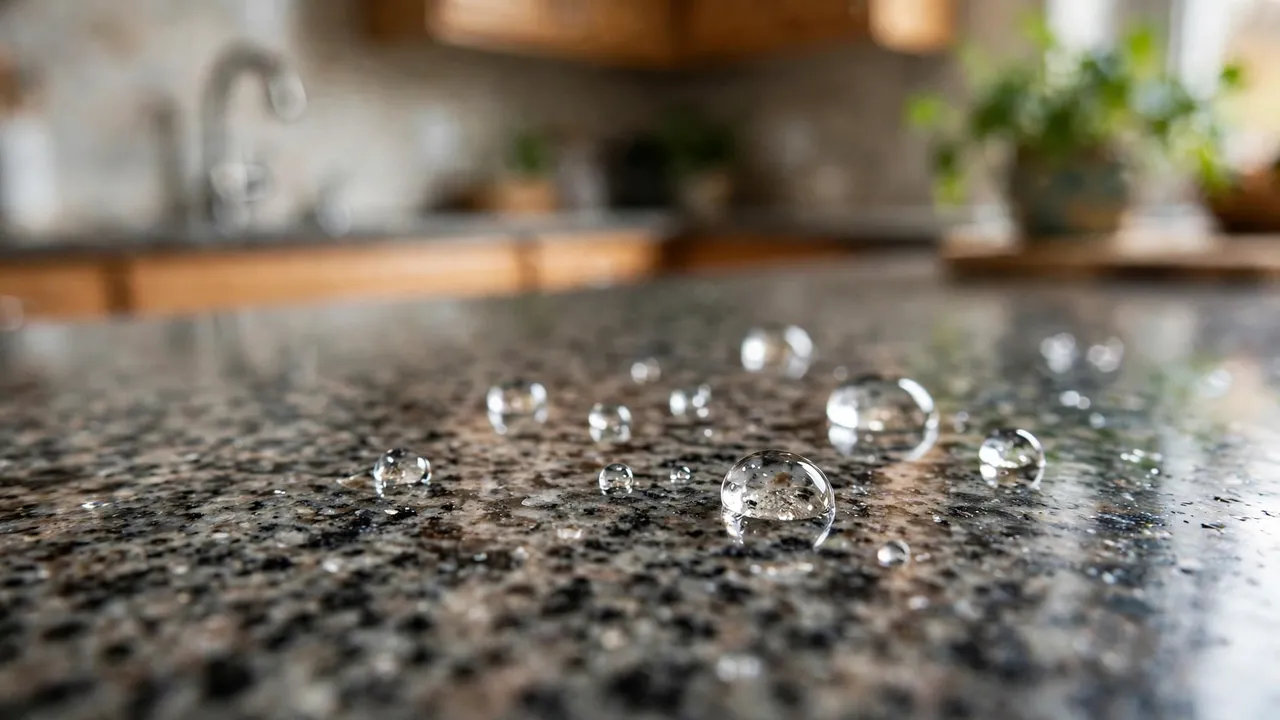
The water test tells you the truth. Pour a small puddle of water (about a quarter cup) on the counter and watch it. If the water still beads after 10–15 minutes and the stone underneath has not darkened, the sealer is working. If the stone darkens within a few minutes, water is soaking in — it is time to reseal with a penetrating granite sealer, following the product's instructions.
What never to use on granite
- Vinegar, lemon and citrus cleaners: acids etch the polish and attack mineral veins in the stone.
- Bleach and ammonia-based cleaners (including many glass cleaners): repeated use degrades the sealer and dulls or discolours the finish.
- Abrasive pads, scouring powders and steel wool: they scratch the polish, and scratches collect grime.
- Generic bathroom and tile cleaners: made for ceramic, often too alkaline or acidic for stone.
- A knife as a scraper, or cutting directly on the stone: granite is hard enough to dull your knives, and dragging an edge scratches the sealer.
Daily habits that keep granite looking new
- Coasters under glasses and bottles, especially oils and anything acidic.
- Trivets or mats under hot pans — granite handles heat well, but thermal shock on a cold stone can, rarely, crack it, and hot oil splashes stain.
- Cutting boards always. It protects both the sealer and your knives.
- Wipe, rinse, dry after cooking. Two minutes now prevents the cloudy film people scrub at later.
- Use a clean cloth, not the pot sponge. A greasy sponge smears yesterday's cooking back over the counter.
Mistakes that damage granite countertops
- Cleaning with vinegar "because it is natural". Acid is acid — it etches.
- Leaving spills overnight, especially oil and wine.
- Skipping the rinse, then blaming the stone for soap-film cloudiness.
- Never testing the sealer. Most "granite stains" are really failed-sealer stains.
- Sitting or standing on the counter to reach a high cupboard — granite can crack along weak veins under point weight.
More kitchen care guides
Stone, tile and steel each have their own rules — see how to clean shower tiles for tile and grout, and how to polish stainless steel for the appliances beside your counter.
Frequently asked questions
What is the best cleaner for granite countertops?
For daily use, warm water with a few drops of mild dish soap, rinsed and dried. For a bought product, choose a pH-neutral cleaner labelled safe for granite or natural stone. Anything acidic, bleachy or abrasive risks the sealer and the polish.
Can I disinfect granite countertops?
Yes — clean first with soap and water, then use a disinfectant whose label says it is approved for granite or sealed natural stone, and follow its contact time. Avoid bleach sprays and vinegar-based "disinfecting" mixes, which harm the sealer.
How often should granite be sealed?
Every 1–3 years is the usual range, but the stone decides: dense dark granite may go 3–5 years, light porous granite may need sealing yearly. Do the water test once a year and reseal when water darkens the stone within a few minutes.
Why does my granite look cloudy or hazy?
Most often it is soap or cleaner residue left on the surface — rinse with a clean damp cloth and buff dry. If the haze stays in one area, the sealer there may be worn or the spot lightly etched by an acidic spill.
Can I put a hot pan directly on granite?
Granite is very heat-resistant and usually tolerates a hot pan. A trivet is still the safer habit: sudden temperature change on cold stone can rarely cause a crack, and hot pans can leave oil marks that soak in.
Does granite need special care that quartz does not?
Yes. Granite is natural stone with pores, so it needs sealing and quick spill cleanup. Manufactured quartz is non-porous and never needs sealing, though it has its own weakness — heat. The daily soap-and-water cleaning is the same for both.
Sources
Method cross-checked against Natural Stone Institute care guidance and established stone-care references (pH-neutral daily cleaning, no acids or bleach, penetrating sealer every 1–3 years, water-droplet sealer test). Written in our own words for A Natural Day readers.

Written by
MD DOLAR HOSEN
Technology expert and the founder and author of A Natural Day. He tests and reviews everyday tech, gadgets, and home essentials, and writes practical buying gui…


Comments (0)
Join the discussion — sign in to leave a comment.
Sign in to commentNo comments yet. Be the first to share your thoughts.