How to Polish Stainless Steel: Easy Steps for a Streak-Free Shine at Home
Quick Answer
To polish stainless steel at home, first wash it with warm water and a drop of dish soap. Dry it fully. Then pick one simple method: a baking soda paste for dull spots, vinegar spray for water marks, flour for a sink, or a few drops of oil for a final shine. Always rub in the direction of the grain, never across it. Finish by buffing with a clean, dry microfiber cloth. That is the whole secret: clean first, work with the grain, and buff dry at the end.
First, Know What Kind of Stainless Steel You Have
Not all stainless steel is the same. The right method depends on the finish. This check takes 30 seconds and saves you from damage.
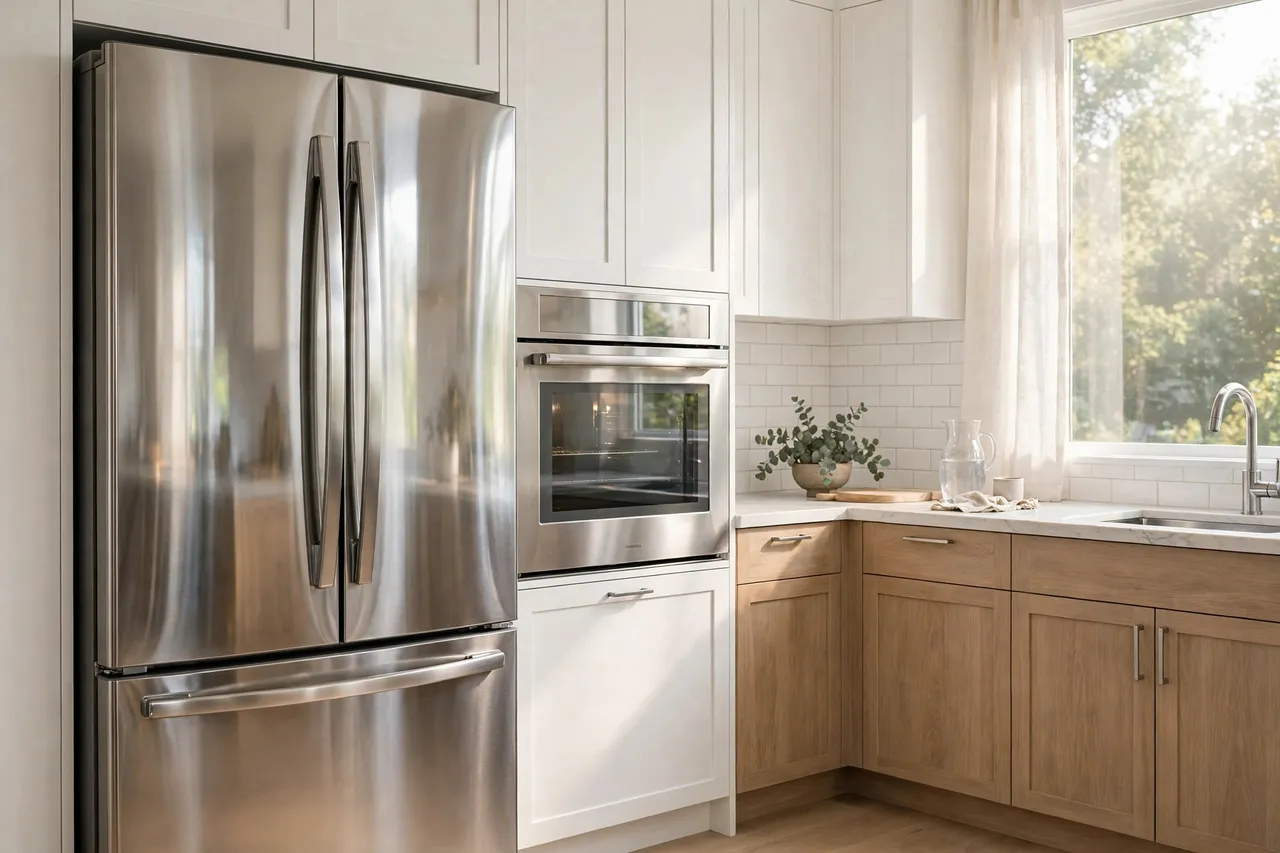
- Brushed finish. Most fridges, ovens and dishwashers look like this. You can see fine lines running one way. That line direction is called the grain. It can run up and down, or side to side.
- Shiny or mirror finish. Some kettles, pots and fixtures shine like a mirror. These show every fingerprint, but they polish up fast.
- Coated or fingerprint-resistant finish. Many new appliances have a clear coat on top. Black stainless steel is also coated. A coat changes the rules: use only mild soap and water. Vinegar, baking soda paste and store polish can harm the coat.
How to find the grain: stand close and look at the light on the surface. The fine lines you see run one way. Rub your cloth the same way those lines run. If you rub across the lines, you get streaks and tiny scratches.
One more test. If your appliance manual says "fingerprint resistant" or "smudge proof," treat it as coated. When in doubt, start with soap and water only.
What You Need
You do not need special tools. Most homes already have these:
- Two or three microfiber cloths (one for washing, one for buffing)
- Mild dish soap
- Warm water
- Baking soda
- White vinegar in a spray bottle
- Plain white flour (for sinks only)
- Olive oil or mineral oil
- A soft sponge or old soft toothbrush for corners
Optional: a store-bought stainless steel polish for heavy dullness. A well-known type is a cream cleanser made for stainless steel and cookware. Use it only on bare, uncoated steel.
Step 1: Clean First, Always
Polishing a dirty surface is the biggest mistake people make. Dirt and grit under your cloth act like sandpaper. They scratch the steel while you polish.
Do this first, every time:
- Mix warm water with a drop of dish soap.
- Wipe the whole surface with a microfiber cloth or soft sponge. Wipe with the grain.
- Rinse the cloth, wipe again with clean water to remove soap.
- Dry the surface fully with a clean cloth. No drips, no damp spots.
Now the steel is ready. Pick your method below based on the problem you see.
The 5 Home Methods to Polish Stainless Steel
Method 1: Baking Soda Paste - Best for Dull Spots and Light Stains
- Mix 2 tablespoons of baking soda with a little water. Make a soft paste, like toothpaste.
- Put a small amount on a damp microfiber cloth.
- Rub gently along the grain. Use light pressure. Let the paste do the work.
- Wipe off with a clean damp cloth.
- Dry and buff with a dry cloth until it shines.
Good for: sink basins, cookware bottoms, dull patches on appliances. Skip it on coated finishes.
Method 2: Vinegar Spray - Best for Water Spots and Hard Water Marks
White spots and cloudy rings are mineral deposits from water. Vinegar melts them away.
- Fill a spray bottle with undiluted white vinegar. For light marks, mix half vinegar and half water.
- Spray the spot. Wait 1 to 2 minutes.
- Wipe with the grain using a microfiber cloth.
- Wipe once more with a cloth dampened with plain water.
- Dry and buff.
Good for: faucets, sinks, shower fixtures, kettle exteriors. Do not use vinegar on coated or fingerprint-resistant finishes.
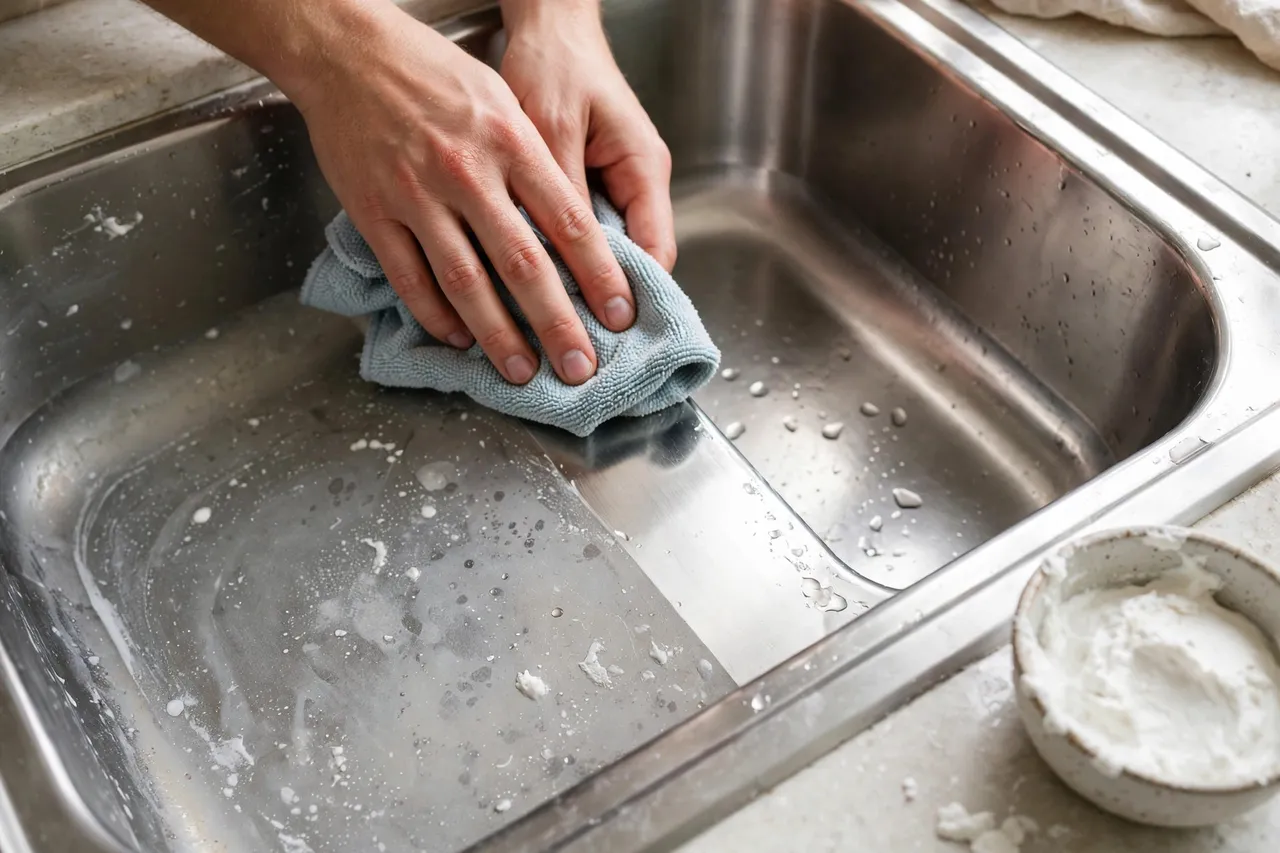
Method 3: Flour - Best for a Stainless Steel Sink
This sounds strange, but flour is a very gentle polish. It lifts grime out of the tiny grooves in a sink.
- Wash the sink with hot soapy water.
- Dry the sink completely. This step matters. Any water turns the flour into glue.
- Sprinkle a thick layer of flour over the whole sink.
- Buff with a soft cloth or paper towel, like waxing a car. Cover the rim, the drain and the faucet base.
- Brush the leftover flour into the trash. Do not wash big amounts of flour down the drain.
- Rinse, dry, and enjoy the shine.
Good for: kitchen sinks, once or twice a month. Use flour only in a sink, where you can control the mess.
Method 4: Oil Finish - Best for Shine and Fewer Fingerprints
Oil does not clean. It is the final step. A tiny amount fills the fine lines in the steel, so the surface looks even and glossy. It also slows down new fingerprints.
- Start with clean, dry steel.
- Put 2 or 3 drops of olive oil or mineral oil on a clean microfiber cloth. A little goes a long way.
- Rub along the grain over the whole surface.
- Flip to a dry part of the cloth and buff off the extra oil.
Too much oil leaves a sticky film that grabs dust. If it feels greasy, keep buffing with the dry side.
Good for: fridge doors, oven fronts, range hoods, and a sink after the flour method.
Method 5: Store-Bought Stainless Steel Polish - Best for Heavy Dullness
If home methods are not enough, a polish made for stainless steel is the next step. Cream and spray types both work.
- Put a small amount on a microfiber cloth, not directly on the steel.
- Rub with the grain, in small sections.
- Buff with a clean dry cloth before the polish dries.
Follow the label. Most of these products say "not for coated finishes." Believe them.
At a Glance: Which Method Should You Use?
| Problem | Best method | Remember |
|---|---|---|
| Dull, grey look | Baking soda paste | Safe on bare steel |
| White water spots | Vinegar spray | Keep off coated finishes |
| Dirty, tired sink | Flour buff | Sink only, surface must be bone dry |
| Fingerprints keep coming back | Oil finish | Use only 2-3 drops |
| Heavy dullness, nothing else worked | Store polish | Follow the label, bare steel only |
| Coated or black stainless | Soap and water only | No vinegar, no paste, no polish |
How to Polish Each Item in Your Home
Appliances: Fridge, Oven, Dishwasher
Wash with soapy water and dry. For dull patches, use the baking soda paste with a light hand. For daily fingerprints, wipe with a cloth dampened with water, dry, then do the oil finish. Always follow the grain. On most fridge doors the grain runs up and down.
Kitchen Sink
Wash and dry. Use flour once or twice a month for a deep shine. For weekly care, baking soda on a damp sponge is enough. Finish with 2 drops of oil buffed in well, so the sink does not feel slippery.
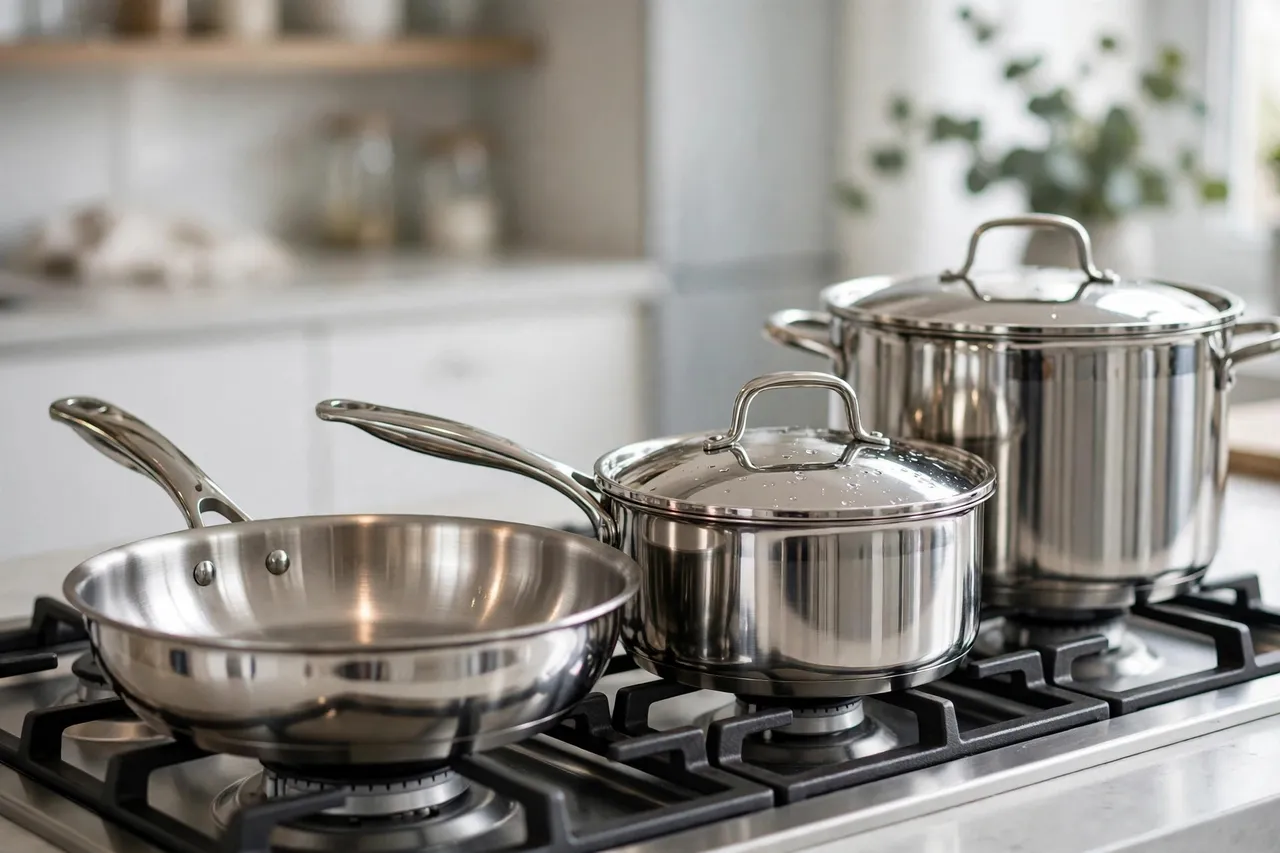
Cookware: Pots and Pans
Wash off food first. For the blue and rainbow colours that heat leaves on pan bottoms, wipe with a cloth soaked in vinegar. The colour fades fast. For burnt-on marks, cover with baking soda paste, wait 15 minutes, then scrub gently with a soft sponge. Dry well. Water left in the pan makes new spots. If you are building a simple, easy-care kitchen, our guide to the best budget kitchen gadgets is a good next read.
Faucets and Fixtures
Spray vinegar on a cloth, wrap it around the faucet, and wait 5 minutes. This softens hard water crust. Wipe, rinse, dry, and buff. A drop of oil at the end keeps new spots away longer.
Cutlery and Small Items
Wash, dry at once, and buff with a dry cloth. Most cutlery only looks dull because of water spots. Drying right after washing fixes it.
Scratches: What You Can and Cannot Fix
Run a fingernail across the scratch. If your nail does not catch, the scratch is light. A baking soda paste, rubbed with the grain, often makes light scratches fade.
If your nail catches in the scratch, it is deep. Home polishing will not remove it. Sanding it out means re-finishing the whole panel so the grain matches, and that is a job for a professional. Be honest with yourself here: a bad home sanding job looks worse than the scratch.
One warning from metal finishers: never use a steel wool pad or a brush that has touched normal steel. Tiny iron bits stick in the surface and rust later as orange spots. Use only soft cloths, sponges, and pads made for stainless steel.
7 Mistakes That Ruin the Shine
- Rubbing across the grain. This is the number one cause of streaks and fine scratches.
- Polishing before cleaning. Dirt under the cloth scratches the surface.
- Using bleach or cleaners with chloride. They attack the protective layer and can start rust.
- Using steel wool or rough scouring pads. They scratch and leave rusting iron bits behind.
- Spraying vinegar or using paste on a coated finish. It can strip the clear coat.
- Using too much oil. The surface turns sticky and shows every touch.
- Leaving the surface wet. Water dries into spots and undoes your work. Always end with a dry buff.
How Often Should You Polish Stainless Steel?
- Fridge and oven fronts: wipe weekly, oil finish once a month
- Kitchen sink: quick clean after heavy use, flour polish once or twice a month
- Cookware: wash and dry after each use, deep polish when dull or heat-stained
- Faucets: vinegar wipe once a month, more often if your water is hard
Hard water speeds everything up. If your taps grow white crust fast, polish a little more often.
How to Keep the Shine Longer
- Wipe spills the same day. Acid foods like tomato and lemon can mark steel if they sit.
- Keep a dry microfiber cloth near the sink. A 10-second dry wipe after washing up stops most water spots.
- Dry dishes and pans right away instead of air-drying on the steel.
- Touch doors by the handle. It sounds simple, but it cuts fingerprint polishing in half.
Frequently Asked Questions
Does polishing remove scratches from stainless steel?
Only very light ones. If your fingernail catches in the scratch, polishing will not fix it. That needs professional re-finishing.
Can I polish brushed stainless steel?
Yes. Brushed steel is the most common type. Just follow the grain lines and use gentle methods like baking soda paste or an oil finish.
Why does my stainless steel look streaky after polishing?
Three usual causes: you rubbed across the grain, the surface was not fully clean first, or you left it damp. Wash, dry, polish with the grain, and end with a dry buff.
Is vinegar safe on all stainless steel?
No. Keep vinegar away from coated and fingerprint-resistant finishes. On bare steel it is safe and great for water spots. Always wipe it off with water after.
What is the best homemade stainless steel polish?
For most homes, baking soda paste for dullness and a few drops of oil for shine cover almost every case. Flour is the best trick for sinks.
Can I use olive oil, or is mineral oil better?
Both work. Mineral oil does not go sticky or rancid over time, so many people prefer it for a final finish. Olive oil is fine if that is what you have.
How do I polish stainless steel without a store-bought polish?
Wash with soap and water, dry fully, use baking soda paste on dull spots, then buff in 2 or 3 drops of oil with the grain. That is the full home method.
Why are there rainbow colours on my pan?
That is a thin oxide layer from high heat. It is harmless. A wipe with vinegar on a cloth usually removes it.
Can polishing stop fingerprints?
It cannot stop them fully, but a light oil finish makes them less visible and easier to wipe off. Coated appliances resist fingerprints best.
Will baking soda scratch stainless steel?
Baking soda is softer than steel, and the paste is gentle. Used with a soft cloth and light pressure along the grain, it is safe on bare stainless steel. Do not use it on coated finishes.
Final Words
Polishing stainless steel is not hard. The order matters more than the product: clean first, pick the method that matches the problem, always work with the grain, and finish dry. Baking soda, vinegar, flour and a little oil handle almost every fridge, sink and pan in a normal home. Save the store polish for heavy dullness, keep harsh cleaners away, and your steel will keep that clean, bright look for years.

Written by
MD DOLAR HOSEN
Technology expert and the founder and author of A Natural Day. He tests and reviews everyday tech, gadgets, and home essentials, and writes practical buying gui…




Comments (0)
Join the discussion — sign in to leave a comment.
Sign in to commentNo comments yet. Be the first to share your thoughts.