How to Clean Shower Tiles: Soap Scum and Hard Water, by Tile Type
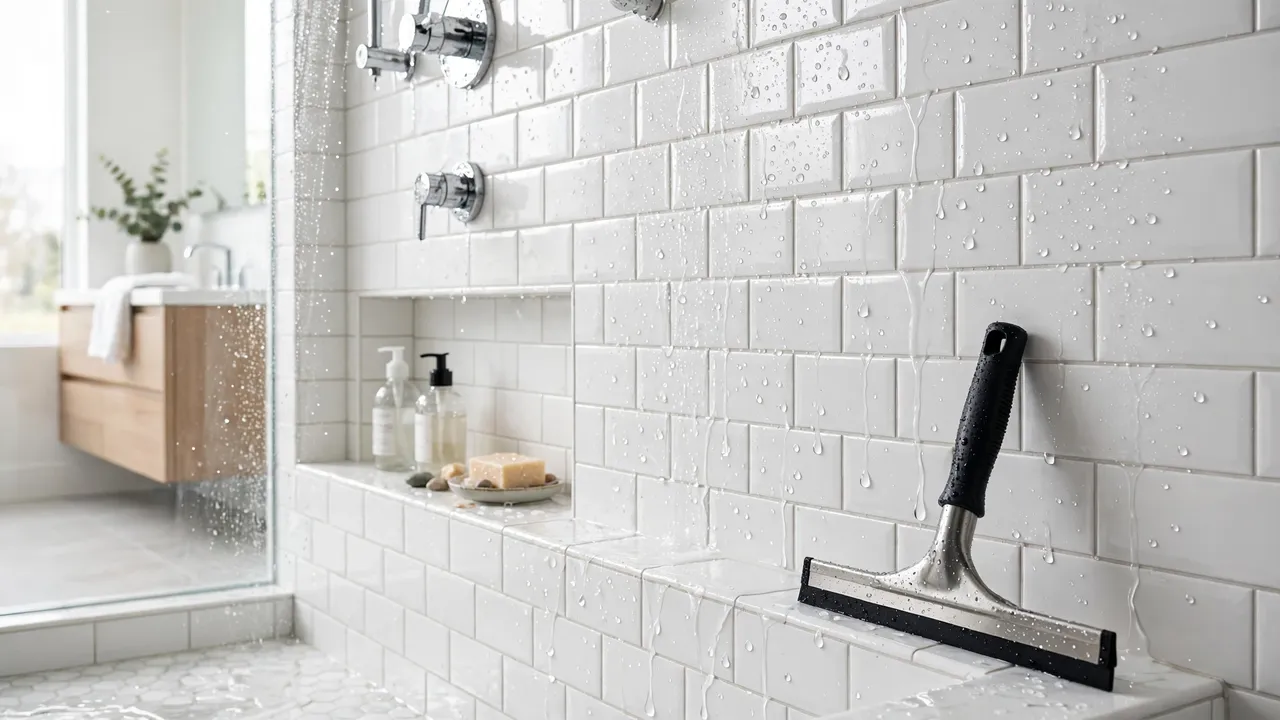
Shower tiles lose their shine for two reasons: soap scum and hard water. Soap scum is the grey, slippery film that forms when bar soap mixes with the minerals in your water. Hard water stains are the rough, white, crusty marks left when water dries on the surface. They look similar, they feel different, and they clean differently.
The other thing that decides your method is the tile itself. Vinegar that cleans ceramic beautifully will permanently dull marble. This guide starts with identifying what you have, then gives the safe clean for each tile type.
What you need
- White vinegar and a spray bottle (ceramic and porcelain only)
- Baking soda
- Mild dish soap or a pH-neutral cleaner (safe for every tile type)
- Non-scratch sponge and a soft brush or old toothbrush
- Microfibre cloths
- A squeegee
- For natural stone: a pH-neutral stone cleaner
Know your tile type first
| Tile type | How to spot it | Safe cleaners | Never use |
|---|---|---|---|
| Ceramic | Smooth glazed surface, the most common shower tile | Vinegar mix, baking soda paste, dish soap | Steel wool and gritty scouring pads |
| Porcelain | Very hard, dense, often larger tiles; similar look to ceramic | Vinegar mix, baking soda paste, dish soap | Abrasive pads that dull the glaze over time |
| Natural stone (marble, travertine, slate, limestone) | Natural veining and texture, feels cooler and less even | pH-neutral stone cleaner, or a few drops of dish soap in warm water | Vinegar, lemon, bleach and most bathroom sprays — acid etches stone |
| Glass tile | Glossy, smooth, often small tiles or mosaics | Glass cleaner or mild dish soap solution | Abrasive powders and stiff brushes — they scratch |
Not sure what you have? Stone has natural, uneven patterns and a matte feel; ceramic and porcelain have a smooth, even glaze. If you cannot tell, clean as if it were stone — the gentle method is safe for everything, just slower on heavy build-up.
How to clean shower tiles, step by step
Step 1: Steam the shower
Run the hot water for about five minutes with the door closed. The steam softens soap scum and loosens mineral deposits, so the cleaning after it needs half the scrubbing. Skip this step for natural stone — plain warm water is kinder to it.
Step 2: Spray your cleaner
Ceramic and porcelain: mix equal parts white vinegar and warm water in a spray bottle, spray the tiles generously from top to bottom. For heavy build-up, use undiluted vinegar.
Stone and glass: use a pH-neutral cleaner, or warm water with a few drops of mild dish soap.
Step 3: Let it sit — dwell time does the work
Leave the cleaner on for 10 to 15 minutes (up to 20 for heavy build-up on ceramic). This sitting time breaks down the film and minerals chemically, so gentle scrubbing finishes the job. Spraying and scrubbing at once is the main reason people think home cleaners "do not work".
Step 4: Paste the stubborn areas
For thick soap scum and stained patches, spread a paste of 3 parts baking soda to 1 part water over the area and leave it 5 to 10 minutes. On grout lines, work the paste in with a toothbrush. A few drops of 3% hydrogen peroxide in the paste helps lift yellowed grout stains.
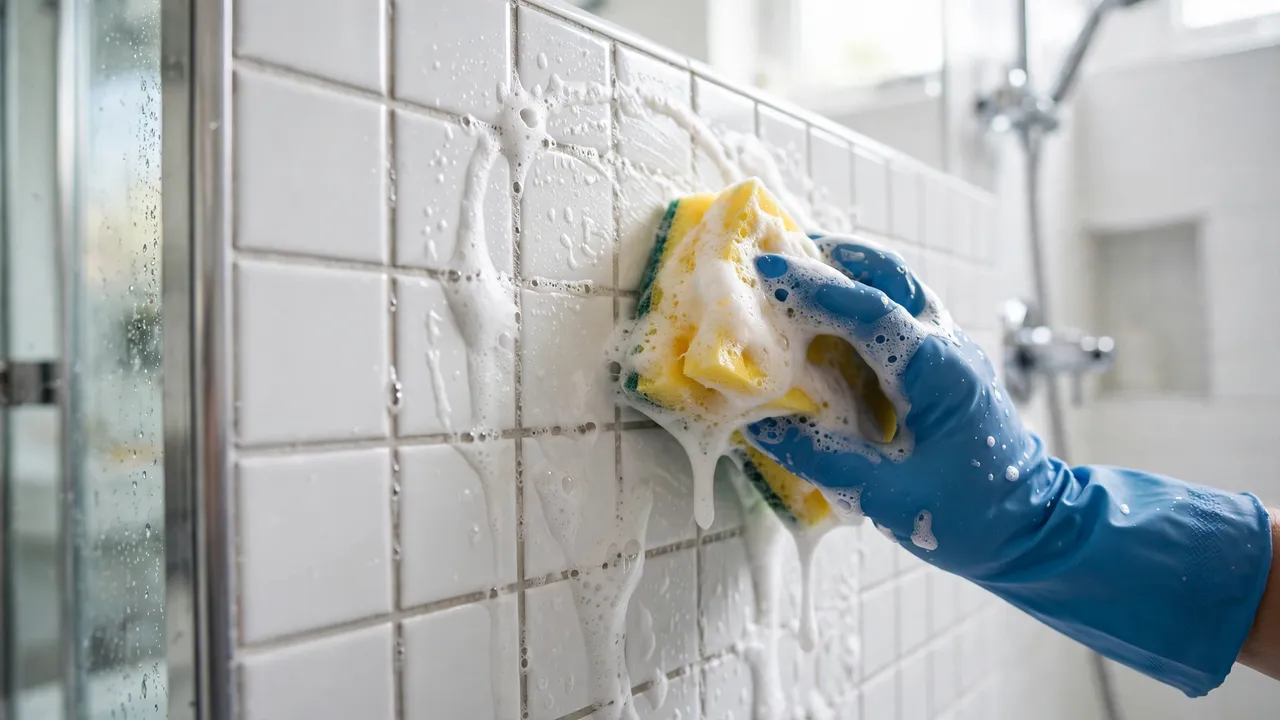
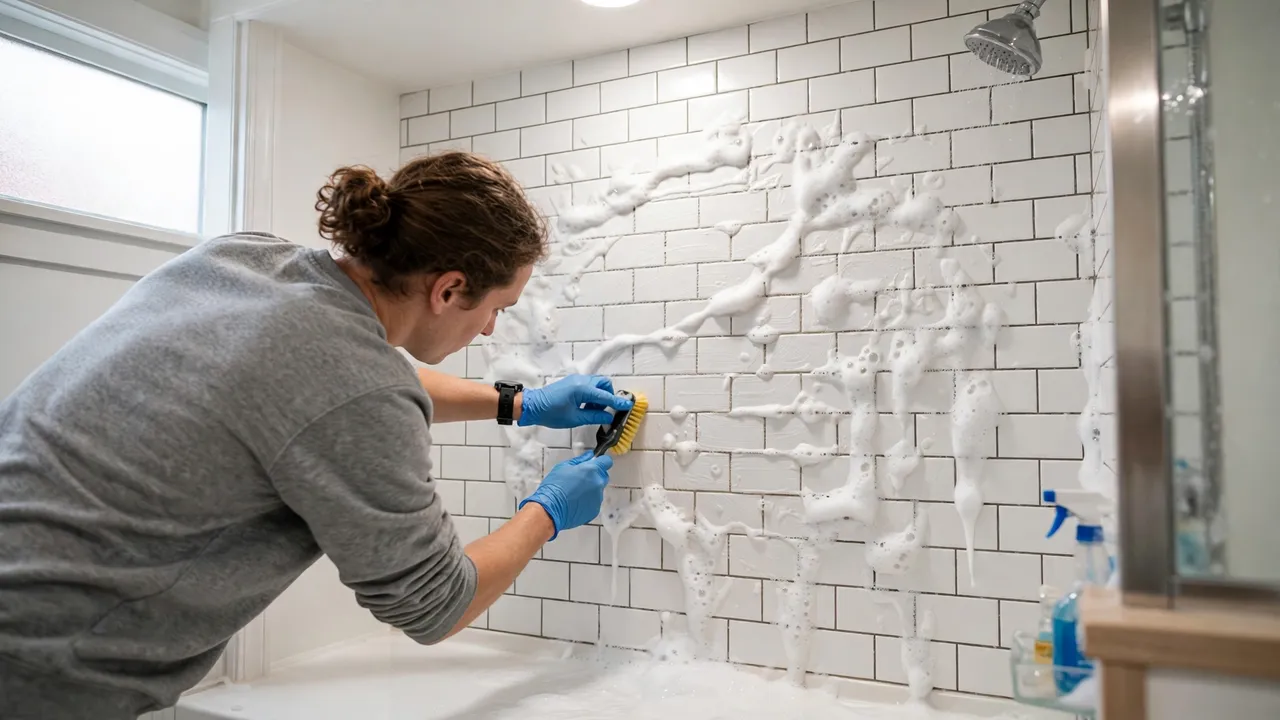
Step 5: Scrub gently in circles
Work over the tiles with a non-scratch sponge or soft brush in small circles, one section at a time. Let the cleaner and paste do the heavy work — pressure is for grout lines, not tile faces. Never use steel wool or gritty pads; scratches hold dirt and make the next clean harder.
Step 6: Rinse and dry
Rinse everything with warm water until no cleaner remains, then wipe dry with a microfibre cloth or run the squeegee down the walls. Drying is what stops new water spots forming the same day.
Hard water stains: the extra pass
Crusty white deposits that survive the normal clean need a longer acid soak — ceramic and porcelain only. Soak a cloth in undiluted vinegar, press it onto the stain, and leave it for 30 minutes before scrubbing. Repeat rather than scrubbing harder. On stone or glass, skip the acid: use a pH-neutral cleaner, more dwell time, and patience, and consider a water softener if stains return within days.
Grout: a short version
Grout is porous, so it stains and grows mould faster than tile. The baking soda paste in step 4, scrubbed with a stiff brush, handles normal grout dirt. Seal grout once a year to slow water soaking in. If the problem is black mould in the grout or caulk rather than dirt, follow our full guide on how to clean shower mould — it covers which cleaner reaches the roots and when caulk must be replaced.
A routine that keeps tiles clean
- After every shower: 30 seconds with the squeegee removes most of the water that causes both scum and stains.
- Weekly: a quick spray-and-wipe with your dish soap solution keeps film from building.
- Monthly: the full clean above, including grout lines.
- Yearly: reseal grout (and stone, if you have it).
- Switch to liquid shower gel if soap scum is a constant fight — bar soap is the main ingredient in scum.
Mistakes that damage shower tiles
- Vinegar on natural stone. The acid etches the surface and leaves permanent dull marks. This is the costliest mistake on this page.
- Scrubbing with steel wool or scouring powder. Scratches trap dirt and dull the glaze.
- Leaving vinegar on grout for hours. Long acid soaks can fade grout colour; 20 minutes is plenty.
- Mixing cleaners. Never combine bleach with vinegar or ammonia — the gas is dangerous. One product at a time.
- Skipping the rinse. Cleaner left on tiles dries into its own film.
Frequently asked questions
What is the best homemade cleaner for shower tiles?
For ceramic and porcelain, equal parts white vinegar and warm water in a spray bottle, with baking soda paste for stubborn areas. For stone and glass, warm water with a few drops of mild dish soap is the safe everyday mix.
How do I tell soap scum from hard water stains?
Run a finger over it. Soap scum feels smooth and slippery or greasy; hard water deposits feel rough, dry and crusty. Scum needs a degreaser or paste and scrubbing; mineral stains need acid (on ceramic) and dwell time.
Can I use vinegar on all shower tiles?
No. Vinegar is safe on ceramic and porcelain, but it permanently etches natural stone like marble and travertine, and it is not the best choice for glass. When in doubt, use a pH-neutral cleaner.
How often should shower tiles be deep cleaned?
About once a month for most homes, with a weekly wipe-down and daily squeegee between. Homes with hard water or many showers per day may need the deep clean every two weeks.
Why do my tiles look cloudy again the next day?
Usually leftover cleaner or mineral film from the rinse water itself. Rinse with clean water and dry the tiles fully with a cloth or squeegee. If cloudiness returns in days, your water is hard — a shower filter or softener helps at the source.
Is a steam cleaner good for shower tiles?
Yes for ceramic, porcelain and grout — steam melts soap scum with almost no scrubbing and no chemicals. Use care on stone (follow the maker's guidance) and never aim steam at damaged grout or caulk for long.
Sources
Methods cross-checked against tile-care guidance from established home and tile references (ceramic and porcelain acid-safe cleaning, pH-neutral-only care for natural stone, dwell-time and squeegee prevention). Written in our own words for A Natural Day readers.

Written by
MD DOLAR HOSEN
Technology expert and the founder and author of A Natural Day. He tests and reviews everyday tech, gadgets, and home essentials, and writes practical buying gui…
Comments (0)
Join the discussion — sign in to leave a comment.
Sign in to commentNo comments yet. Be the first to share your thoughts.