How to Clean Soapstone Countertops: Simple Care, Oiling and Scratch Repair
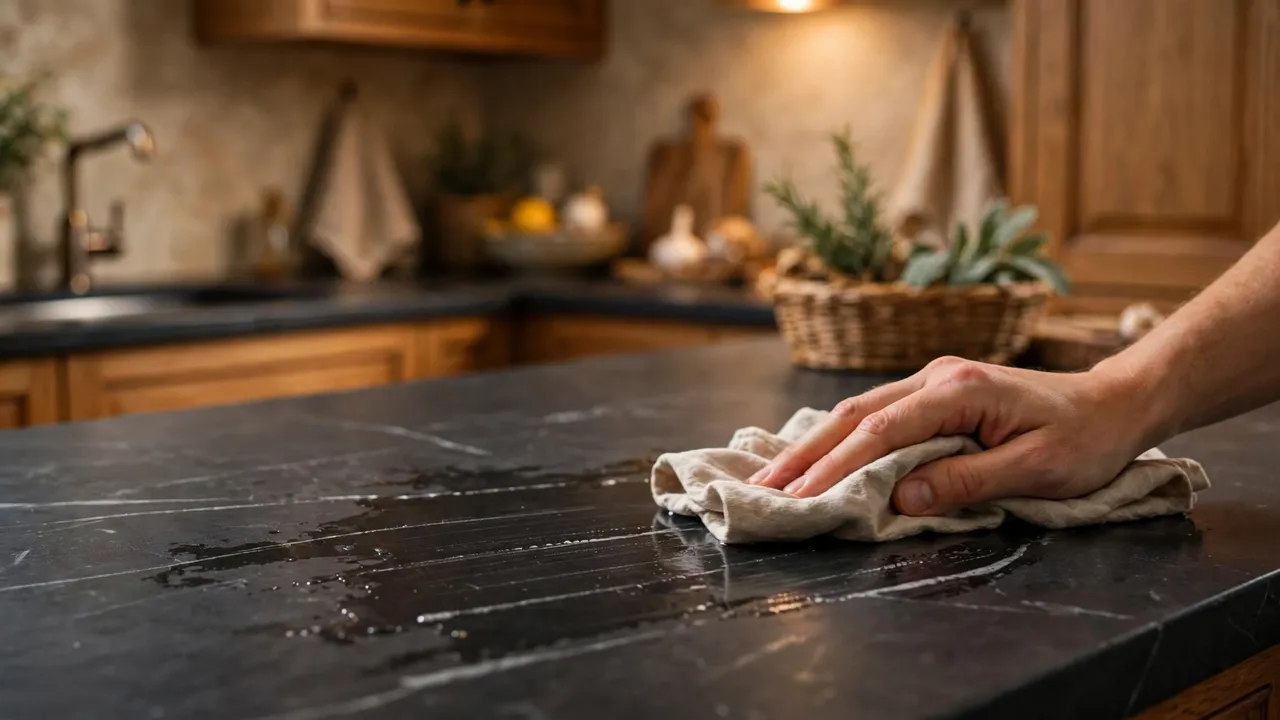
Soapstone is the most forgiving countertop stone you can own — and the one that confuses people most. It never needs sealing. It does not stain, because it is non-porous. Acids do not etch it. Hot pans can go straight onto it. Its one weakness is the opposite of other stones: soapstone is soft, so it scratches — and the good news is that scratches are the easiest damage in the kitchen to fix.
Daily cleaning is just warm water, a few drops of dish soap and a soft cloth. The mineral oil routine everyone talks about is cosmetic, not protective. This guide covers the daily clean, the truth about oiling, and the five-minute scratch repair that makes soapstone owners relax.
What you need
- Soft cloth or microfibre towel, plus a non-abrasive sponge
- Mild dish soap and warm water
- Plastic scraper (for stuck-on food)
- Food-grade mineral oil (optional — for colour, not protection)
- Fine sandpaper or a sanding sponge, 120 and 220 grit (for scratches)
Soapstone vs other stones: why the rules differ
| Soapstone | Granite | Marble | |
|---|---|---|---|
| Porous? | No — liquids stay on the surface | Yes — needs sealing | Yes — needs sealing |
| Sealing needed? | Never | Every 1–3 years | Every 6–12 months |
| Acid damage? | No etching | Can etch some stones | Etches easily |
| Heat? | Hot pans go straight on | Very heat-resistant | Heat-resistant, stains are the risk |
| Weakness | Soft — scratches and dents | Can crack on impact | Stains and etches |
How to clean soapstone countertops, step by step
Step 1: Wipe off crumbs and grit
Clear the surface and wipe it with a dry cloth. Grit dragged under a sponge is the main cause of the fine scratches people blame on the stone itself.
Step 2: Wash with warm soapy water
Mix a few drops of dish soap into warm water, wipe the whole counter with the damp cloth or sponge, and give prep areas and the sink surround an extra pass. For dried grease or a sticky ring, lay a warm damp cloth over the spot for a few minutes — soak time loosens almost everything on a non-porous surface.
Step 3: Rinse and dry
Wipe again with a clean damp cloth to lift the soap, then dry with a towel. Drying keeps the surface even-looking and stops water marks on the oiled finish.
Step 4: Lift stuck-on food with plastic only
Use a plastic scraper or an old credit card for anything stubborn. Metal scrapers and scouring pads leave marks on this soft stone — powdered cleansers and steel wool are the tools to keep away from soapstone.
Mineral oil: what it actually does
Let us clear up the biggest myth: mineral oil does not seal or protect soapstone. The stone is non-porous and needs no protection from liquids. Oiling is purely about looks. Soapstone naturally darkens over time, from grey towards deep charcoal, and it darkens unevenly where hands, water and cooking oils touch it most. Mineral oil speeds that darkening up and evens it out.
So the choice is yours. Like the natural, mottled, slow-changing look? Never oil at all. Want the even dark charcoal look soon? Oil regularly. Neither choice harms the stone.
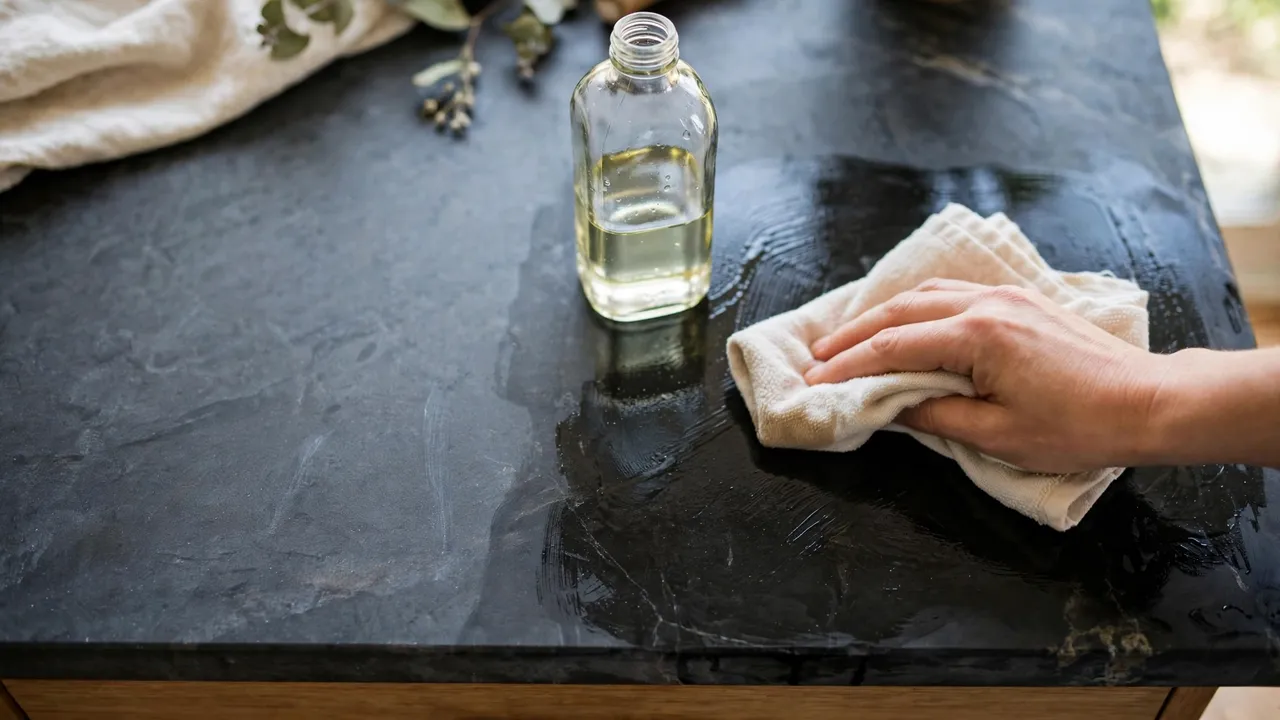
How to oil soapstone
- Clean the counter and let it dry completely — at least an hour. Oil over a damp surface goes on unevenly.
- Pour a little food-grade mineral oil onto a soft cloth and wipe a thin, even coat over the whole surface, edges included.
- Leave it about 20–30 minutes.
- Buff off all the excess with a clean dry cloth until the surface no longer feels greasy.
For a new counter, oil about once a week for the first one to three months, then every few weeks, then only when the colour starts looking uneven again. Use food-grade mineral oil only — cooking oils go rancid. Soapstone wax is an alternative that lasts longer between coats.
Fixing scratches: soapstone's party trick
- Light scratches: rub a little mineral oil over the mark, or even just your fingertip. Most surface scratches are only disturbed oil, and they darken and vanish at once.
- Deeper scratches and small dents: dampen the area and sand gently with 120-grit paper in small circles until the scratch is nearly gone, then finish with 220-grit used wet. Wipe away the dust and re-oil the spot — it may need two or three oil coats over a day or two to match the surrounding colour.
- Chips on an edge: sand the sharp edge smooth the same way. Soapstone is soft enough that home repair blends in well.
Damage that would mean a professional call-out on granite or quartz is a five-minute job here. That is the trade you made for the softness.
What to avoid on soapstone
- Abrasive powders, scouring pads and steel wool: they scratch. (Sandpaper is for deliberate repairs, not cleaning.)
- Harsh solvents and strong chemicals: they will not etch the stone, but they strip the mineral oil finish and force you to re-oil more often.
- Cutting directly on the surface: knives are the top cause of scratches. Use a board.
- Dropping heavy cast iron on an edge: the stone dents and chips more easily than granite.
One reassurance: unlike marble, soapstone is chemically inert, so vinegar, lemon and ordinary household cleaners do not damage the stone itself. Mild soap and water are still the best habit — they are all the stone needs, and they leave the oil finish alone.
Mistakes new soapstone owners make
- Trying to "seal" it. There is nothing to seal — the stone does not absorb.
- Panicking over the first scratch. Oil it, or sand it. It is a feature of the material, not a disaster.
- Oiling unevenly — one heavy coat in the middle, none at the edges — then wondering why the colour is patchy. Thin, whole-surface coats are the method.
- Using olive or vegetable oil instead of mineral oil. Food oils turn rancid on the surface.
- Scrubbing with gritty powders that leave a web of fine scratches.
More stone and kitchen care
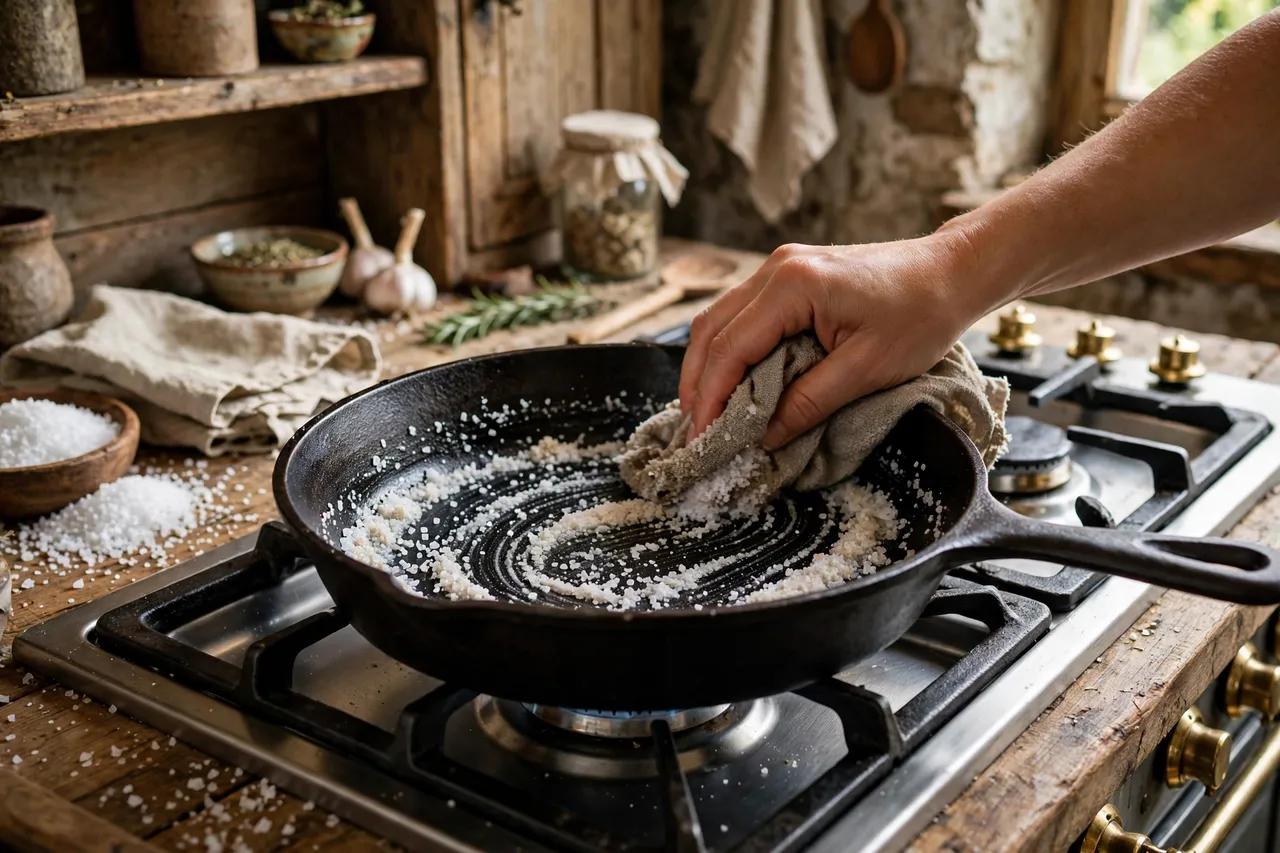
Compare this guide with how to clean granite countertops — same kitchen, opposite rules — and how to clean cast iron with salt for the pans that live on top.
Frequently asked questions
Do soapstone countertops need to be sealed?
No. Soapstone is non-porous, so liquids cannot soak in and stain it. Mineral oil is often confused with sealing, but it only darkens the colour evenly — it protects nothing, and skipping it does no harm.
What is the best cleaner for soapstone?
Warm water with a few drops of mild dish soap and a soft cloth, rinsed and dried. That is genuinely all it needs day to day. A 1:1 mix of 70% isopropyl alcohol and water works when you want to disinfect.
How often should I oil soapstone?
If you oil at all: weekly for the first one to three months on a new counter, then every few weeks, then only when the colour looks uneven. The stone darkens permanently over 6–8 months of oiling, after which coats last much longer.
Can soapstone stain?
Almost never permanently. Because the stone is non-porous, most "stains" are surface residue that wash off, or dark patches where oil or water has darkened the surface — those even out with a full oil coat or fade with time.
Can I put a hot pan on soapstone?
Yes. Soapstone handles direct heat exceptionally well — it was used for stoves and cookware for centuries. Hot pans straight from the stove will not crack or scorch it.
Why is my soapstone turning black in patches?
That is natural oxidation plus contact: the stone darkens where hands, water and oils touch it most. It is not damage. If you want it even, oil the whole surface; if you like the lived-in look, leave it — the whole counter evens out over time.
Sources
Method cross-checked against soapstone fabricator and stone-care guidance (non-porous, no sealing, mineral oil is cosmetic only, scratches sand out with 120/220 grit, hot pans safe). Written in our own words for A Natural Day readers.

Written by
MD DOLAR HOSEN
Technology expert and the founder and author of A Natural Day. He tests and reviews everyday tech, gadgets, and home essentials, and writes practical buying gui…
Comments (0)
Join the discussion — sign in to leave a comment.
Sign in to commentNo comments yet. Be the first to share your thoughts.