How to Clean Cast Iron With Salt: The Scrub That Protects Seasoning
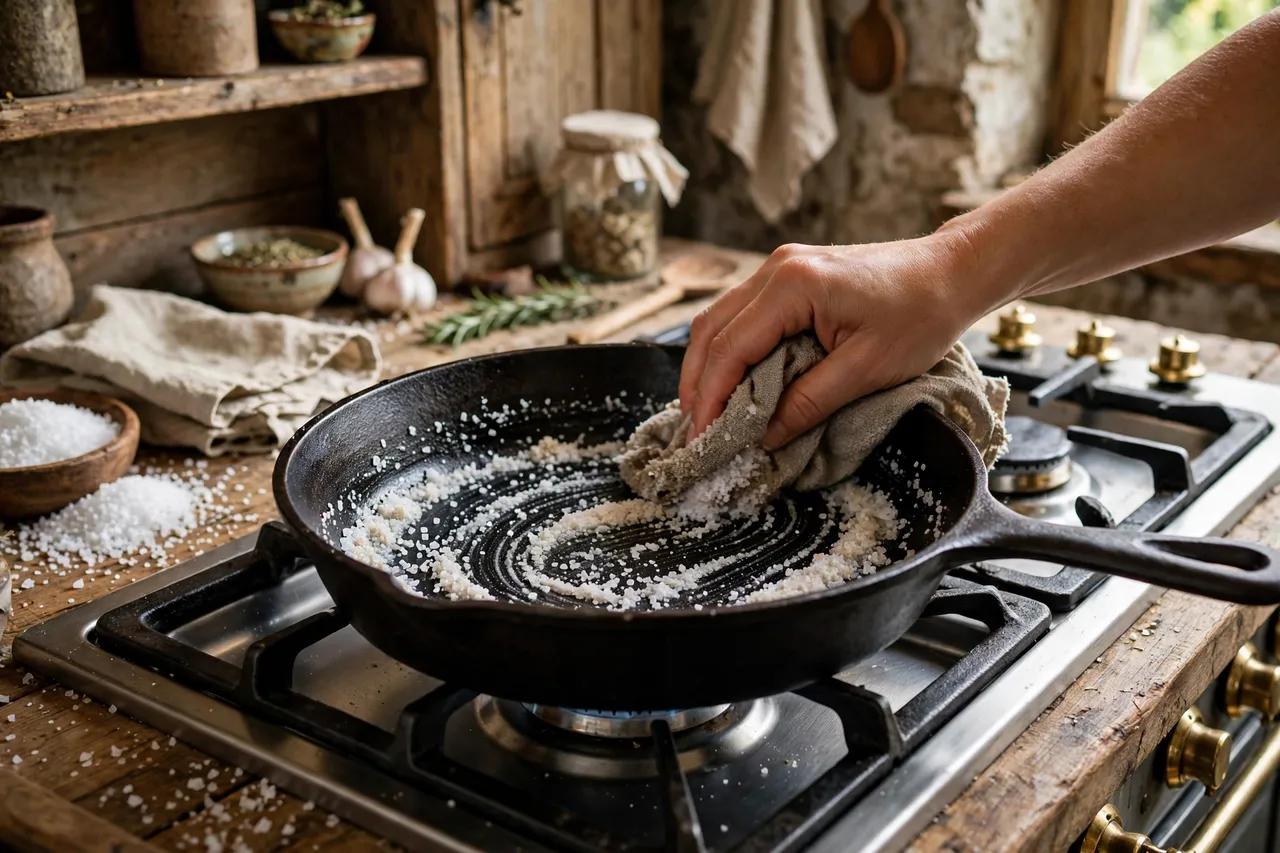
Cast iron's non-stick surface is not a coating — it is seasoning: layers of oil baked onto the iron until they harden into a slick, protective skin. Cleaning a cast iron pan is really about one thing: removing the food while keeping that seasoning. Coarse salt is the classic tool for the job. It scrubs like a scouring pad, absorbs grease as it goes, and leaves the seasoning untouched.
This guide gives the full salt method for everyday cleaning, the potato trick for rust, and the honest answer on the great soap debate.
What you need
- Coarse kosher salt or sea salt (about half a cup for a large skillet)
- Paper towels or a folded cloth
- A stiff brush or non-metal scrubber
- A potato, cut in half (for rust — optional but brilliant)
- Neutral cooking oil (canola, grapeseed, vegetable or flaxseed)
- Oven gloves or tongs
Why salt works
Salt crystals are hard enough to scour off stuck food and carbon, but they work by rolling and absorbing rather than gouging. As you scrub, the salt picks up grease and burnt bits and turns grey — that is the dirt leaving the pan instead of being smeared around. And unlike a long soak or a dishwasher cycle, a salt scrub never gives rust a chance to start.
How to clean cast iron with salt, step by step
Step 1: Start with a warm, dry pan
Let the pan cool until it is warm, not screaming hot, and tip out any loose food. The salt method needs no water at all for a normal clean — that is its biggest advantage.
Step 2: Add a generous layer of salt
Pour in a quarter to half a cup of coarse salt, enough to cover the cooking surface. Fine table salt works in a pinch, but coarse crystals scrub better and last longer before dissolving into the grease.
Step 3: Scrub in small circles
Take a folded paper towel or cloth, press down, and work the salt around the pan in small circles with firm pressure. Go over the sides and the corners where the base meets the wall. The salt will darken as it absorbs oil and lifts the stuck bits. For a really burnt-on patch, warm the pan gently on low heat for a few minutes first — warmth softens the grease and the salt finishes it.
Step 4: Tip out the dirty salt
Pour the used salt into the bin and wipe the pan clean with a dry towel. If residue remains, repeat with fresh salt rather than scrubbing harder. Only if food still clings should you rinse — briefly, with hot water and a brush, never a soak.
Step 5: Dry it completely — on the stove
This step decides whether your pan rusts. Towel-dry the pan, then set it on a low burner for a minute or two until every drop of moisture has evaporated. Drip-drying cast iron is how rust starts.
Step 6: Oil it while it is warm
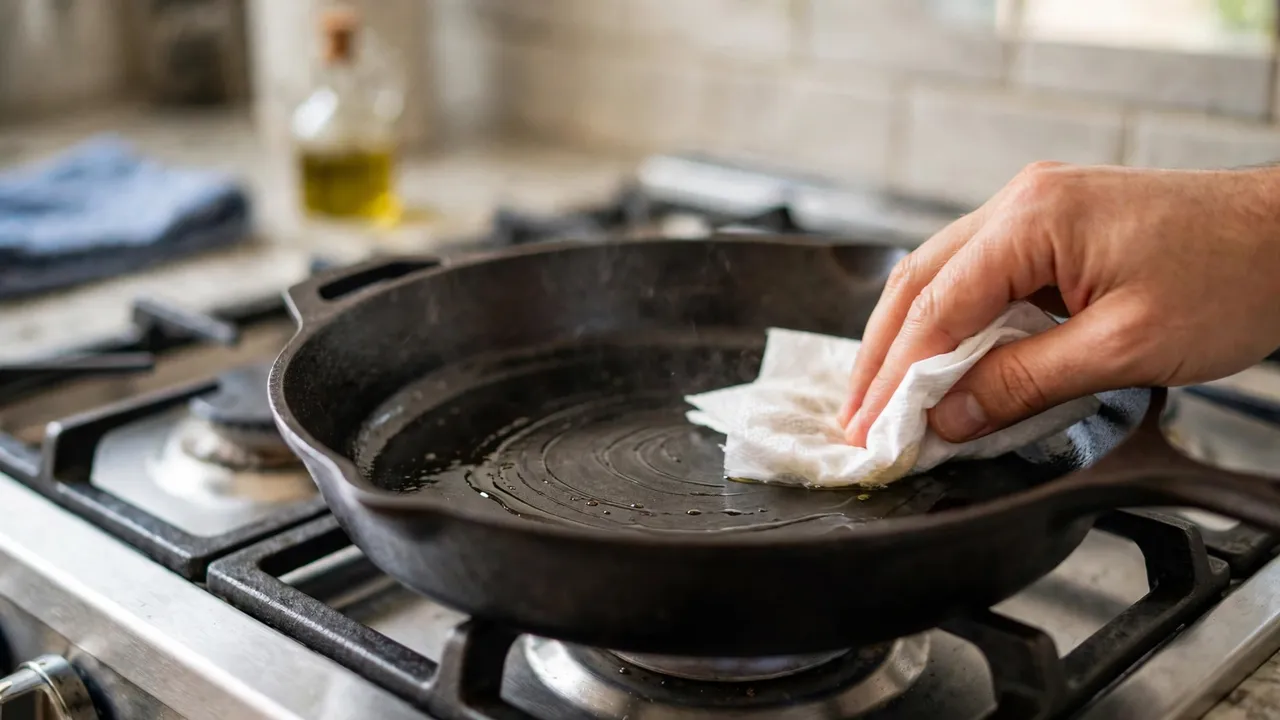
Put half a teaspoon of oil in the warm pan and rub it over the whole surface — inside, outside and handle — with a paper towel. Then keep wiping with a clean towel until the pan looks dry and no oil pools anywhere. Too much oil is the one mistake here: a thick layer turns sticky instead of seasoning. This whisper-thin coat protects the pan until its next use.
The potato trick for rust
For a rusty or long-neglected pan, salt plus a cut potato is the classic restoration. Sprinkle the pan generously with coarse salt, then scrub with the cut side of a halved potato, pressing firmly in circles. The potato is just moist enough to help the salt grind the rust away, and its shape gives you a safe handle. Rinse out the dirty salt and repeat with fresh salt until the rust is gone, then wash briefly, dry on the stove, oil, and re-season (below). Heavy rust may need steel wool first — that is fine on a pan you are restoring, just not as an everyday cleaner.
Re-seasoning after a deep clean
- Clean and dry the pan fully, stove-dried as above.
- Rub the thinnest possible coat of oil over the entire pan — then wipe it again, as if you were trying to remove it all. The layer should look almost dry.
- Place the pan upside down in the oven (foil on the rack below for drips) and heat to 450–500°F (230–260°C).
- Bake for one hour, then let the pan cool in the oven.
- Repeat two or three times for a neglected pan. One round is plenty after a normal salt clean.
The soap question, answered honestly
Old advice says never let soap touch cast iron. That rule comes from the days of lye-based soaps, which really did strip seasoning. A drop of modern mild dish soap with hot water and a brush will not remove baked-on seasoning — polymerised oil is far tougher than that. So: soap occasionally is fine, soaking is not, and the dishwasher is never fine. The salt method remains the best everyday choice simply because it needs no water and no drying race against rust.
Everyday habits for a pan that lasts generations
- Clean it while it is still warm — food releases far more easily.
- Preheat the pan before cooking and give food a moment to release before moving it; most "sticking" is impatience, not bad seasoning.
- Store it dry, with a paper towel inside if you stack pans, to absorb moisture and protect the surface.
- Cook with it often. Regular use is the real seasoning programme — every fry adds a microscopic layer.
Mistakes that ruin cast iron
- Soaking the pan in the sink "to loosen things". It loosens the seasoning and grows rust.
- Putting it in the dishwasher. Detergent plus hours of moisture strips and rusts it in one cycle.
- Leaving it to drip-dry. Always stove-dry.
- Pouring cold water into a screaming-hot pan. Thermal shock can warp or crack iron. Let it cool a little, and use hot water.
- Leaving too much oil after cleaning. Pooled oil bakes into sticky patches instead of hard seasoning.
More kitchen care guides
Cast iron often lives on a stone counter — see how to clean soapstone countertops and how to clean granite countertops for the surfaces around it, and common air fryer mistakes for the other hard-working pan in the kitchen.
Frequently asked questions
What kind of salt is best for cleaning cast iron?
Coarse kosher salt or coarse sea salt. The big crystals scrub effectively and absorb grease without dissolving too fast. Fine table salt works, but you will need more of it and it gives up sooner.
Can I use soap on cast iron?
Yes, occasionally. Modern mild dish soap does not strip baked-on seasoning — that warning dates from harsh lye soaps. What you must avoid is soaking and the dishwasher. For daily cleaning, the salt method is still simplest.
How do I remove rust from a cast iron skillet?
Scrub with coarse salt using a halved potato as your scrubber, repeating with fresh salt until the rust lifts. For heavy rust, start with steel wool and soapy water. Then dry on the stove, oil thinly, and re-season in the oven.
Why is my cast iron sticky after oiling?
Too much oil. The coat before heating should be wiped almost completely off — what remains should look dry. Thick oil cannot polymerise evenly, so it bakes into a gummy layer. Scrub with salt, dry, and re-oil much more thinly.
How often should cast iron be seasoned?
The thin oil coat after every clean (Step 6) maintains it. A full oven re-seasoning is only needed when the surface looks dull and grey, food starts sticking badly, or after a rust restoration — for a pan in regular use, that may be once a year or less.
Can I cook acidic foods like tomatoes in cast iron?
Short cooking is fine in a well-seasoned pan. Long, slow simmers of tomato sauce or wine can eat into the seasoning and pick up a metallic taste, so use a different pan for those and keep cast iron for frying, searing and baking.
Sources
Method cross-checked against established cast iron care guidance from makers and cooking references (salt scrub method, potato-and-salt rust removal, stove drying, thin-oil seasoning at 450–500°F). Written in our own words for A Natural Day readers.

Written by
MD DOLAR HOSEN
Technology expert and the founder and author of A Natural Day. He tests and reviews everyday tech, gadgets, and home essentials, and writes practical buying gui…


Comments (0)
Join the discussion — sign in to leave a comment.
Sign in to commentNo comments yet. Be the first to share your thoughts.