How to Clean a Porcelain Sink Without Scratching the Glaze
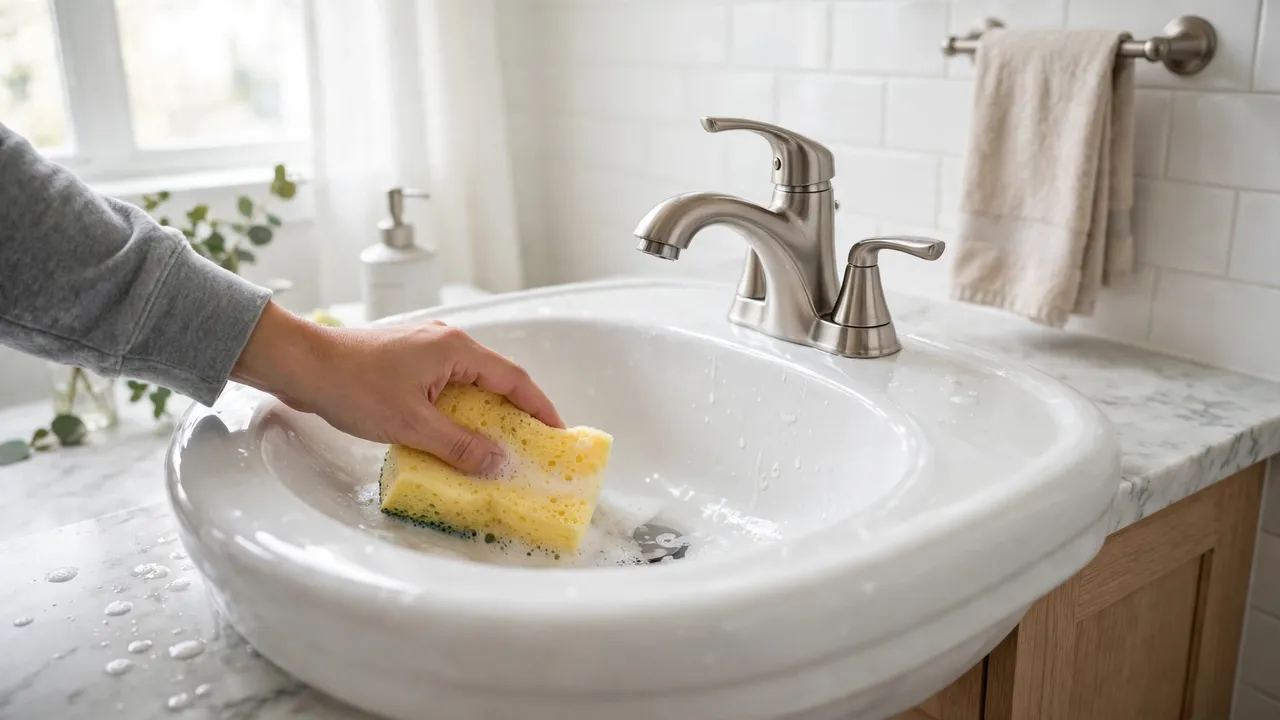
Porcelain is glass fused onto a base — that glossy glaze is the whole surface, and it is both the sink's beauty and its weakness. While the glaze is intact, porcelain barely stains and wipes clean in seconds. Once the glaze is scratched or eaten by harsh chemicals, dirt grips, stains set, and no cleaning brings the shine back. So every rule for a porcelain sink protects the glaze: soft tools only, gentle cleaners, and baking soda plus hydrogen peroxide as the heavy artillery — strong on stains, safe on the finish.
What you need
- Soft sponge or microfibre cloth (never a scouring pad)
- Baking soda
- Hydrogen peroxide (standard 3% household strength), ideally in a spray bottle
- Mild dish soap
- A pumice stone (only for metal marks and rust — used wet, see below)
- A dry microfibre towel
The everyday clean (2 minutes)
Step 1: Rinse and clear the sink
Rinse the basin with warm water and remove loose debris — hair, grit and food bits are themselves abrasive if you scrub them across the glaze.
Step 2: Wash with mild soapy water
A soft sponge with warm water and a drop of dish soap, wiped over the whole basin. This handles daily toothpaste, soap scum and kitchen film.
Step 3: Rinse and dry
Rinse with clean water and wipe dry with the microfibre towel. Drying is what keeps hard-water spots and soap film from building into visible grime — a dry sink stays clean-looking far longer.
The deep clean: baking soda + hydrogen peroxide
Step 1: Sprinkle baking soda over the damp sink
Wet the basin, then sprinkle baking soda evenly across it, concentrating on stained areas. Baking soda is a gentle abrasive — it lifts grime without scratching the glaze.
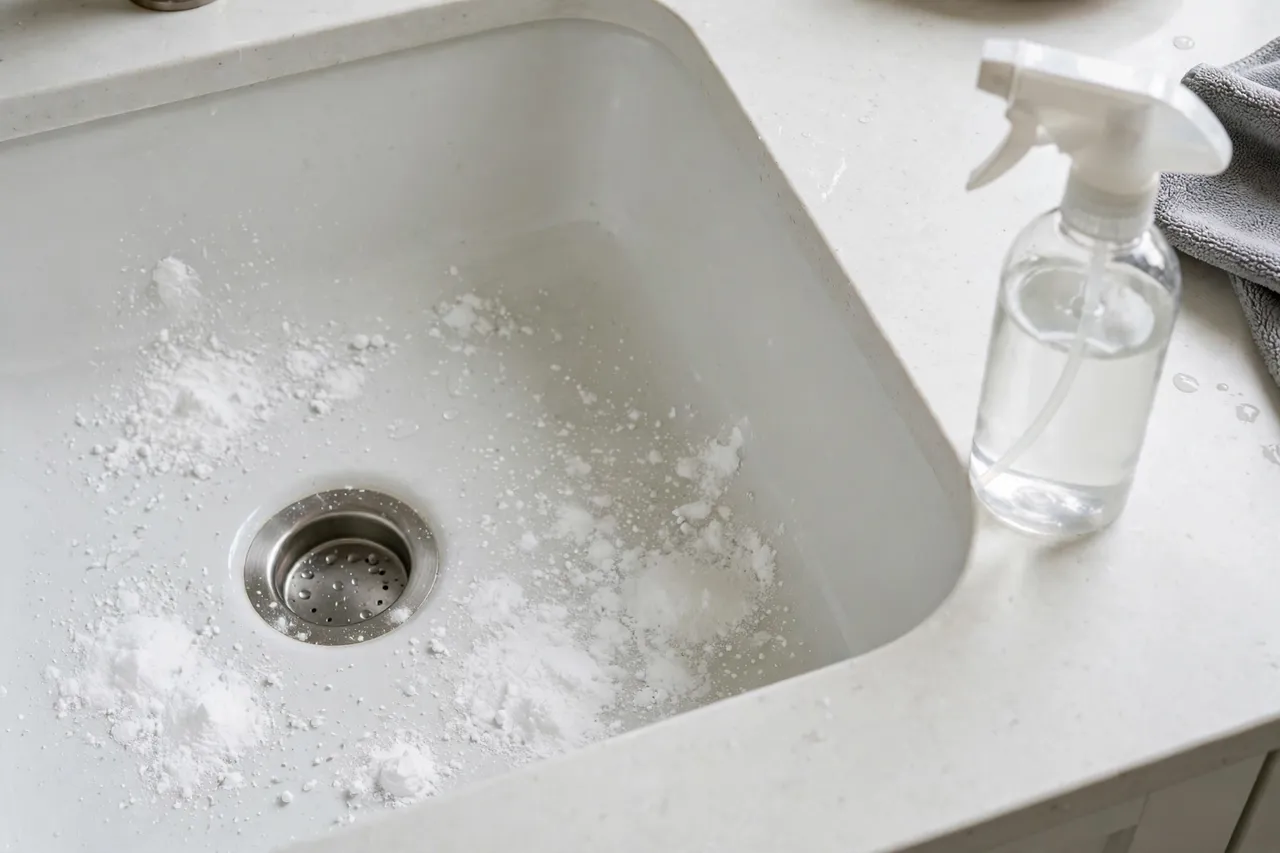
Step 2: Spray with hydrogen peroxide
Spray or pour hydrogen peroxide over the baking soda. It fizzes on contact — that reaction helps break down stains and brightens the surface, and peroxide disinfects as it works. It is also the colour-safe alternative to chlorine bleach, which matters for coloured and vintage porcelain.
Step 3: Scrub gently in circles
Work the paste over the basin with the soft sponge in circular motions, spending extra time on stains. Let it sit 10–15 minutes on deeper stains before scrubbing again.
Step 4: Rinse warm and dry
Rinse thoroughly with warm water and wipe completely dry. Repeat the paste on any stain that survives the first round rather than reaching for something harsher.
Stains and marks, one by one
| Mark | Fix |
|---|---|
| Grey metal marks (pots, cutlery) | Usually metal deposited ON the glaze, not damage. Buff with a baking soda paste; stubborn marks yield to a wet pumice stone used very gently (below). |
| Rust spots | Hydrogen peroxide paste as above, or lemon juice left on the spot. A wet pumice stone, rubbed lightly, removes rust rings. |
| Yellow discolouration | The baking soda and peroxide deep clean, left to sit longer. Coloured porcelain: peroxide only — never chlorine bleach, which can permanently damage colour and vintage glaze. |
| Hard-water scale around the tap | A cloth soaked in white vinegar laid on the scale for 15–30 minutes, then wiped. (Spot use only — see the caution below.) |
| Minor scratches | Baking soda paste buffed with a soft cloth can fade light marks. Deeper chips and cracks need a porcelain repair kit from a hardware store. |
The pumice stone: powerful, with rules
A pumice stone removes metal marks and rust that nothing else touches — but used wrong it scratches. The rules: keep both the stone and the sink soaking wet the entire time, use the lightest pressure, work a small area, and stop the moment the mark lifts. Never use a dry pumice stone on porcelain, ever.
What never to use on porcelain
- Steel wool and scouring pads: they cut the glaze — the one thing you cannot replace. This is the most common way porcelain sinks are ruined.
- Strong acids and harsh chemical cleaners used routinely: they eat the glaze over time, leaving it dull and porous. (A vinegar cloth on limescale, briefly and rinsed, is fine; soaking the basin in acid is not.)
- Ammonia-based cleaners: glaze damage with repeated use.
- Chlorine bleach on coloured or vintage porcelain: it can permanently discolour and weaken old glaze. White modern porcelain tolerates a diluted bleach soak occasionally — peroxide achieves the same brightening without the risk.
- Abrasive powders scrubbed hard: even "gentle" powders scratch if you lean on them; let the paste and time do the work.
Habits that keep porcelain glossy
- Wipe the sink down daily — 30 seconds with a cloth stops build-up before it starts.
- Deal with stains fresh. A stain treated today lifts in minutes; the same stain next month needs the full treatment.
- Use a sink grid or mat in kitchen sinks to stop heavy pots and pans marking and chipping the basin.
- Do not drop heavy cookware or tools into the sink — chips come from impacts, not cleaning.
- Rinse after hair dye, strong tea and coffee — porcelain's classic staining trio.
More bathroom and kitchen cleaning
Porcelain's neighbours need the same gentle touch — see how to clean shower tiles and how to clean granite countertops.
Frequently asked questions
What is the best way to clean a porcelain sink?
For daily cleaning, warm water with a drop of dish soap on a soft sponge, rinsed and dried. For a deep clean, sprinkle baking soda over the damp basin, spray with 3% hydrogen peroxide, let it fizz and sit 10–15 minutes, scrub gently with the sponge, then rinse and dry. Never use steel wool or scouring pads.
How do I get stains out of a porcelain sink?
Use the baking soda and hydrogen peroxide paste, left on the stain for 10–15 minutes, then gentle circular scrubbing. Rust responds to peroxide or lemon juice; grey metal marks buff out with baking soda paste or a wet pumice stone used lightly. Treat stains fresh whenever you can.
Can I use bleach on a porcelain sink?
On white, modern porcelain, a diluted bleach soak is occasionally tolerated — but it is risky on coloured or vintage porcelain, where it can permanently damage the glaze. Hydrogen peroxide brightens and disinfects without that risk, which is why this guide uses it instead.
How do I remove scratches from a porcelain sink?
First check whether they are true scratches or metal marks sitting on the glaze — most grey "scratches" are metal deposits that buff away with baking soda paste or a wet pumice stone. Genuine light scratches can be faded with baking soda paste; deep scratches and chips need a porcelain repair kit.
Is vinegar safe on porcelain?
For brief, targeted use — a vinegar-soaked cloth on hard-water scale, then rinsed — yes. As a routine cleaner or a long soak, no: acids gradually dull and eat the glaze. Keep vinegar for the limescale job only.
Why does my porcelain sink look dull?
Usually a film of soap and hard-water deposits — fixed by the deep clean and by drying the sink after use. If the dullness is in patches where the sink gets heavy use, the glaze itself may be worn or micro-scratched from abrasive cleaning, which cannot be polished back; prevention is the only cure.
Sources
Method cross-checked against porcelain care guidance from cleaning professionals and makers (baking soda and hydrogen peroxide method, soft tools only, pumice used wet, bleach caution for coloured and vintage porcelain). Written in our own words for A Natural Day readers.

Written by
MD DOLAR HOSEN
Technology expert and the founder and author of A Natural Day. He tests and reviews everyday tech, gadgets, and home essentials, and writes practical buying gui…

Comments (0)
Join the discussion — sign in to leave a comment.
Sign in to commentNo comments yet. Be the first to share your thoughts.