How to Clean a Hairbrush: Remove Hair, Oil and Build-Up the Right Way
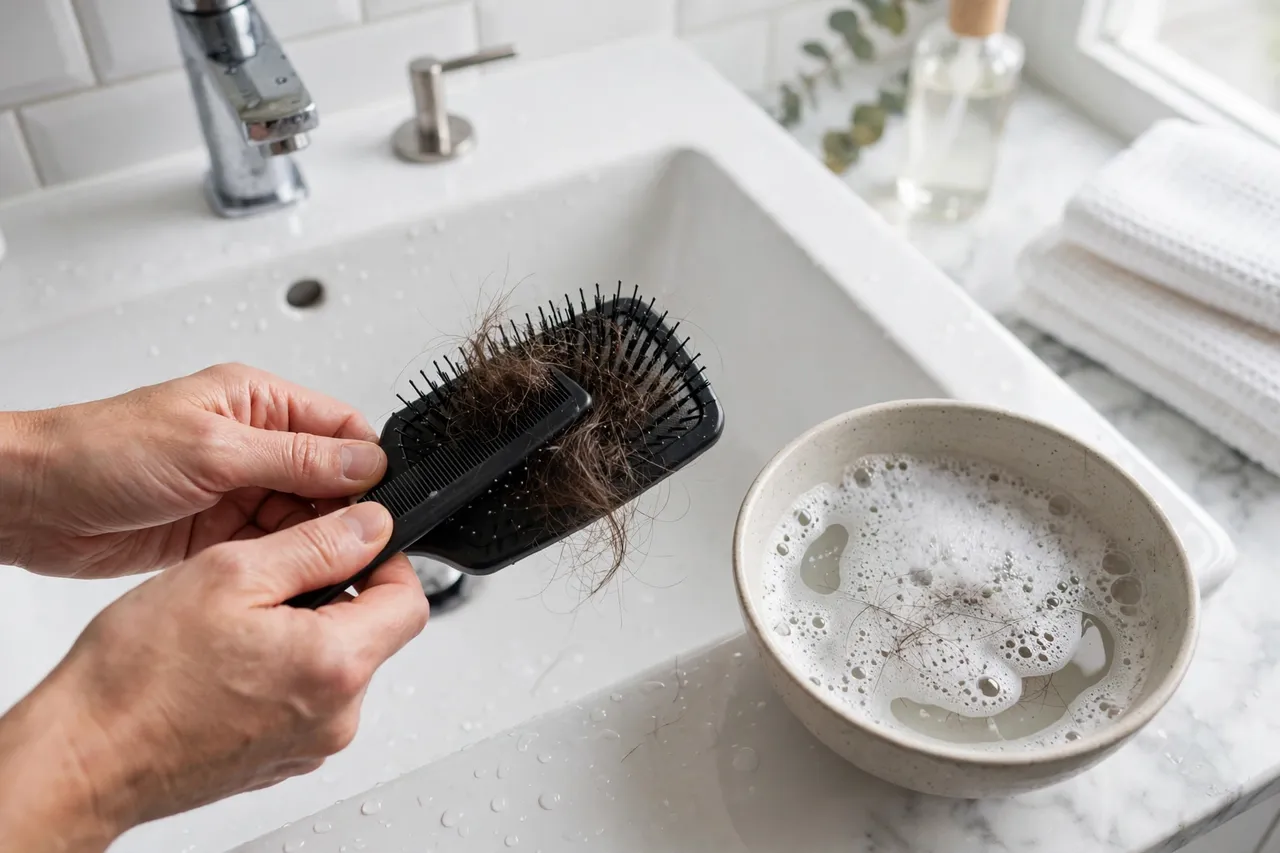
Every time you brush your hair, the brush collects more than loose strands. Scalp oil, dead skin cells, dust and the remains of gels, sprays and dry shampoo all settle at the base of the bristles. Then the next morning, that mix goes straight back onto your clean hair. It is the main reason hair can look greasy again hours after washing.
Cleaning a hairbrush takes about ten minutes, and the method changes slightly by brush type. Plastic brushes can soak. Wooden and natural-bristle brushes cannot. This guide covers both, plus how to clear the grey fuzz at the base of the bristles — and when a brush is simply finished.
What you need
- A rat-tail comb, chopstick, or any pointed tool
- Small scissors (for hair wound tightly around bristles)
- A bowl or sink of warm water
- Gentle shampoo (sulfate-free for natural bristles)
- 1–2 teaspoons of baking soda (optional, for heavy build-up)
- An old toothbrush
- A clean towel
How to clean a hairbrush, step by step
Step 1: Remove the hair while the brush is dry
Work the pointed end of a rat-tail comb under the mat of hair at the base of the bristles and lift it out in sections. Dry hair comes out far more easily than wet hair. If strands are wound tightly around a round brush, snip along the barrel with small scissors and pull the cut hair free. Pull out as much as you can — the wash works much better without a layer of hair in the way.
Step 2: Mix warm soapy water
Fill a bowl or the sink with warm (not hot) water and add a few drops of gentle shampoo. Swish to make light suds. For a brush heavy with product build-up, stir in 1–2 teaspoons of baking soda — it helps cut through grease and residue.
Step 3: Soak — but only the right brushes
Plastic and synthetic brushes: submerge the whole brush and soak for 3 to 5 minutes. If the brush has a soft cushion base, dip only the bristles and keep the cushion dry — water trapped inside the cushion grows mould.
Wooden brushes and natural (boar) bristles: never submerge them. Hold the brush and dip only the bristles into the water, swishing them for a minute or two. Water warps wood, cracks its finish and loosens the glue that holds bristle tufts.
Step 4: Scrub the base with a toothbrush
The grey fuzz and white flakes collect where each bristle meets the base — that is scalp oil and dead skin, and soaking alone rarely removes it. Dip an old toothbrush in the soapy water and scrub along the base of every row, working from the base of each bristle upwards. Dip and shake the brush in the water a few times as you go to wash the loosened dirt away.
Step 5: Rinse
Rinse the brush under cool or lukewarm running water until no suds remain. For wooden brushes, rinse the bristles only, keeping the handle as dry as you can. Shake off the extra water over the sink.
Step 6: Dry bristles-down
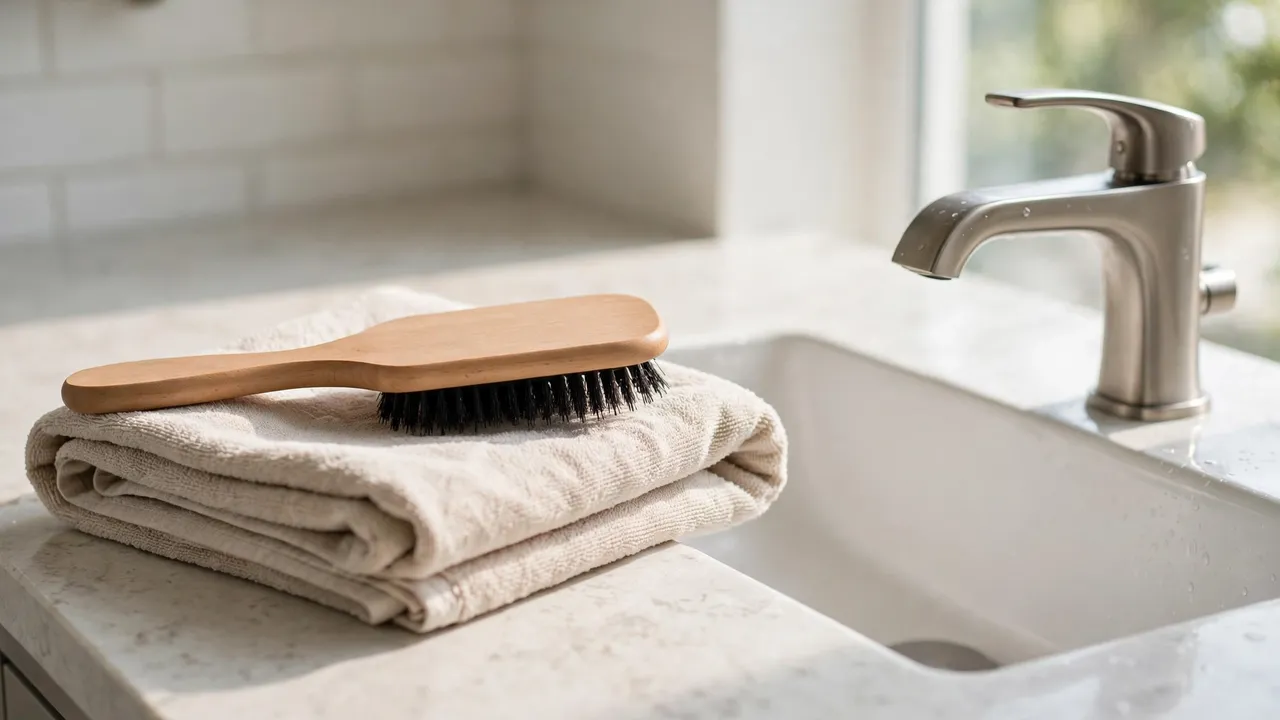
Lay the brush face down on a clean towel, bristles pointing down, so water drains out of the base instead of into it. Leave it to air-dry fully — a few hours for plastic, overnight for dense natural bristles. Never dry a brush bristles-up: the water sits in the base, which weakens glue and invites mould.
Cleaning by brush type
| Brush type | Soak? | Best cleaner | Watch out for |
|---|---|---|---|
| Plastic / synthetic paddle or vent brush | Yes, 3–5 minutes | Shampoo or a drop of dish soap | Keep cushion bases dry inside |
| Wooden brush or wooden pins | No — bristles only | Gentle shampoo | Water warps wood and cracks the finish |
| Natural boar-bristle brush | No — brief dip only | Sulfate-free shampoo | Hot water and harsh soap dry the bristles out |
| Round styling brush | Bristles only | Shampoo | Cut wound hair off the barrel first |
| Combs (plastic) | Yes | Soapy water, toothbrush between the teeth | Wooden combs: wipe, do not soak |
How often should you clean your hairbrush?
- Remove loose hair: every few days — it takes ten seconds and stops build-up compacting.
- Full wash: once a week if you use styling creams, gels or hairspray often; every 2 to 3 weeks if you use little product.
- After illness or head lice: wash at once, and follow the note below.
A note on head lice
If the brush has been used on hair with head lice, wipe it clean, then soak a plastic brush in hot (not boiling) soapy water for 10 minutes, or leave the brush sealed in a bag for 48 hours. Lice cannot live long away from a scalp, so time plus a hot wash handles brushes and combs safely. Wooden brushes: clean the bristles as above and rest the brush for 48 hours before use.
Mistakes that damage a hairbrush
- Soaking a wooden brush. Warped wood, cracked finish, loose bristles.
- Using boiling water. It can melt plastic pins and warp the brush.
- Skipping the hair removal. Washing over a mat of hair cleans the hair, not the brush.
- Drying bristles-up. Water pools in the base and grows mould inside cushion brushes.
- Using harsh chemicals. Bleach, acetone and strong solvents degrade plastic, rubber and natural bristles.
- Sharing brushes. Brushes carry skin flakes and bacteria between people; keep yours personal.
When to replace your hairbrush
Replace a brush when pins lose their tips or start scratching the scalp, when bristles fall out in clumps, when the cushion cracks or stays damp inside, or when the base still smells musty after a full clean. A good brush kept clean lasts years; a damaged one tears hair no matter how clean it is.
Keep the rest of your routine clean too
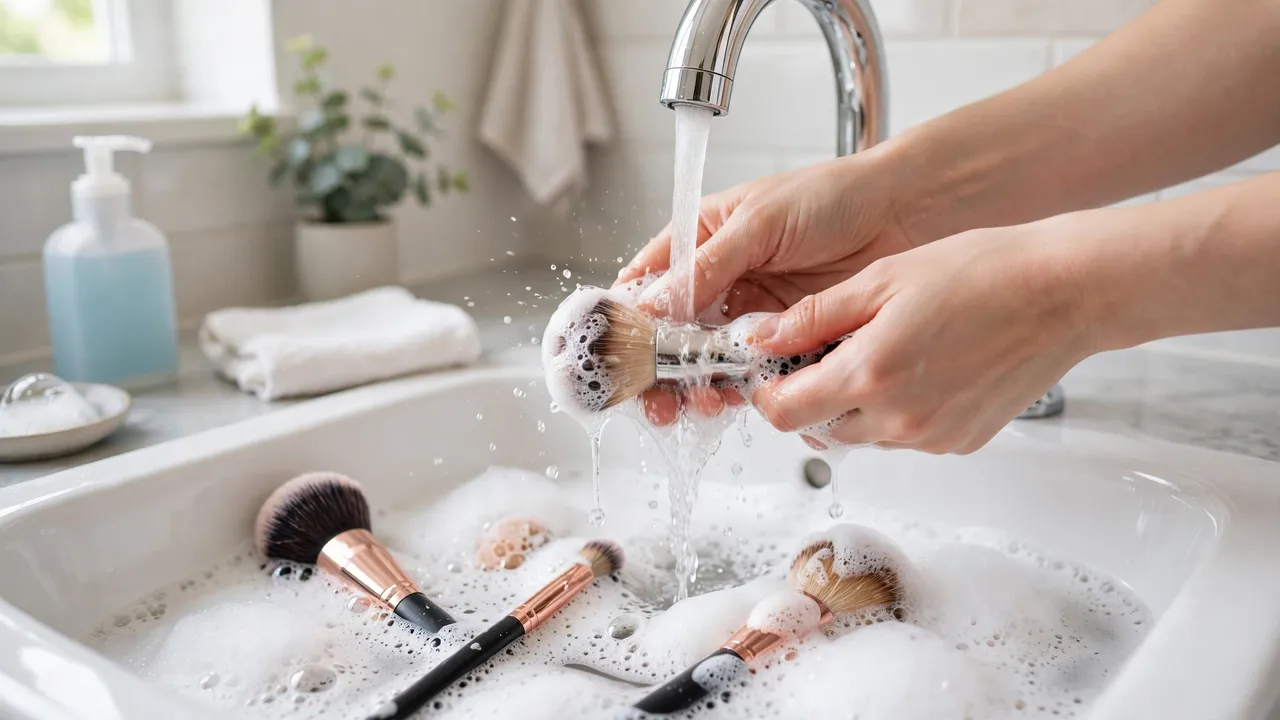
Brushes are one part of a clean routine. The same gentle wash keeps your makeup tools safe — see how to clean makeup brushes for the method dermatologists recommend.
Frequently asked questions
Why is there grey fuzz at the base of my hairbrush?
It is a mix of dead skin cells, scalp oil, dust and product residue that collects around each bristle. The toothbrush scrub in step 4 removes it. Regular hair removal every few days stops it building up.
Can I put my hairbrush in the dishwasher?
No. The heat and strong detergent can melt pins, warp plastic and ruin cushions and wooden handles. A ten-minute hand wash is safer and just as effective.
How do I clean a brush without getting the cushion wet?
Dip only the bristles in soapy water, holding the brush at an angle, and scrub with a damp toothbrush. Rinse the same way, then press the cushion with a dry towel to draw out any water that got in.
Does a dirty brush really make hair greasy?
Yes. The oil and product at the base of the bristles transfer back onto freshly washed hair with every stroke. Fine hair shows it fastest, because it picks up oil more easily.
What is the fastest daily habit to keep a brush clean?
Lift the loose hair out after every few uses with your fingers or a comb. Ten seconds of prevention replaces most of the deep cleaning later.
Can I use vinegar to disinfect my brush?
A short dip of the bristles in a half-vinegar, half-water mix can help with bacteria and hard-water build-up on plastic brushes. Rinse well afterwards, and skip vinegar on wooden brushes — keep it brief and bristles-only if you use it at all.
Sources
Method cross-checked against Healthline's hairbrush cleaning guide and HGTV's brush-care advice (soak plastic brushes only, keep wooden handles dry, dry bristles-down). Written in our own words for A Natural Day readers.

Written by
MD DOLAR HOSEN
Technology expert and the founder and author of A Natural Day. He tests and reviews everyday tech, gadgets, and home essentials, and writes practical buying gui…
Comments (0)
Join the discussion — sign in to leave a comment.
Sign in to commentNo comments yet. Be the first to share your thoughts.