How to Clean Terracotta Tiles Without Damaging Them
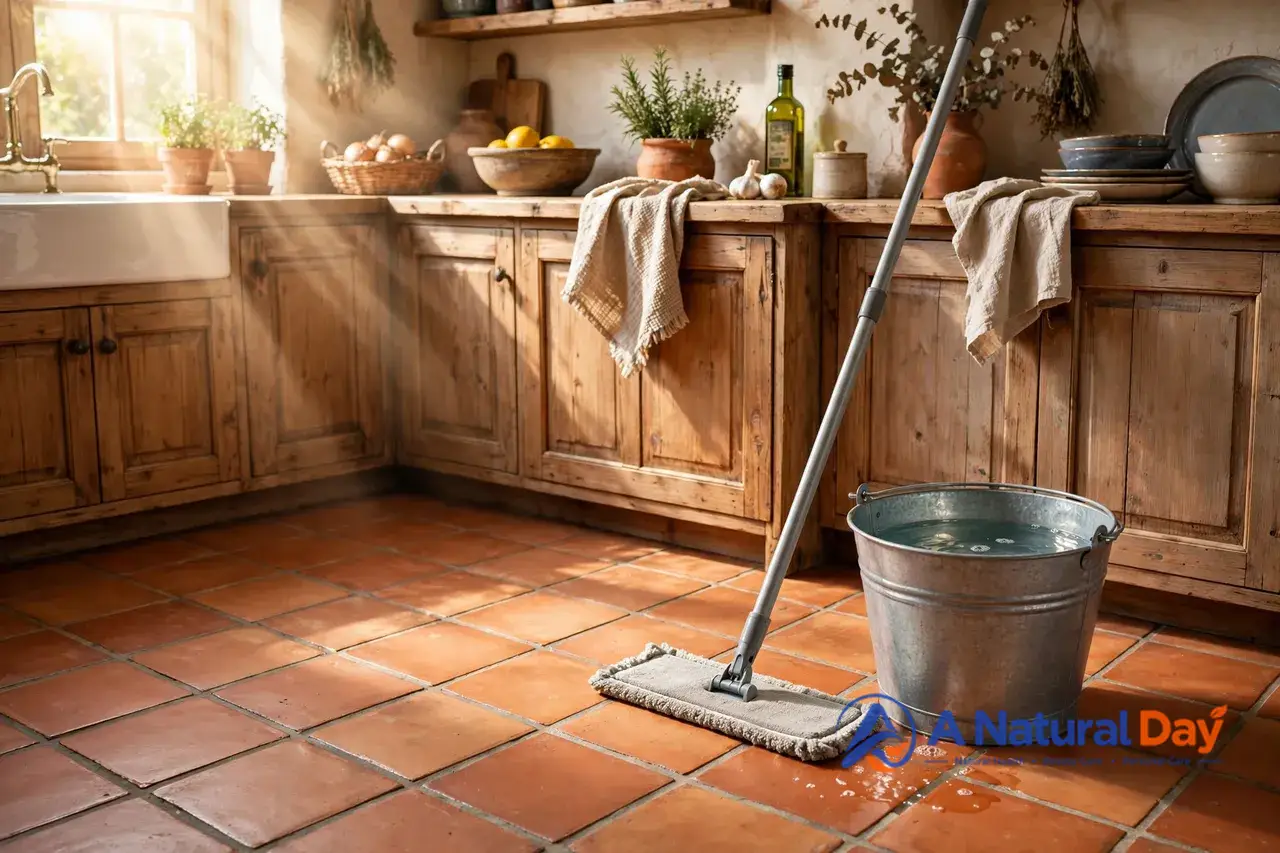
Terracotta tiles are baked clay, and that one fact decides everything about cleaning them. Clay is porous — it drinks in water, grease and dirt instead of letting them sit on the surface like glazed ceramic does. Cleaned the gentle way, a terracotta floor lasts for decades and keeps its warm color. Cleaned with the wrong products — vinegar, bleach, a steam mop — it stains, dulls and loses its seal. This guide covers the safe routine for both sealed and unsealed terracotta.
The short answer
Sweep or vacuum first so grit is not dragged across the surface. Then mop with a flat microfiber mop that is well wrung out, using warm water with a small amount of pH-neutral cleaner made for stone or unglazed tile. Work in small sections, rinse with clean water, and dry the floor with a towel or a dry mop instead of letting it air-dry. Never use vinegar or other acidic cleaners, bleach, abrasive pads, or a steam mop — acids eat into the clay and break down sealant, and excess water soaks into the pores and can leave dark patches.
Step 1: Check whether your tiles are sealed
Almost every cleaning decision depends on this, and the test takes 30 seconds. Drop a few drops of water on a hidden spot — behind a door or under furniture — and watch.
| What happens | What it means | How to clean |
|---|---|---|
| Water beads and sits on the surface | The tile is sealed and the seal is intact | The standard routine below; your main job is protecting the sealant |
| Water soaks in within a minute and darkens the clay | The tile is unsealed, or the seal has worn through | Use even less water, dry faster, and plan to reseal after cleaning |
Unsealed terracotta has nothing between the clay and whatever lands on it, so spills must be blotted at once. Sealed terracotta is more forgiving day to day, but the sealant itself is damaged by acids and harsh chemicals — which is where most cleaning mistakes happen.
What you need
- A soft broom, or a vacuum with a hard-floor setting and soft brush
- A flat microfiber mop
- Two buckets — one for the cleaning solution, one for rinse water
- A pH-neutral cleaner made for natural stone or unglazed tile
- A soft-bristled brush for grout lines (an old soft toothbrush works for small areas)
- Clean towels or a dry mop for drying
- Terracotta sealer, if your seal test shows the seal has worn through
The routine clean, step by step
Step 2: Sweep or vacuum the grit away
Always start dry. Sand and grit act like sandpaper under a mop and scratch the surface and the sealant. Sweep with a soft broom or vacuum on a hard-floor setting, and pay attention to edges and grout lines, where grit collects.
Step 3: Mop with a well-wrung microfiber mop
Mix the pH-neutral cleaner in warm water at the strength on the label — more cleaner does not mean cleaner tiles, it means more residue left in the pores. Dip the mop, then wring it until it is damp, not dripping. Terracotta should never be flooded. Mop in small sections, moving in the direction of the grout lines.
Step 4: Rinse with clean water
Soap film left on terracotta dries dull and attracts new dirt faster. Go over each section again with the mop rinsed in your second bucket of plain water, changing the rinse water when it turns cloudy.
Step 5: Dry the floor — do not let it air-dry
Buff the floor dry with towels or a dry mop. Standing water is terracotta's main enemy: it soaks into unsealed clay, leaves mineral marks as it evaporates, and can push salts to the surface as white patches. A dry floor also shows you straight away whether the clean worked.
Deep cleaning ground-in dirt and grout
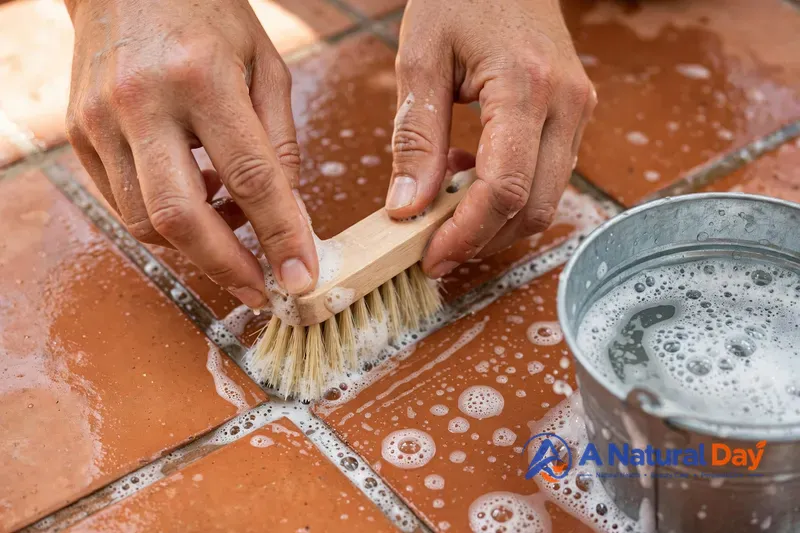
For a floor that stays dull after the routine clean, work section by section with the same pH-neutral solution and a soft brush, scrubbing in small circles and wiping the loosened dirt away with the mop before it dries back on. Grout lines hold the most grime: scrub them gently along their length with the soft brush. Never reach for a scouring pad or a stiff wire brush — both scratch clay and strip sealant.
For oily kitchen stains
For an oily kitchen stain on unsealed tile, blot up what you can, then cover the spot with a paste of baking soda and water, leave it for a few hours so it draws the oil out, and wipe it away. Repeat rather than scrubbing harder.
White patches: what they are and how to remove them
White, powdery patches on terracotta are usually efflorescence — salts from the clay and grout carried to the surface by moisture, then left behind when the water dries. Brush the dry powder off with a dry, stiff hand brush first. Most of it comes away without any liquid at all. Then keep the floor dry; the patches return only if moisture keeps moving through the tile. White patches that are hard and crusty, rather than powdery, are more likely limescale from hard water — on sealed tile, a stone-safe cleaner and patience will shift them; on unsealed tile, ask a tile shop before using anything stronger.
When to reseal — and how
Sealant wears away in traffic paths first — doorways, in front of the sink and stove. If your water-drop test soaks in where it used to bead, it is time. Clean the floor thoroughly using the steps above and let it dry completely, at least 24 hours. Apply a breathable sealer made for terracotta in thin, even coats with a flat applicator or lint-free cloth, following the product's coat count and drying times. Thin coats matter: one thick coat can dry cloudy and peel. Keep the floor dry for the full curing time on the label before mopping again.
Mistakes that damage terracotta tiles
- Vinegar and lemon cleaners. The most common bad advice. Acid dulls and slowly dissolves sealant, and on unsealed clay it can etch the surface directly. Old guides mention vinegar because traditional unsealed cotto was once washed that way before modern sealers existed — on a sealed floor today it does harm, not good.
- Steam mops. Steam forces moisture deep into the pores and can crack the sealant and loosen grout. Terracotta needs the opposite: as little water as possible.
- A soaking-wet mop. Flooding the floor drives dirt and water into the clay, leaving dark patches and white salt marks. Damp mop, small sections, dry straight away.
- Bleach and all-purpose sprays. Bleach can lighten the clay unevenly and weaken grout; general kitchen sprays often contain acids or leave films. A pH-neutral stone cleaner covers every routine job.
- Abrasive pads and powders. They scratch the surface, and every scratch holds dirt faster than the tile did before.
- Too much cleaner. Over-strong solution leaves residue inside the pores that dulls the color. Label strength, then rinse.
- Skipping the dry sweep. Mopping grit across the floor is how fine scratches — and a permanently dull traffic lane — happen.
More floor and tile cleaning guides
For glazed bathroom tile and grout, see how to clean bathroom tiles and grout. For the wooden furniture that often shares the room, see how to clean wood furniture properly.
Useful products for this job
A pH-neutral stone and tile cleaner handles every routine clean, and a breathable terracotta sealer restores protection when the water test shows the old seal has worn through. Prices change often, so check the current price on Amazon before you buy.
- pH-neutral stone and tile cleaners on Amazon — look for "safe for unglazed tile and natural stone" on the label, and avoid anything that lists vinegar or acid.
- Terracotta tile sealers on Amazon — choose a breathable, penetrating sealer for floors; check whether you want a natural matte finish or a color-enhancing one.
A Natural Day is reader-supported. When you buy through links on this page, we may earn an Amazon commission at no extra cost to you.
Frequently asked questions
Can you use vinegar on terracotta tiles?
No — it is the one cleaner to avoid. Vinegar is acidic: it dulls and breaks down sealant, and it can etch unsealed clay. A pH-neutral cleaner made for stone or unglazed tile does the same job safely.
How often should terracotta tiles be cleaned?
Sweep high-traffic areas a few times a week, mop once a week or when the floor looks dull, and reseal when the water-drop test starts soaking in instead of beading — typically every one to three years depending on traffic and the sealer used.
Can you steam clean terracotta tiles?
It is not recommended. Steam pushes moisture deep into the porous clay, can damage the sealant, and may loosen grout. A damp microfiber mop cleans terracotta well without the risk.
Why does my terracotta floor look dull after mopping?
Usually one of three causes: cleaner residue left in the pores (rinse with plain water and dry), a worn sealant (do the water-drop test), or fine scratches from grit that was mopped instead of swept away first.
How do you get white patches off terracotta?
If the patches are powdery, it is efflorescence — brush them off dry with a stiff hand brush and keep the floor dry so moisture stops carrying salts to the surface. Hard, crusty white marks are limescale; use a stone-safe cleaner and never an acid descaler on unsealed tile.
Can you mop terracotta with just water?
For a light clean, yes — warm water and a well-wrung mop is enough for weekly upkeep. Add a pH-neutral cleaner when the floor is greasy or ground-in dirt appears, and always rinse and dry afterward.

Written by
MD DOLAR HOSEN
Technology expert and the founder and author of A Natural Day. He tests and reviews everyday tech, gadgets, and home essentials, and writes practical buying gui…

Comments (0)
Join the discussion — sign in to leave a comment.
Sign in to commentNo comments yet. Be the first to share your thoughts.