How to Clean Retainers: Daily and Weekly Routine
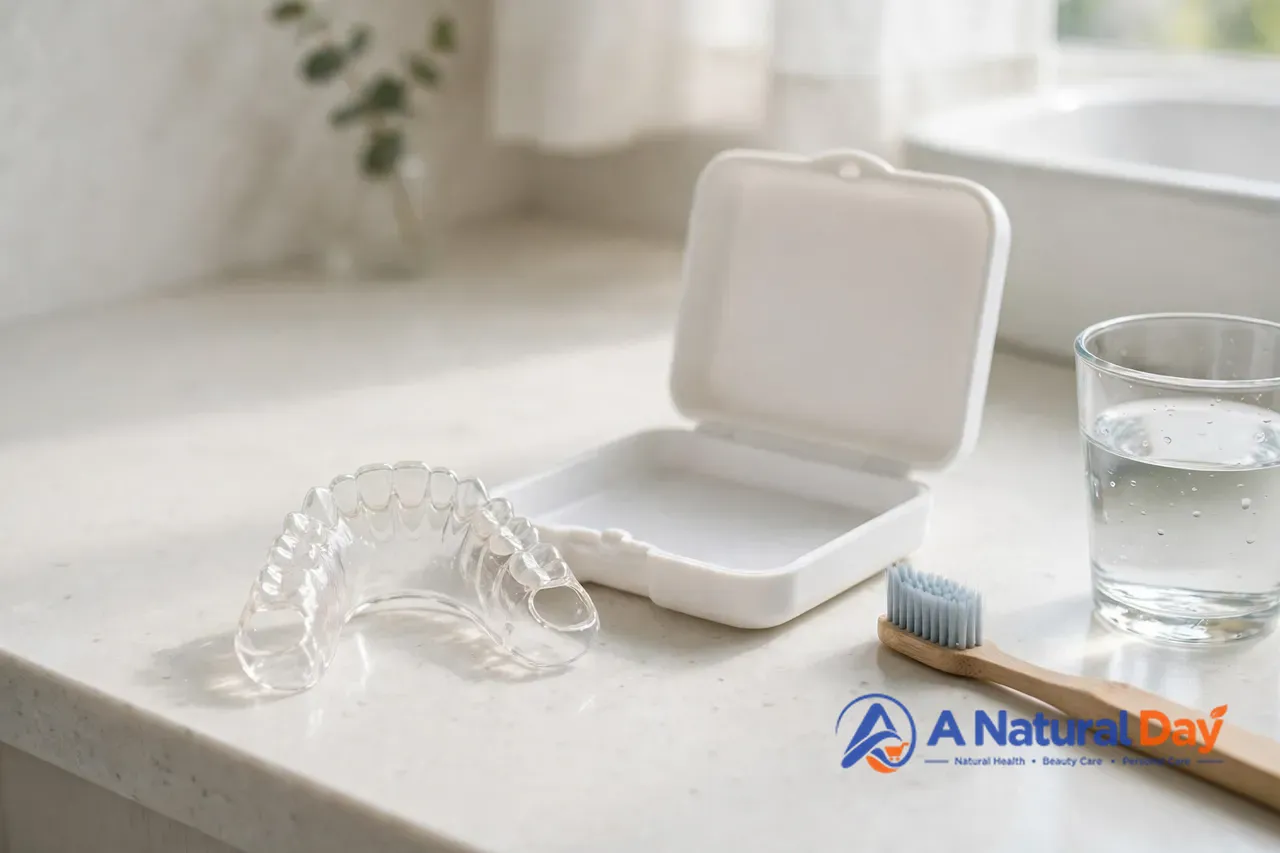
A retainer sits in a warm, wet mouth for hours every day, so it collects plaque, bacteria and odor fast. The good news is that cleaning it is simple: a quick brush every day and a short soak once a week. Most retainer damage does not come from dirt — it comes from cleaning it the wrong way, with hot water, toothpaste or harsh chemicals. This guide gives you the safe routine for every common retainer type.
The short answer
Rinse your retainer in lukewarm water every time you take it out. Once a day, brush it gently with a soft toothbrush and a drop of mild liquid soap, rinse well, and let it dry before it goes back in its case. Once a week, deep-clean it with a 15–20 minute soak in a retainer cleaning tablet solution. Never use hot water, toothpaste, bleach or mouthwash with alcohol — heat warps the plastic, and toothpaste scratches it, which makes it turn cloudy and hold even more bacteria.
Know your retainer type
The right method depends on the type you wear. Find yours in this table first.
| Retainer type | What it is | Daily method | Watch out for |
|---|---|---|---|
| Clear plastic (Essix / Vivera) | A thin, see-through tray molded to your teeth | Rinse, gentle brush with mild soap, rinse again | Warps in hot water; scratches and turns cloudy with toothpaste |
| Hawley (wire and acrylic) | A colored acrylic plate with a metal wire across the front teeth | Brush the acrylic, the wire and the clasps gently | Long soaks can affect the metal parts — follow the product's time limit |
| Fixed (bonded) retainer | A thin wire glued behind your teeth — it does not come out | Brush around the wire and floss under it every day | Plaque builds up fast around the bonding pads and gumline |
What you need
- A soft-bristled toothbrush kept only for your retainer
- Mild liquid soap — clear, unscented dish soap or hand soap works well
- Lukewarm water (never hot)
- Retainer cleaning tablets for the weekly soak
- A clean cup or small bowl for soaking
- White vinegar and baking soda (optional, for buildup and odor)
- A clean retainer case
The daily routine, step by step
Step 1: Rinse it the moment you take it out
Run the retainer under lukewarm water as soon as it leaves your mouth. This washes away saliva and loose debris before they dry and harden on the surface. Dried plaque is much harder to remove, and it is what makes a retainer smell. If you wear your retainer at night only, do this every morning.
Step 2: Brush gently with soap — not toothpaste
Put a drop of mild liquid soap on your separate soft toothbrush and brush every surface: outside, inside where it touches your teeth, and the grooves. Use light pressure. Toothpaste feels like the obvious choice, but most toothpastes are mildly abrasive. On clear plastic they leave tiny scratches that turn the retainer cloudy and give bacteria more places to hide.
Step 3: Rinse well and let it dry
Rinse off all the soap under running water — soap residue tastes bad and can irritate your mouth. Shake off the extra water and let the retainer air-dry for a few minutes on a clean surface before you close it in its case. A retainer stored wet in a closed case grows odor-causing bacteria faster.
The weekly deep clean
Daily brushing handles fresh plaque. Once a week, a soak removes the buildup brushing misses. Pick the method that fits what you have at home.
Method 1: Retainer cleaning tablets
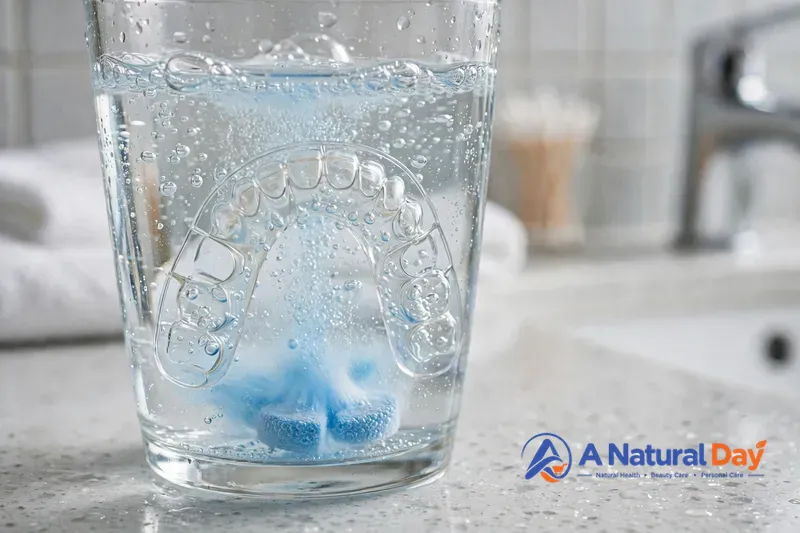
Fill a cup with lukewarm water, drop in one tablet made for retainers or aligners, and add the retainer so it is fully covered. Leave it for the time on the packet — usually 15 to 20 minutes. Rinse it well before wearing it. Do not leave it soaking for hours; long soaks can weaken clear plastic and affect the metal parts of a Hawley retainer.
Method 2: White vinegar soak for white buildup
If you see white or chalky patches, that is mineral buildup from saliva, and soap alone will not shift it. Soak the retainer in a mix of equal parts white vinegar and lukewarm water for 15 to 30 minutes. Then brush gently with your soft brush, rinse very well, and the patches should be gone or much lighter. Use this only once in a while, not every day.
Method 3: Baking soda for odor
For a retainer that smells even after brushing, stir a teaspoon of baking soda into a cup of lukewarm water and soak for 15 minutes. Baking soda neutralizes odor gently. Rinse well afterward. Do not scrub with dry baking soda powder — that is abrasive, like toothpaste.
Clean the case too
A dirty case puts germs straight back onto a clean retainer. Wash the case with soap and warm water a few times a week, rinse it, and let it dry fully with the lid open. If it stays slimy or smells even after washing, replace it — cases are cheap, and orthodontists recommend a fresh one every few months.
Cleaning a fixed (bonded) retainer
A fixed retainer never comes out, so you clean it in place as part of brushing your teeth. Angle your toothbrush to reach around the wire and each bonding pad. Then clean under the wire once a day with floss threaders, a floss pick made for braces, or a water flosser — normal flossing alone cannot get under the wire, and that hidden spot is where plaque and tartar collect first. For a fuller routine, see our guide on how to use a Waterpik water flosser.
Mistakes that damage retainers
- Hot or boiling water. Heat warps clear plastic, and a warped retainer no longer holds your teeth in place. Lukewarm only, every time — and never the dishwasher.
- Toothpaste. Its fine abrasives scratch plastic, causing cloudiness and faster buildup. Mild soap cleans just as well without the damage.
- Bleach and strong cleaners. Bleach can weaken the material, discolor acrylic and is not safe to put in your mouth. Never use it, even diluted.
- Alcohol-based mouthwash soaks. Alcohol can dry out and crack the plastic. A brief rinse is fine for some types, but do not soak in it.
- Skipping days. Plaque hardens within a day or two. A retainer cleaned daily takes two minutes; one left for a week needs a deep clean and may keep its odor.
- Wrapping it in a napkin. That is how retainers end up in the trash at restaurants. If it is not in your mouth, it belongs in its case.
- Scraping buildup with a knife or pin. Hard deposits that survive a vinegar soak are a job for your orthodontist's tools, not sharp metal that scratches and cracks the surface.
More dental and personal care guides
For the rest of your routine, see how to use a Philips Sonicare 4100 toothbrush and how to use a Waterpik Aquarius WP-660 water flosser.
Useful products for this job
Two products cover almost all retainer care: cleaning tablets for the weekly soak, and an ultrasonic cleaner if you want a hands-off deep clean. Prices change often, so check the current price on Amazon before you buy.
- Retainer cleaner tablets on Amazon — choose tablets labeled for retainers and aligners, and follow the soaking time on the packet.
- Ultrasonic retainer cleaners on Amazon — a small ultrasonic bath loosens buildup in the grooves without scrubbing; useful if your retainer turns cloudy quickly.
A Natural Day is reader-supported. When you buy through links on this page, we may earn an Amazon commission at no extra cost to you.
Frequently asked questions
How often should you clean a retainer?
Every day. Rinse it each time you remove it, brush it once a day with mild soap, and give it a soaking deep clean once a week. Clean the case a few times a week as well.
Can you clean a retainer with toothpaste?
It is not a good idea. Most toothpastes are abrasive and scratch the surface, which makes clear retainers turn cloudy and lets bacteria stick more easily. A soft brush with mild liquid soap is safer and works just as well.
How do you get white buildup off a retainer?
Soak it for 15 to 30 minutes in equal parts white vinegar and lukewarm water, then brush gently and rinse well. The white patches are mineral deposits, and the mild acid in vinegar dissolves them. If hard crust remains, ask your orthodontist to remove it rather than scraping it yourself.
Can you use denture cleaner on a retainer?
Many people do, and tablets made for retainers and aligners are the safer first choice. If you use a denture tablet, check that it is safe for your retainer's material, keep to the stated soaking time, and rinse very well. Avoid denture cleaners with bleach on clear plastic.
Why does my retainer smell bad even after cleaning?
Usually because bacteria are living in scratches, in dried plaque, or in the case itself. Try a baking soda soak, wash and fully dry the case, and check that you are letting the retainer dry before storing it. If the smell stays, the plastic may be old and porous — ask your orthodontist whether it is time for a replacement.
When should a retainer be replaced?
When it cracks, no longer fits snugly, stays cloudy or smelly after a proper deep clean, or your orthodontist says so. A loose or damaged retainer cannot hold your teeth in position, so do not keep wearing one that has changed shape.

Written by
MD DOLAR HOSEN
Technology expert and the founder and author of A Natural Day. He tests and reviews everyday tech, gadgets, and home essentials, and writes practical buying gui…


Comments (0)
Join the discussion — sign in to leave a comment.
Sign in to commentNo comments yet. Be the first to share your thoughts.