How to Clean a Microwave: The Steam Method (Vinegar or Lemon)
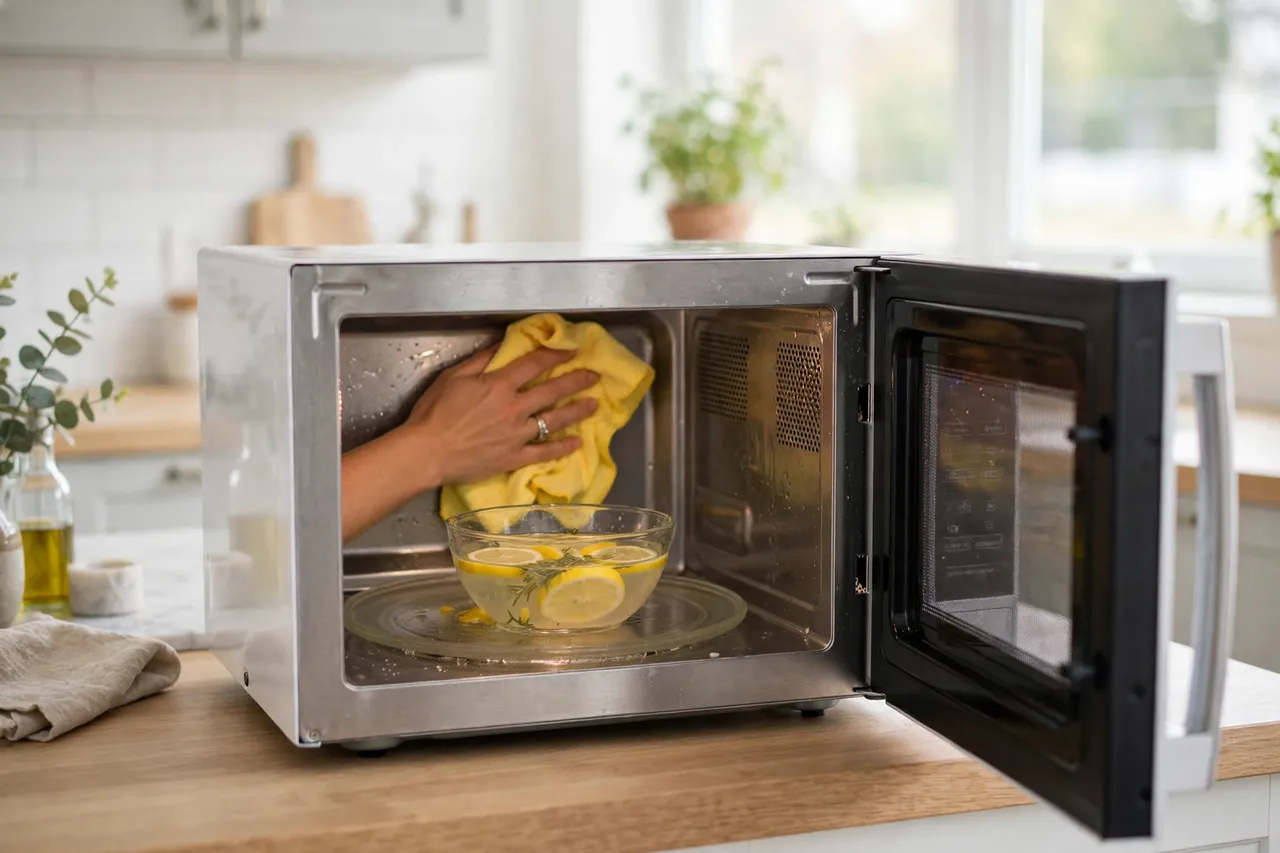
A dirty microwave cleans itself, almost: you steam a bowl of water and vinegar (or lemon) inside it, wait, and the baked-on splatters that looked permanent wipe off with a cloth. Steam does the work that scrubbing used to — it softens dried food on the walls, ceiling and door, including the places your hand cannot reach. The whole job takes about 15 minutes, most of it waiting, and needs nothing stronger than vinegar.
What you need
- A microwave-safe bowl
- 1 cup of water plus 2 tablespoons of white vinegar — or half a lemon, sliced
- A soft cloth or sponge (never a scouring pad)
- Dish soap and warm water for the turntable
- Baking soda (for stubborn spots and smells)
The steam clean, step by step
Step 1: Take out the turntable and wash it
Remove the glass turntable and the roller ring underneath. Wash both in warm soapy water in the sink (most turntables are also dishwasher-safe) and set them aside to dry. This also clears the floor of the microwave for wiping.
Step 2: Make the steam bowl
Fill the bowl with 1 cup of water and add either 2 tablespoons of white vinegar or the lemon slices (give them a squeeze first). Vinegar cuts grease and neutralises odours; lemon does the same job with a fresher smell. Plain water alone works on light dirt — the acid just helps on grease and smells.
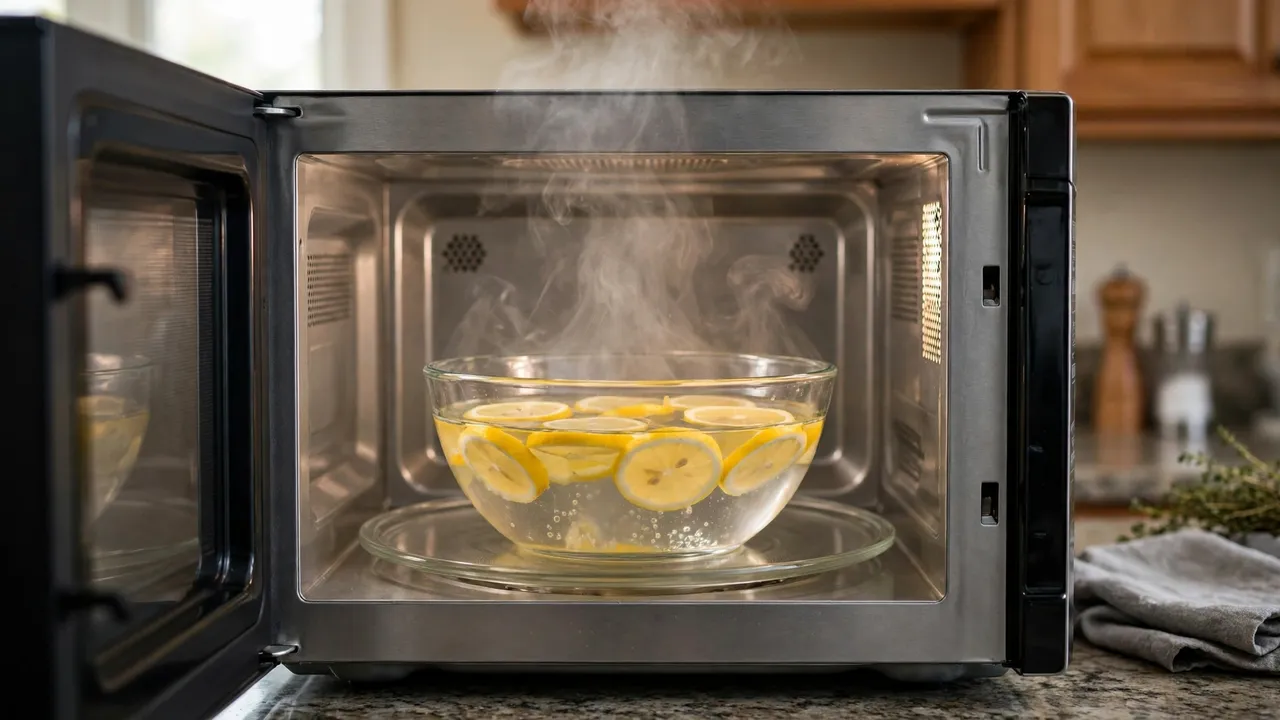
Step 3: Microwave on high for 3–5 minutes
Run it until the water boils and the window fogs up with steam. If your microwave is lower-powered, give it the full 5 minutes.
Step 4: Do not open the door — wait 5–10 minutes
This waiting step is where the cleaning actually happens. The trapped steam saturates every surface and softens the dried-on food. Opening the door early lets the steam escape and halves the effect, so leave it closed and let it work.
Step 5: Wipe everything down
Carefully lift out the bowl (it is hot) and wipe the ceiling, walls, floor and the inside of the door with the cloth or sponge. Softened splatters should lift with almost no pressure. Work top to bottom so drips fall onto surfaces you have not wiped yet.
Step 6: Stubborn spots get baking soda paste
Anything that survives the steam gets a paste of baking soda and a little water on a damp cloth, rubbed gently. Rinse the cloth and wipe the residue away. Never reach for a scouring pad — scratches in the interior coating give future grime more to grip and can damage the finish.
Step 7: The details — door seal, exterior, and underneath
Wipe the folds of the rubber door seal with a cloth or cotton swab dipped in the vinegar water — food hides there and causes smells. Clean the exterior and the control panel with a cloth dampened with soapy water (damp, not wet — keep liquid out of the vents and controls). Replace the dry turntable and ring.
Getting a burnt smell out
- Steam with vinegar first — the full method above, maybe twice. Vinegar steam neutralises most burnt-food odours because the smell lives in residue on the surfaces and in the vents.
- Clean the door seal and vents — lingering smell after a clean interior usually means particles are trapped in the seal folds or the vents.
- Baking soda overnight: leave a small open bowl or box of baking soda inside the closed microwave overnight to absorb what remains.
- Over-the-range models: check the grease and charcoal filters — a saturated filter holds the smell no matter how clean the cavity is, and charcoal filters are replaceable, not washable.
- The waveguide cover (the small flat panel on the inside wall): wipe it gently with a damp cloth only — never soak it. If it is charred through, it needs replacing; a damaged cover is a repair job, not a cleaning job.
What never to do
- No bleach or ammonia cleaners inside: harsh chemical residues and fumes have no place where food is heated.
- No steel wool or scouring pads: they scratch the interior coating, and scratched surfaces hold grime and odours worse forever after.
- No soaking the waveguide cover or spraying cleaner into the vents: liquid inside the machine's workings is a fault waiting to happen. Apply cleaner to the cloth, not the microwave.
- Do not run it empty to "burn off" smells: running a microwave empty can damage it. Steam is the tool.
Keep it clean with almost no effort
- Cover food with a microwave cover or a plate — most splatter never happens.
- Wipe fresh splashes immediately with a damp cloth; 10 seconds now beats the steam treatment later.
- Steam-clean monthly if you use it daily — it takes 15 mostly-hands-off minutes.
- Leave the door ajar for a few minutes after strong-smelling food so moisture and odour escape instead of settling.
More kitchen cleaning guides
Steam and patience clean most of the kitchen: see how to clean a waffle maker and how to clean stainless steel appliances.
Frequently asked questions
What is the easiest way to clean a microwave?
The steam method: microwave a bowl of 1 cup water with 2 tablespoons of vinegar (or lemon slices) on high for 3–5 minutes until it boils and steams, leave the door closed for another 5–10 minutes, then wipe the softened grime off with a cloth. Wash the turntable separately in the sink.
How do you get dried, baked-on food out of a microwave?
Steam is the answer — it rehydrates and softens the dried food so it wipes away instead of needing to be chipped or scrubbed. For the few spots that survive, use a baking soda paste on a damp cloth. Never use a scouring pad, which scratches the interior.
How do you get a burnt smell out of a microwave?
Steam-clean with vinegar, possibly twice, and wipe the door seal folds where particles hide. Then leave an open bowl of baking soda inside overnight to absorb the rest. If the smell persists in an over-the-range model, the charcoal filter is likely saturated and needs replacing.
Can you use vinegar to clean a microwave?
Yes — white vinegar is the standard choice. Two tablespoons in a cup of water, steamed as described, cuts grease and neutralises odours. Use white vinegar, not coloured kinds, so nothing stains. Lemon does the same job if you prefer the smell.
How often should you clean a microwave?
Wipe splashes as they happen, and do the full steam clean about once a month for a daily-use microwave — sooner whenever there is a visible build-up or a smell when the door opens. The turntable can go through the dishwasher whenever it looks cloudy.
Is it safe to clean a microwave with baking soda?
Yes. As a paste on a damp cloth it is a gentle abrasive that lifts stubborn spots without scratching, and left dry in an open bowl overnight it absorbs odours. Just wipe the paste residue away with a clean damp cloth afterwards.
Sources
Method cross-checked against appliance-care guidance (vinegar or lemon steam, closed-door dwell time, turntable washed separately, no bleach, ammonia or scouring pads, charcoal filter note for over-the-range models). Written in our own words for A Natural Day readers.

Written by
MD DOLAR HOSEN
Technology expert and the founder and author of A Natural Day. He tests and reviews everyday tech, gadgets, and home essentials, and writes practical buying gui…

Comments (0)
Join the discussion — sign in to leave a comment.
Sign in to commentNo comments yet. Be the first to share your thoughts.