How to Clean a Mattress: Stains, Smells and the Baking Soda Method
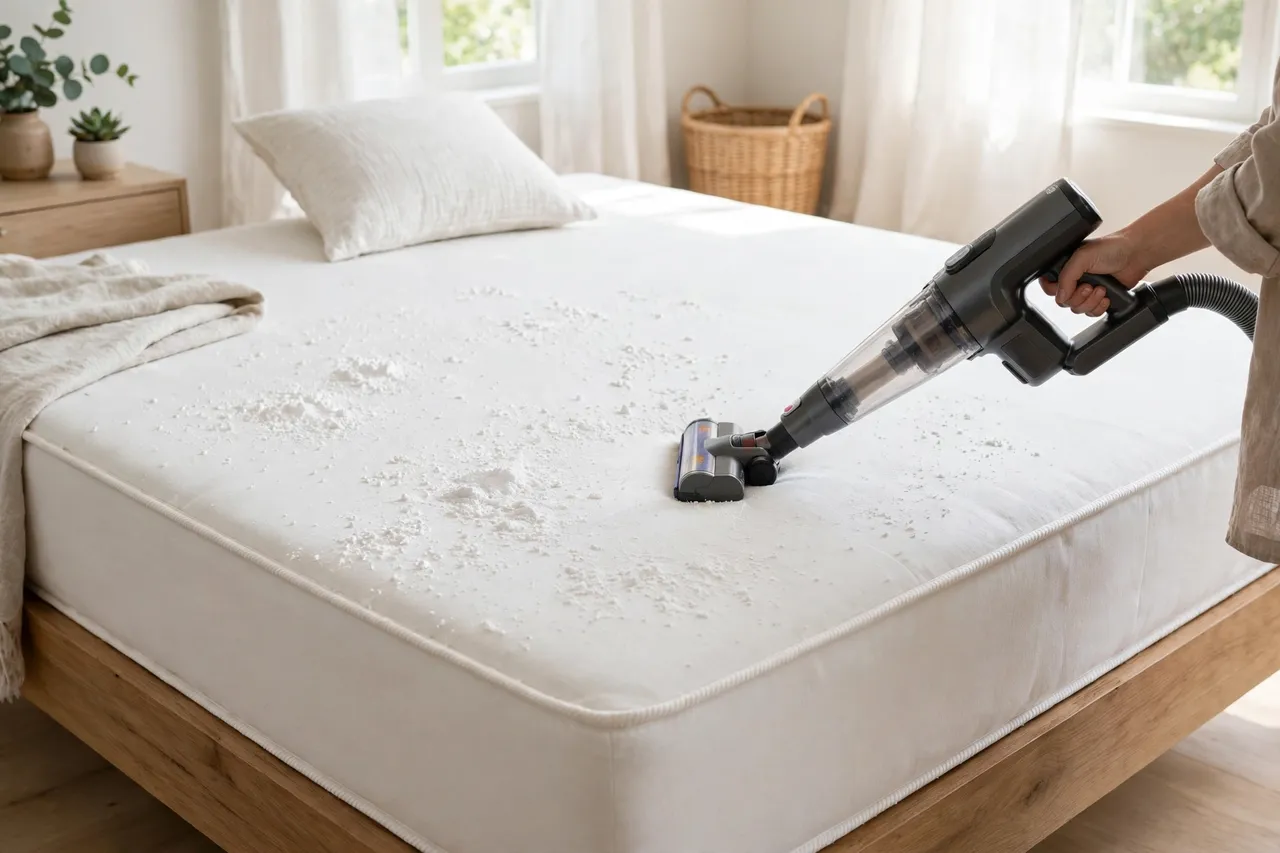
You cannot put a mattress in the wash, and it soaks up sweat, spills, dust and odours every single night. The good news: a proper clean needs no special machine. Vacuum slowly, treat stains with the right cleaner for that stain, give the whole surface a long baking soda rest, and dry it completely. Two golden rules run through everything below — blot, never scrub, and use as little liquid as you can, because a mattress that gets soaked inside dries slowly and can grow mould.
What you need
- A vacuum with an upholstery tool and a crevice tool
- Baking soda (one standard box is plenty for a queen)
- Clean white cloths or towels (white, so no dye transfers)
- A spray bottle
- Mild dish soap; white vinegar; 3% hydrogen peroxide
- An enzyme cleaner for urine and other biological stains (optional but best for those)
- A fan or an open window for drying
Before you start, check the care label. Memory foam, latex and hybrid mattresses must never be soaked, and some makers void the warranty if you use a steam cleaner — steam also drives moisture deep into foam, where it cannot dry. Everything in this guide uses a light mist only, so it works for all mattress types.
The full clean, step by step
Step 1: Strip the bed and wash everything washable
Sheets, pillowcases and the mattress protector go in the wash — hot water for dust mites if the labels allow. Cleaning the mattress while the bedding stays dirty is wasted work.
Step 2: Vacuum the whole surface, slowly
Fit the upholstery tool and cover the entire top in slow, overlapping strokes. Slow matters: dust, skin flakes and dust-mite debris sit down in the weave, and a quick pass lifts only surface fluff. Then run the crevice tool along every seam, the edge piping and around any tufted buttons — the places debris collects. Empty a bagless bin outside afterwards.
Step 3: Spot-clean the stains (see the table below)
Treat stains now, before the deodorising step, working with the cleaner that matches the stain. Blot with a clean cloth, pressing and lifting — never rub, which spreads the stain and pushes it deeper.
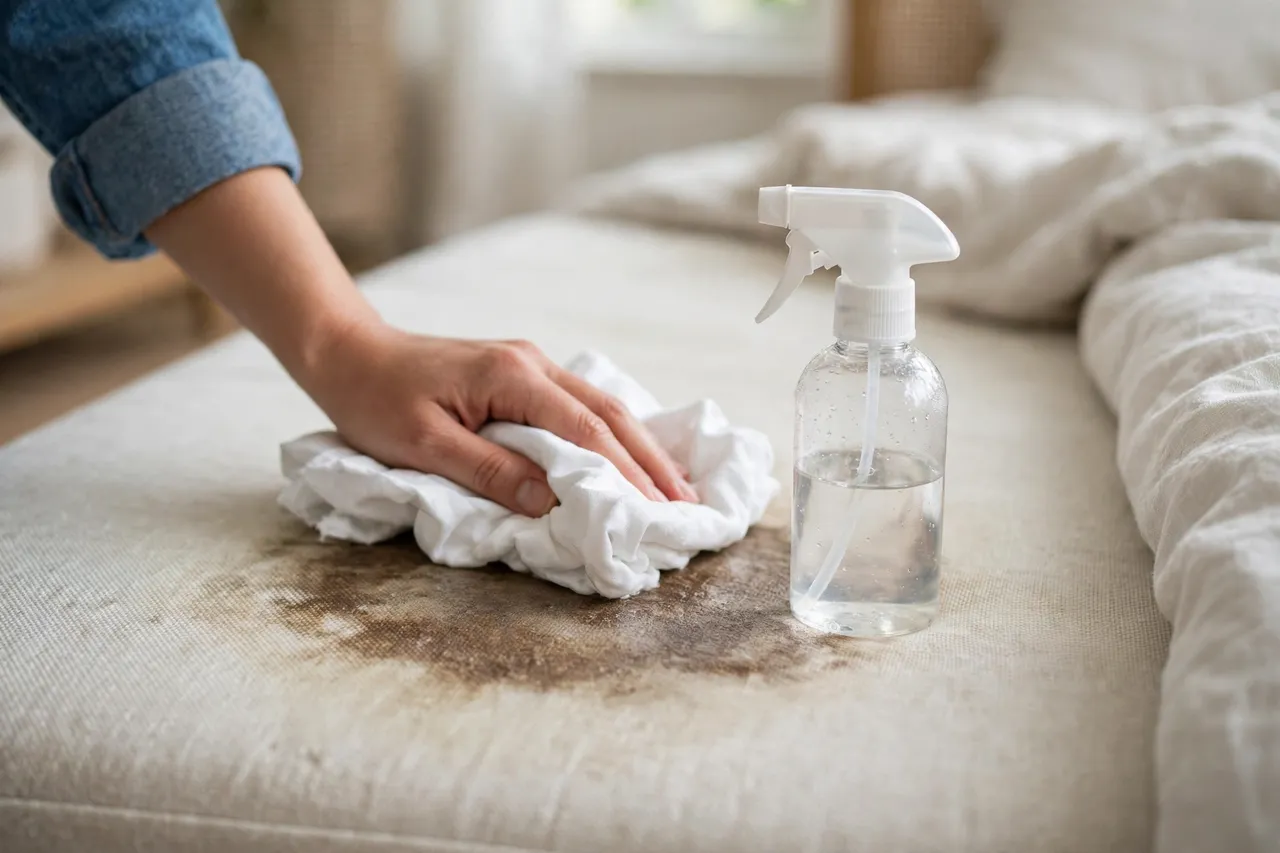
Step 4: Deodorise with baking soda
Sprinkle baking soda over the whole surface in a thin, even layer and rub it in lightly with your hand or a soft brush so it contacts the fabric. Leave it as long as you can — a few hours at minimum, 8 hours or overnight is best. Baking soda absorbs moisture and neutralises the acids behind stale mattress smell. Vacuum it all up slowly with the upholstery tool.
Step 5: Air and dry completely
Let the mattress air with the bed unmade — a fan pointed at it or an open window speeds things up, and a few hours of sunlight in the room helps freshen it too. Do not remake the bed until the surface feels completely dry: bedding over a damp mattress traps moisture inside.
Step 6: Protect it going forward
Fit a washable mattress protector before the sheets go back on. It is the single best cleaning decision — future sweat and spills stop at the protector, which you can simply wash.
Stains: the right cleaner for each one
| Stain | Method |
|---|---|
| Urine (fresh) | Blot up as much as possible with towels, pressing firmly. Spray with an enzyme cleaner (it breaks down the proteins that cause the smell — soap only masks it), a little beyond the visible edges, since liquid wicks outward. Leave per the label (usually 10–15 minutes), blot again, then cover with baking soda for 8+ hours and vacuum. No enzyme cleaner? A half-and-half mix of white vinegar and water, misted and blotted, is the next best thing. |
| Urine (dried / old) | Stronger mix: 8 oz (240 ml) hydrogen peroxide + 3 tablespoons baking soda + a drop of dish soap in a spray bottle. Mist the stain, let it dry fully, then vacuum. For stubborn old stains, covering the treated area with plastic wrap for 24 hours keeps the cleaner working instead of evaporating. |
| Blood | Cold water only — warm or hot water sets blood permanently. Blot with a cloth dampened in cold water, working from the outside in. For what remains, dab hydrogen peroxide on a cloth and blot (test peroxide on an underside corner first — it can lighten coloured fabric). |
| Sweat and yellowing | A small squeeze of dish soap in a cup of cool water, misted on and blotted; then blot again with a cloth dampened in plain water to lift the soap back out. |
| Vomit | Scrape off solids, blot, then treat exactly like urine — enzyme cleaner first choice. |
| Drinks (coffee, wine) | Blot immediately, mist with the dish-soap solution, blot; repeat rather than soaking. A little hydrogen peroxide helps on white fabric (spot-test first). |
Mistakes that make things worse
- Soaking the mattress: the most common error. Deep liquid takes days to dry inside foam and invites mould. Mist, blot, repeat — patience beats volume.
- Scrubbing stains: rubbing spreads the stain wider and drives it deeper. Blot and lift, always.
- Bleach: it degrades foams and fabrics and can leave harsh residues in the thing you sleep on. Never the right tool here.
- Steam cleaning memory foam: heat damages the foam's structure and pushes water where it cannot dry. Check the warranty — many makers forbid it.
- Remaking the bed too soon: sheets over a damp mattress trap the moisture you just worked to remove. Dry fully first.
- Hot water on blood: it cooks the protein into the fabric and sets the stain for good. Cold only.
How often should you clean a mattress?
- Vacuum + baking soda refresh: every 3–6 months (each season is an easy rhythm).
- Stains: immediately — fresh stains lift in minutes, dried ones take hours of work.
- Protector: wash every 1–2 months.
- Flip or rotate: if your mattress design allows it, rotating head-to-foot every few months evens out wear and the spots where sweat collects.
More home cleaning guides
The same blot-and-baking-soda logic runs the upholstery next door: how to clean a leather couch and how to clean wood furniture properly.
Frequently asked questions
How do you deep-clean a mattress at home?
Strip the bed, vacuum the whole surface slowly with the upholstery tool (then the crevice tool along seams), spot-clean stains with the cleaner that matches the stain, sprinkle baking soda over everything for several hours or overnight, vacuum it up, and let the mattress dry completely before remaking the bed. Blot stains — never scrub — and use as little liquid as possible.
How do you get urine out of a mattress?
Blot up as much as you can, then use an enzyme cleaner — it breaks down the odour-causing proteins instead of masking them. Spray slightly beyond the stain's edges, leave it for the time on the label, blot, cover with baking soda for at least 8 hours, and vacuum. For dried urine, use a spray of 8 oz hydrogen peroxide with 3 tablespoons of baking soda and a drop of dish soap.
Can baking soda really clean a mattress?
It does two of the jobs: it absorbs moisture and neutralises the acidic compounds behind stale smells, which is why the long baking-soda rest is the deodorising heart of the clean. It does not remove stains by itself — those need the spot treatment for their type first.
Can you steam clean a mattress?
On some traditional spring mattresses, carefully — but never on memory foam: the heat damages foam and drives moisture deep inside, where it dries slowly and can grow mould. Many manufacturers also void the warranty for steam cleaning. The mist-and-blot method in this guide is safe for every type.
How do you get the smell out of a mattress?
Find the source first — an old urine or sweat stain needs its spot treatment, because odour lives in the stain. Then do the full-surface baking soda treatment for 8 hours or overnight and vacuum thoroughly. Finish with hours of fresh air or a fan, and add a washable protector so it does not come back.
How long does a mattress take to dry after cleaning?
If you used the light-mist method here, a few hours with a fan or open window. A mattress that was soaked can take a day or more — one more reason to use little liquid. Never put bedding back on until the surface feels fully dry to the touch.
Sources
Method cross-checked against mattress-care and sleep-site guidance (vacuum and baking soda routine, enzyme cleaners for urine, cold water only for blood, no bleach or steam on foam). Written in our own words for A Natural Day readers.

Written by
MD DOLAR HOSEN
Technology expert and the founder and author of A Natural Day. He tests and reviews everyday tech, gadgets, and home essentials, and writes practical buying gui…


Comments (0)
Join the discussion — sign in to leave a comment.
Sign in to commentNo comments yet. Be the first to share your thoughts.