Sans Air Purifier Review: What the 1,854 Sq Ft Claim Really Means
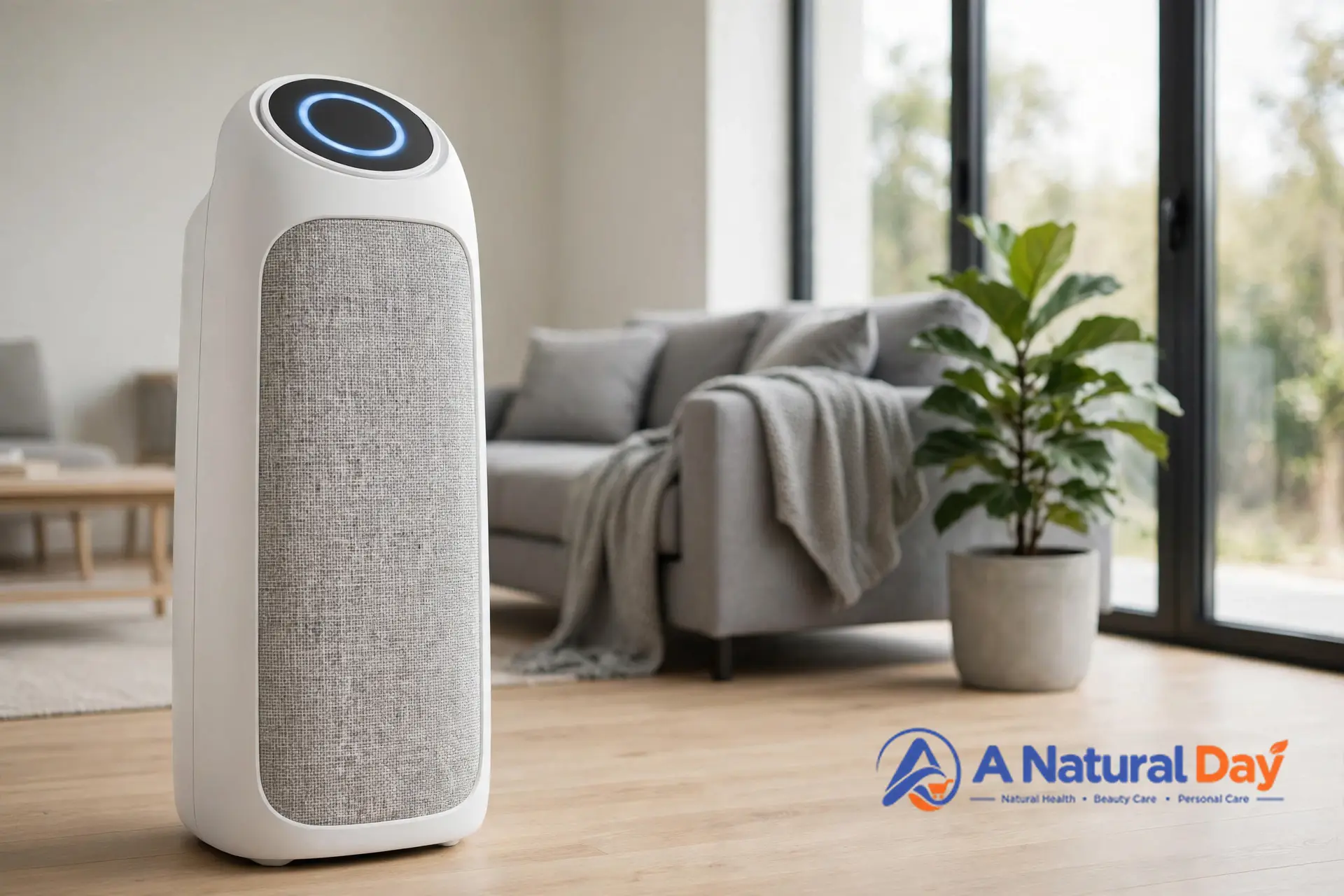
A Sans Air Purifier is a good place to start if you want cleaner air in a large room without a smart app or a hard setup. Sans is a direct-to-consumer brand, and this is its main whole-home purifier. It pairs a medical-grade HEPA 13 filter with a full pound of activated carbon and a built-in UV-C light. This guide looks at the machine in depth: what it does, what the big coverage number really means, what it costs to run, and who should buy it. No hard words. No guesswork.
Quick answer: The Sans Air Purifier is a simple, powerful purifier for large rooms and open living spaces. It cleans the air with a three-stage filter system, shows your air quality live on a small display, and runs quietly on its lowest setting. It has no Wi-Fi, no app, and no remote, so it suits people who want clean air with almost nothing to learn. Its filter needs a change every three months, so count that running cost before you buy.
Our pick: Sans HEPA Air Purifier for Whole Home and Large Rooms
A whole-home air purifier with a medical-grade HEPA 13 filter, one pound of activated carbon, a built-in UV-C light, and a SmartPure display that reads your air quality in real time.
Check the Sans Air Purifier on Amazon
As an Amazon Associate, A Natural Day earns from qualifying purchases.
What Is the Sans Air Purifier?
The Sans Air Purifier is a plug-in tower purifier made by Sans, a California-based company that sells air and water products direct to buyers. It is built for people who want serious air cleaning without a smart home setup. You plug it in, pick a fan speed or turn on auto mode, and it does the rest.
It stands 20 inches tall and 10 inches wide, and it weighs 11 pounds. A handle on top folds away when you do not need it, so you can carry it from room to room without touching the dirty filter side. It comes in four colours: white, midnight, sand, and agave.
The Sans Air Purifier is rated 4.3 out of 5 stars on Amazon, from hundreds of buyer ratings. Reviewers praise its simple controls, its quiet low speed, and its strong filtration. The most common complaints are the cost of the machine and the short filter life.
Sans Air Purifier Key Features at a Glance
Here are the facts that matter, all taken from the product listing and from independent review pages.
- Filtration: Three stages — a wipeable pre-filter for dust and hair, a medical-grade HEPA 13 filter, and one pound of activated carbon for odours, chemicals, and gases.
Particle capture: The HEPA 13 filter captures 99.97% of particles down to 0.3 microns, and 99.95% of particles as small as 0.1 microns.
UV-C light: A built-in UV-C light sits inside the unit and is CARB-certified ozone-free. It adds a germicidal layer against bacteria, viruses, and mould.
Coverage: The maker states coverage of up to 1,854 square feet for whole-home circulation. Read the next section before you trust that number for your room.
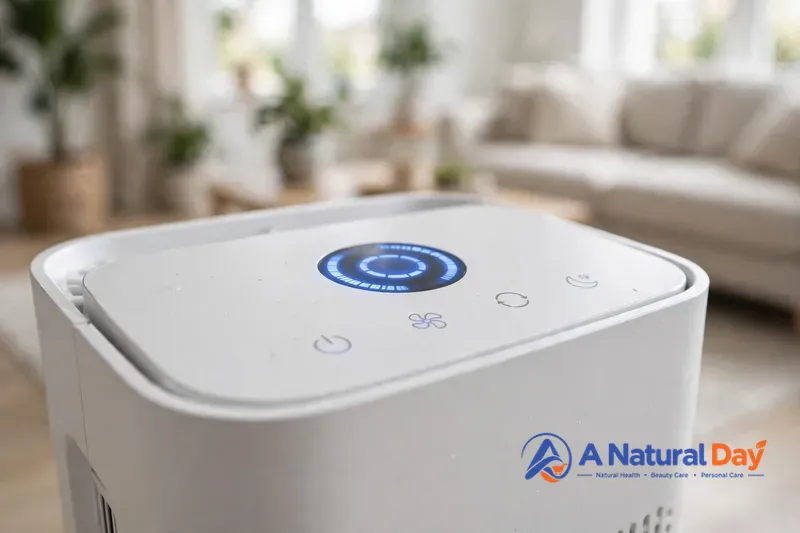
SmartPure display: A small display shows your air quality as a number and a colour — blue for good, yellow for moderate, red for poor. You can cycle through PM2.5, PM10, and VOC readings.
Fan speeds: Four modes — auto, low, medium, and high. Auto mode adjusts the fan speed to match the air quality it senses.
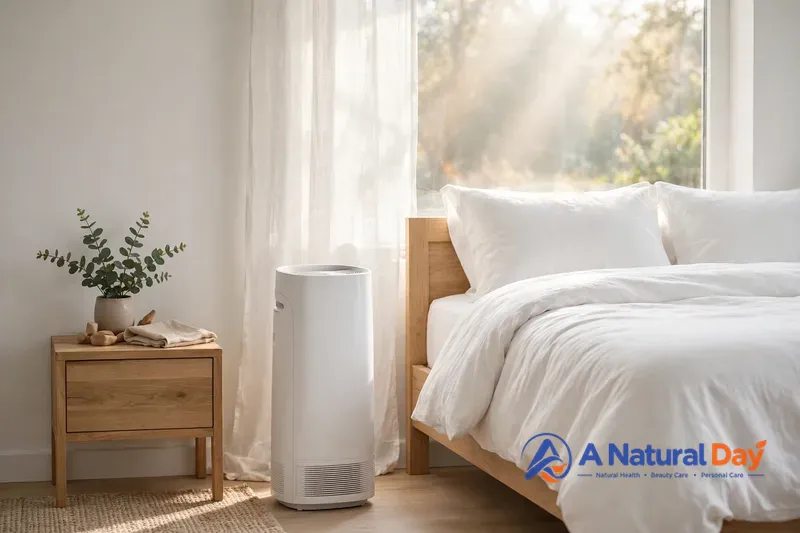
Noise: 25 decibels on the lowest setting, up to 53 decibels on the highest speed. The low setting is quiet enough for a bedroom at night.
Child lock: A smart child lock stops curious kids from changing the settings.
Filter life: The filter needs a change every three months, and a red light alerts you when it is due.
Warranty: A 5-year warranty is stated for the machine.
No app: There is no Wi-Fi, no Bluetooth, and no app. All controls sit on the top panel.
The 1,854 Sq Ft Question: What the Sans Air Purifier Coverage Really Means
This is the part most reviews skip, and it is the part that matters most before you buy.
The maker states the Sans Air Purifier covers up to 1,854 square feet. Some review pages state a smaller figure, around 1,560 square feet. The two numbers come from different ways of measuring. The larger number describes whole-home circulation — air moving through a large open space over time. It does not mean the machine cleans a 1,854-square-foot room as fast as a small bedroom.
Air purifier experts use a stricter standard. At the standard of 4.8 air changes per hour — the rate used for allergy and asthma relief — the effective room size for this machine is closer to 386 square feet. That is still a large bedroom or a good-size living room. But it is very different from 1,854.
So, how should you read the number? Use it this way:
One large room or an open living area: The Sans Air Purifier fits well. It moves a lot of air and covers a big space.
A small bedroom: It is more machine than you need. A smaller purifier will clean the same room for less money and less filter cost.
A whole floor or a full home: One unit will not clean every room at the strict allergy standard. Place it where you spend the most time — the living room or the bedroom — and let it work there.
One more honest note: the Sans Air Purifier is not AHAM certified. AHAM is the industry body that verifies clean air delivery rates. Sans uses Intertek, a large independent testing lab, instead. Intertek tests against the same core standards, but you will not find this model in the AHAM directory. If AHAM verification matters to you, check that before you buy. If independent lab testing is enough, Intertek is a serious lab.
How to Use the Sans Air Purifier
Setup takes a few minutes. These are the basic steps.
1. Place it with space around it. Put the purifier on the floor with clear space on all sides. Do not push it tight against a wall or behind furniture. Air needs room to flow in and out.
2. Plug it in and read the display. The SmartPure display shows your air quality as a number and a colour. Blue means good, yellow means moderate, and red means poor. Give it a few minutes to sense the room.
3. Pick a fan mode. Auto mode is the best start. The machine speeds up when the air gets worse and slows down when it clears. Low is the quiet night setting. High is for stale air, smoke, or after cooking.
4. Check the readings. Press the display button to cycle through PM2.5, PM10, and VOC readings. PM2.5 covers fine particles like smoke and ash. PM10 covers larger particles like dust and pollen. VOC covers gases like formaldehyde from new furniture.
5. Turn on the child lock if you need it. If kids are in the house, lock the panel so the settings stay as you set them.
The purifier has no app, so there is nothing to install and no account to make. That is a plus for many buyers. It is also the main limit: you cannot check the air or change the speed from your phone.
Clean air is only half the job in a home. Dust on soft surfaces keeps coming back into the air, so pair the purifier with regular cleaning. Our guide on how to clean a mattress covers one of the biggest dust holders in the bedroom.
Filter Changes and Running Costs of the Sans Air Purifier
This is the cost most buyers miss. The Sans Air Purifier needs a new filter every three months. That is more often than many rival purifiers, which run six to twelve months on one filter.
The pre-filter is wipeable. You can clean dust and hair off it with a soft cloth. But the main filter — the HEPA 13 layer and the carbon — must be replaced, not washed. A red light on the panel alerts you when the change is due, and the back panel opens so you can pull the old filter out and slide the new one in.
Over three years, that means about twelve filters. Before you buy, add that running cost to the cost of the machine and compare it with a purifier that changes filters once or twice a year. The Sans cleans well, but it is not a buy-once machine. If you hate buying filters, this is the fact that should change your mind.
Sans Air Purifier vs Other Purifiers
The Sans Air Purifier competes in the premium range. Here is how it sits against the common alternatives.
Against small-room purifiers like Levoit: Small-room purifiers cost less, use less power, and cover a bedroom well. They cannot match the Sans on large-room coverage or on carbon weight. Pick the Sans if your room is large or open-plan. Pick a small purifier if your room is a normal bedroom.
Against AHAM-verified purifiers like Blueair: Some rivals carry AHAM verification, which lets you compare their clean air delivery rate in a public database. The Sans uses Intertek testing instead. Both are independent labs, but only AHAM puts the result in its directory. Pick an AHAM-verified model if you want that public check.
Against app-connected purifiers like Coway: Connected purifiers let you check air quality and change settings from your phone. The Sans has no app at all. Pick the Sans if you want simple controls and no accounts. Pick a connected model if you want phone control and air history.
One honest note: the Sans is not the cheapest way to clean a room. You pay for the HEPA 13 grade, the full pound of carbon, the UV-C light, and the large coverage. If your room is small and your air is already fair, a cheaper purifier will do the same visible job.
For the rest of the home, clean floors keep dust down between filter changes. See our guide on how to clean floors naturally for simple routines that cut the dust the purifier has to catch.
Who Should Buy It — and Who Should Skip It
Buy it if:
You have a large living room, an open-plan space, or a big bedroom that needs real air cleaning.
You or your family have allergies, and you want a medical-grade HEPA 13 filter with strong carbon for odours and chemicals.
You want a simple machine with no app, no Wi-Fi, and nothing to learn.
You want a quiet night setting and a display that shows your air quality in plain numbers.
You are fine with a filter change every three months.
Skip it if:
Your room is small. A cheaper small-room purifier will clean it just as well.
You want phone control, air history, or smart home links. The Sans has none of these.
You want AHAM-verified performance in a public database. The Sans is tested by Intertek, not AHAM.
You hate buying filters. A three-month cycle adds up fast.
You want a remote control. The Sans has no remote — all controls are on the top panel.
Fans and other air-moving machines need cleaning too, or they blow dust back into the room. Our guide on how to clean the Dreo Nomad One tower fan shows the same care routine for a tower fan.
Sans Air Purifier — FAQ
How big a room does the Sans Air Purifier cover? The maker states up to 1,854 square feet for whole-home circulation. At the stricter allergy standard of 4.8 air changes per hour, the effective room size is closer to 386 square feet. It fits a large living room or a big bedroom well.
What filter does the Sans Air Purifier use? It uses a three-stage system: a wipeable pre-filter, a medical-grade HEPA 13 filter, and one pound of activated carbon. A built-in UV-C light adds a germicidal layer. The filter needs a change every three months.
Is the Sans Air Purifier quiet? Yes, on low. It runs at 25 decibels on the lowest setting, which is quiet enough for sleep. On high it reaches 53 decibels, which is still quieter than most home machines, but you will hear it.
Does the Sans Air Purifier have an app? No. It has no Wi-Fi, no Bluetooth, and no app. All controls sit on the top panel, and the SmartPure display shows your air quality as a number and a colour.
Does the Sans Air Purifier remove odours? Yes. The one pound of activated carbon is built to catch odours, chemicals, and gases such as VOCs. The pre-filter catches dust and hair, and the HEPA 13 filter catches fine particles.
Is the Sans Air Purifier AHAM certified? No. Sans uses Intertek, an independent testing lab, instead of AHAM certification. Intertek tests against the same core standards, but the model does not appear in the AHAM directory.
How often do I change the filter? Every three months. A red light on the panel alerts you when the change is due. The pre-filter can be wiped clean with a soft cloth, but the main filter must be replaced.
Conclusion
The Sans Air Purifier earns its place in a large room by doing a simple job well. Its HEPA 13 filter, full pound of carbon, and UV-C light clean the air hard, and its SmartPure display tells you what is happening in plain numbers. It runs quietly at night, it moves from room to room on its handle, and it asks nothing of you beyond a filter change every three months.
It is not the right machine for everyone. Small rooms do not need it, phone lovers will miss the app, and buyers who hate filter costs should look elsewhere. But for a large living room or a big bedroom, where allergies or odours are a real problem, the Sans Air Purifier is a strong and simple pick.
Check the Sans Air Purifier on Amazon and see the latest details for yourself.

Written by
MD DOLAR HOSEN
Technology expert and the founder and author of A Natural Day. He tests and reviews everyday tech, gadgets, and home essentials, and writes practical buying gui…
Comments (0)
Join the discussion — sign in to leave a comment.
Sign in to commentNo comments yet. Be the first to share your thoughts.