How to Cook Salmon in an Air Fryer: Crispy Skin in 10–12 Minutes
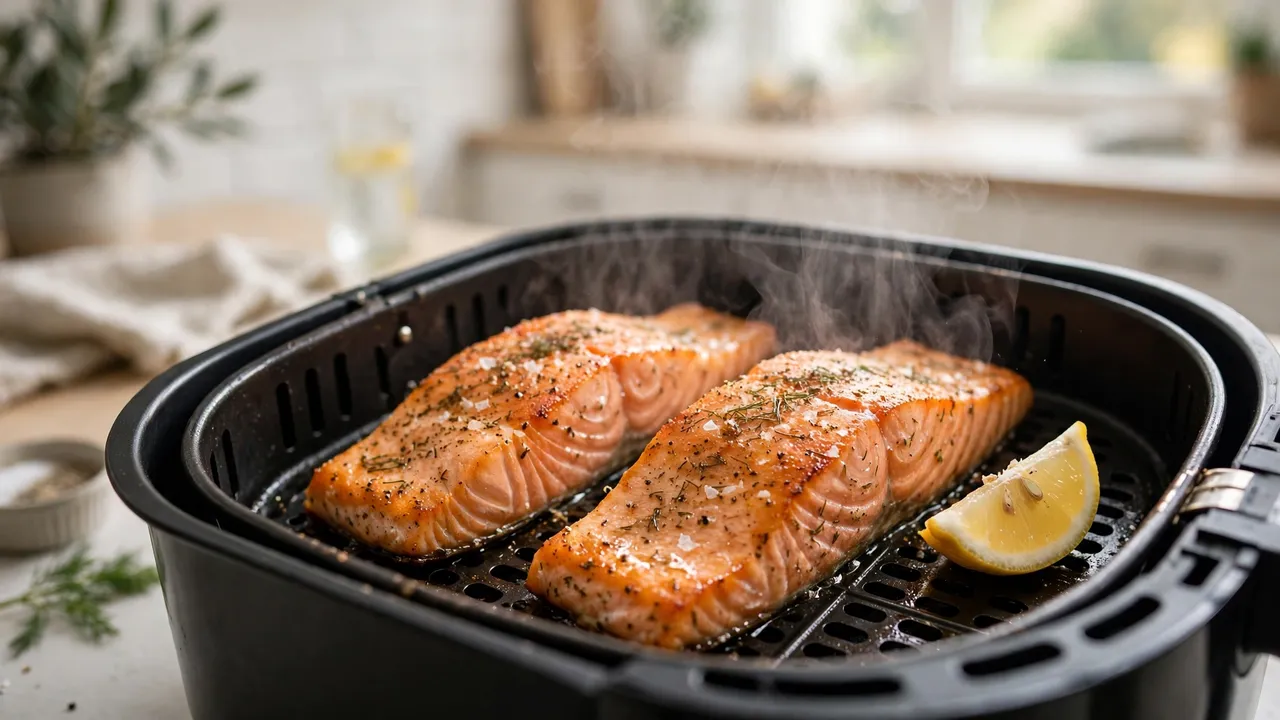
Salmon is the fish the air fryer was made for. The hot, fast air crisps the skin like a pan sear, while the flesh stays moist and flakes cleanly — in about half the time of an oven, with no fishy smell filling the house. The method is short: dry the fillets, season them, cook skin-side down without flipping, and pull them at the right temperature. Here it is, with times by thickness.
The short answer
Cook salmon at 380°F (193°C), skin-side down, in a single layer. A standard 1-inch fillet takes 10–12 minutes. Cook until the thickest part reaches 145°F (63°C) — the FDA safe temperature for fish — then rest 3 minutes. Do not flip skin-on fillets: the skin crisps against the basket and protects the flesh. Dry skin at the start is what makes it crisp.
What you need
- 4 salmon fillets, about 6 oz each, skin-on for the crispiest result
- 1 tablespoon oil (avocado or olive oil)
- 1 teaspoon garlic powder and 1 teaspoon paprika
- Salt and black pepper
- 1 lemon, cut into wedges
- An instant-read food thermometer
Time chart by thickness
Measure at the thickest point. A thin tail piece and a thick centre-cut fillet from the same fish can finish 3 minutes apart, so check each piece, not just the batch.
| Fillet | Temperature | Time | Notes |
|---|---|---|---|
| ¾ inch thick | 380°F | 8–10 minutes | Check at 8 minutes; thin fillets go fast |
| 1 inch thick | 380°F | 10–12 minutes | The standard supermarket fillet |
| 1¼ inches thick | 380°F | 12–14 minutes | Centre-cut; very juicy if not overcooked |
| 1½ inches thick | 380°F | 14–16 minutes | Check at 14 minutes, then every minute |
| Skinless, 1 inch | 380°F | 9–11 minutes | Oil the basket; flip gently once halfway |
| Frozen, 1 inch | 380°F | 16–19 minutes | Season after 8 minutes, once the surface thaws |
Step by step
Step 1: Take the salmon out of the fridge 15 minutes early
Ice-cold salmon cooks unevenly — the outside overcooks while the centre is still cool. Fifteen minutes on the counter takes the chill off and evens out the cook. Do not leave fish out longer than that.
Step 2: Pat it completely dry
Dry the top and the skin with paper towels. This is the crisp-skin step: dry skin crisps, wet skin steams. For the very best skin, leave the fillets uncovered in the fridge for 30 minutes before cooking so the surface dries further.
Step 3: Oil and season, skin included
Rub the fillets with oil, then season the flesh with the garlic powder, paprika, salt and pepper. Season the skin lightly too, and do it just before cooking — salt left sitting on the flesh draws out moisture.
Step 4: Preheat to 380°F
Run the air fryer empty for 3 minutes. A hot basket starts the skin crisping on contact; a cold one gives soft skin that sticks.
Step 5: Cook skin-side down — and do not flip
Lay the fillets in a single layer, skin-side down, with space between them. Then leave them alone. The skin shields the flesh from the direct heat while it crisps against the basket, and the circulating air cooks the top. Flipping risks tearing the skin and breaking the fillet. Skinless fillets are the exception: oil the basket and turn them gently once, halfway.
Step 6: Check the thickest part
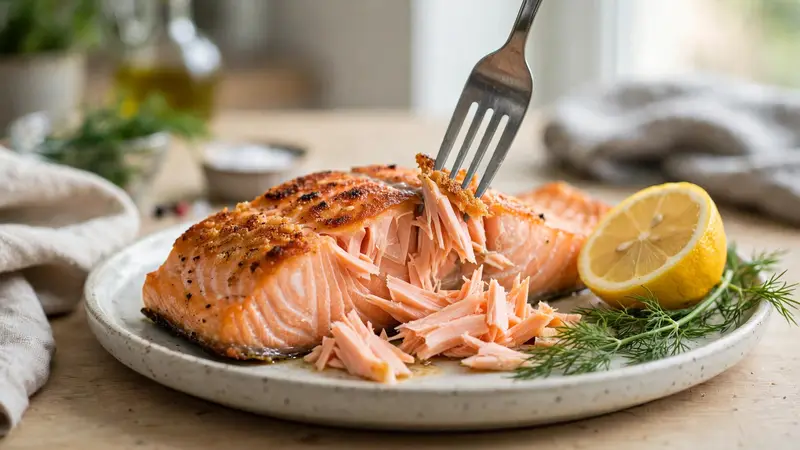
Start checking at the short end of the chart time. Push the thermometer into the thickest part of the largest fillet. At 145°F the salmon is fully cooked by FDA guidance, opaque and flaking. Many cooks prefer salmon a little under that — around 125–135°F for a medium, silkier centre — which is a personal choice; 145°F is the official safe standard, and it is the number to use for children, pregnant readers and anyone cautious.
Step 7: Rest 3 minutes, then lemon
Rest the fillets for 3 minutes. The flesh relaxes, the juices settle, and the skin firms up a little more. Squeeze lemon over just before serving — acid added earlier can dull the surface colour while it cooks.
About the white stuff on salmon
The white beads that sometimes appear on cooked salmon are albumin — a natural protein that gets pushed to the surface as the flesh tightens. It is harmless. It shows up more when salmon is cooked hard and fast, so it is a useful signal: lots of albumin usually means the fillet went a bit past its best point. Gentler, on-time cooking keeps most of it inside.
Mistakes that ruin air fryer salmon
- Wet skin. The number one cause of soft skin. Pat dry, every time.
- Flipping skin-on fillets. The skin tears and the fillet breaks. Skin-side down, start to finish.
- Crowding the basket. Fillets that touch steam each other. Cook in batches.
- Overcooking. Salmon goes from silky to dry in about two minutes. Check early and check each piece.
- Cold fish, cold basket. Both ends of the cook suffer. Fifteen minutes out of the fridge, 3 minutes of preheat.
- Lemon before cooking. Acid dulls the flesh if it sits. Squeeze it on at the table.
More air fryer recipes
More fast dinners from the same basket: air fryer chicken legs, air fryer pork tenderloin, air fryer boneless pork chops and air fryer asparagus on the side.
Useful products for this recipe
These are the products that fit this recipe. Prices change often, so check the current price on Amazon before you buy.
- COSORI TurboBlaze 6-Qt Air Fryer — a wide basket fits four fillets in one layer with space to crisp.
- Ninja Air Fryer 4-Qt — a compact air fryer that suits small kitchens and small batches.
- TempPro Instant-Read Meat Thermometer — a fast reading at the thickest part is the difference between silky salmon and dry salmon.
A Natural Day is reader-supported. When you buy through links on this page, we may earn an Amazon commission at no extra cost to you.
Frequently asked questions
How long do you cook salmon in an air fryer?
At 380°F, a 1-inch fillet takes 10–12 minutes. Thinner ¾-inch fillets take 8–10 minutes, and thick 1½-inch fillets take 14–16 minutes. Cook skin-side down without flipping, to 145°F in the thickest part.
What temperature should salmon be cooked to?
145°F (63°C) is the FDA safe temperature for fish, and at that point the flesh is opaque and flakes easily. Many cooks prefer a medium centre at 125–135°F for a silkier texture; the choice is yours, but 145°F is the official standard.
Do you flip salmon in an air fryer?
Not when it is skin-on. Cooking skin-side down the whole time crisps the skin and protects the flesh, and the hot air cooks the top. Skinless fillets can be turned once, gently, halfway through.
How do you get salmon skin extra crispy?
Start with very dry skin — pat it dry, or dry it uncovered in the fridge for 30 minutes. Then oil it lightly, salt it, preheat the air fryer, and cook skin-side down without moving the fillets.
Can you cook frozen salmon in an air fryer?
Yes. A 1-inch frozen fillet takes about 16–19 minutes at 380°F. Season it after roughly 8 minutes, once the surface has thawed enough for the seasoning to stick, and check the thickest part before serving.
What is the white stuff that comes out of salmon?
Albumin, a natural protein in the fish. It is harmless, and it appears more when salmon is overcooked or cooked very hard. Pulling the fillets on time keeps most of it from showing.
Sources
Times and temperatures cross-checked against published air fryer salmon guides and charts (380–390°F, skin-side down, thickness-based times, frozen times), and the 145°F finish follows the FDA safe minimum cooking temperature for fish. Written in our own words for A Natural Day readers.

Written by
MD DOLAR HOSEN
Technology expert and the founder and author of A Natural Day. He tests and reviews everyday tech, gadgets, and home essentials, and writes practical buying gui…
Comments (0)
Join the discussion — sign in to leave a comment.
Sign in to commentNo comments yet. Be the first to share your thoughts.