Clarence Thomas First Amendment Warning: What the Supreme Court Declined to Hear
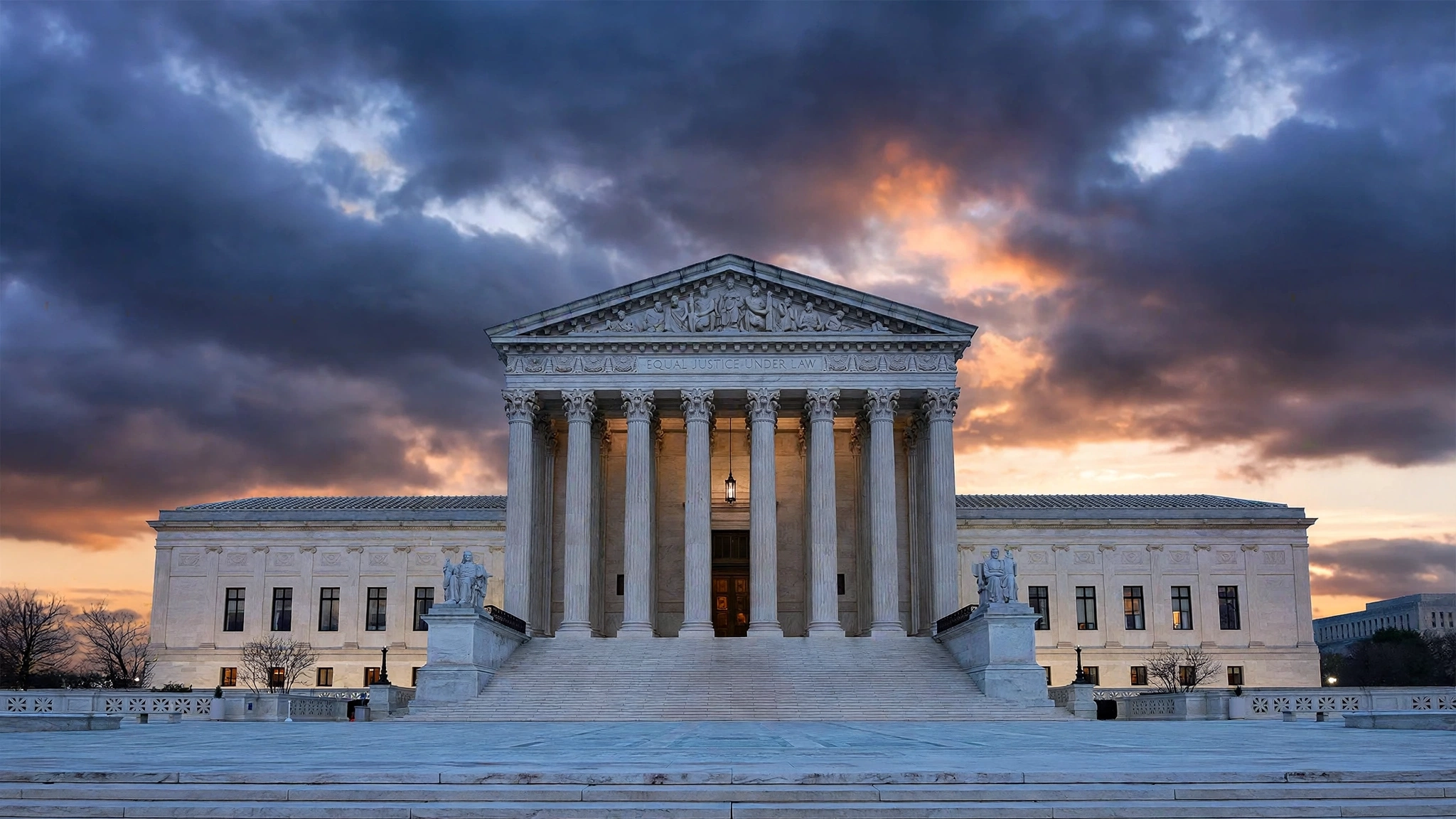
The Clarence Thomas First Amendment warning came in a dissent on November 16, 2026, over California's implicit-bias training rule for doctors.
QUICK ANSWER
On Monday, November 16, 2026, the Supreme Court declined to hear a challenge to California's rule that continuing medical education courses for doctors must include implicit-bias training. Justice Clarence Thomas dissented, joined by Justice Samuel Alito. He warned that the lower court's reasoning could let states force private speakers to carry the government's message. Justice Neil Gorsuch also said he would have granted the case.
CLARENCE THOMAS FIRST AMENDMENT WARNING: THE CASE
The case is Azadeh Khatibi, et al. v. Felix C. Yip, et al., No. 25-1240, from the Ninth Circuit. Dr. Azadeh Khatibi, a California ophthalmologist who teaches continuing education courses, sued with the nonprofit Do No Harm. They argued the rule forces private instructors to convey a government-favoured message, in violation of the First Amendment.
WHAT CALIFORNIA REQUIRES
California-licensed doctors must complete 50 hours of approved continuing medical education every two years. Since 2019, the law has required that after January 1, 2022, all such courses must include curriculum on understanding implicit bias. The courses are often run by private bodies, certified by private accreditors, and taught by private instructors.
WHY THE LOWER COURTS LET IT STAND
The district court dismissed the challenge on May 2, 2024, on the theory that the training requirement counts as "government speech." The Ninth Circuit affirmed in 2025, holding that the courses count as government speech because California heavily regulates the medical profession. If the content is government speech, First Amendment free-speech scrutiny does not apply.
WHAT THOMAS SAID
Thomas wrote that the government-speech doctrine "occupies a narrow corner of our First Amendment jurisprudence." His core line: "It cannot be the case that compelled speech becomes government speech because the government has compelled the speech." He closed with the warning that gives this story its name: "A State cannot regulate its way out of First Amendment scrutiny," and the doctrine should not be used as "a cover for censorship" or a cloak for compelled speech.
THE THREE EXAMPLES IN HIS DISSENT
Thomas asked what the Ninth Circuit's logic would allow next. Could California require an instructor to give the state's preferred message on abortion? Could it require an instructor to say gender-transition surgery is ethically required for certain patients? Could it require a speaker at a lawyers' training event to oppose racial preferences in hiring? He wrote that under the lower court's logic, enough regulation would turn each private message into unprotected government speech.
WHO JOINED HIM, AND WHO DID NOT
Thomas was joined by Justice Samuel Alito. Justice Neil Gorsuch also said he would have granted the petition, but he did not join Thomas's dissent and his reasons are not public. It takes four votes to grant a case. This one did not get them. No position of the other justices is recorded.
THE SECOND STATEMENT ON THE SAME DAY
On the same order list, Thomas filed a statement in a Maryland gun case, Katherine Novotny, et al. v. Wes Moore, et al., No. 25-1324. There he agreed with the decision not to hear the case, while saying he is sceptical that Maryland's bans on carrying guns in many public places fit the nation's history of gun regulation. The two writings are separate cases with separate outcomes.
WHAT THIS DECISION DOES AND DOES NOT MEAN
The Court did not rule that California's rule is constitutional. It declined to hear the challenge, so the Ninth Circuit's ruling stands and the rule stays in effect. The constitutional question remains open. The case is over for these challengers, but the doctrine Thomas criticised is still unsettled.
WHAT HAPPENS NEXT
The next Supreme Court orders list is Monday, December 7, according to Duke's Center for Firearms Law. Thomas wrote that in a narrower gun case, the Court should consider how far states can go in banning guns in "sensitive places." On the speech question, nothing is scheduled.
FREQUENTLY ASKED QUESTIONS
What did Clarence Thomas warn about? He warned that states could use the government-speech doctrine to force private speakers to carry the government's message, calling it "a cover for censorship."
What case was it? Khatibi v. Yip, No. 25-1240 — a challenge to California's implicit-bias training rule for doctors' continuing education courses.
Did the Supreme Court rule the California law constitutional? No. It declined to hear the case, so the lower court's ruling stands but the constitutional question is not settled.
Who joined Thomas? Justice Samuel Alito joined his dissent. Justice Neil Gorsuch also said he would have granted the case.
FINAL VERDICT
The Clarence Thomas First Amendment warning is a dissent, not a ruling: the Court declined the case, the California rule stays, and Thomas put on record why he thinks the lower court's government-speech reasoning is dangerous. The quote to remember is his closing line — a state cannot regulate its way out of First Amendment scrutiny.
SOURCES
- Global 1 News — Thomas: States Can't Regulate Out of First Amendment — https://global1.news/thomas-state-cannot-regulate-first-amendment-scrutiny
- BreakingBlast — Clarence Thomas Warns Declined California Case Leaves Door Open to Government Compelled Speech — https://breakingblast.com/article/clarence-thomas-calls-foul-on-california-ruling-he-says-could-turn-citizens-into-governmen/
- Google Trends US daily trending searches — https://trends.google.com/trends/trendingsearches/daily?geo=US
Written by
MD DOLAR HOSEN
Technology expert and the founder and author of A Natural Day. He tests and reviews everyday tech, gadgets, and home essentials, and writes practical buying gui…
Comments (0)
Join the discussion — sign in to leave a comment.
Sign in to commentNo comments yet. Be the first to share your thoughts.